arrow-down arrow-left arrow-nav arrow-right arrow-up close db-alumni db-current db-faculty db-fmaily db-future db-online download facebook gallery help linked-in maximize menu minimize pause play print search share twitter youtube zinfolio

Life University D.C. Program’s Revolutionary Technology Series: NeuroLIFE Institute Offers Students Technology Experience Like No Other

Students entering the Doctor of Chiropractic program at Life University (Life U) have the opportunity to learn in an environment that embraces innovation, technology and a whole-person approach to health. One of the most exciting examples is the work being done through the NeuroLIFE Institute (NLI) , where cutting-edge neurotechnology is used to assess and address neurological function while helping individuals pursue better health outcomes.

According to the NLI, its approach is centered on using advanced neurotechnology to identify and target neurological pathways impacted by neurodegenerative diseases. The institute focuses on developing innovative therapies and care plans designed to help improve quality of life while continually researching new approaches to care.

For Life U D.C. students, this commitment to innovation demonstrates how modern chiropractic education extends beyond traditional classroom learning. Exposure to advanced assessment and therapeutic technologies helps students understand the important role the nervous system plays in overall health and human performance.

Challenging the “New Normal”

A defining philosophy of the NLI is its refusal to accept a patient’s limitations as permanent. The institute states that many individuals with complex conditions are told they have reached the best outcome possible. Its team believes the brain and body have remarkable potential for adaptation and healing and seeks to help patients tap into that capacity.

This perspective aligns with Life U’s commitment to helping people achieve their fullest health potential through a patient-centered approach that focuses on function, adaptability and quality of life.

Technology-Driven Assessment and Care

What makes the NLI particularly noteworthy is its use of advanced technologies to evaluate and support nervous system function. The institute utilizes Brain Mapping, NeuroSensory Integrator (NSI), Videonystagmography (VNG) and other assessment tools to create a comprehensive picture of a patient’s health and neurological status. Personalized care programs may incorporate technologies and therapies such as Gyrostim, neurofeedback and extensive visual therapies.

The Institute describes this approach as combining the newest innovations in healthcare with a unique method of assessing and treating the nervous system to help individuals who have not responded to other methods of care.

Among the technologies highlighted by the institute is the Gyrostim, an off-axis rotational device used to activate specific areas of the nervous system. According to the institute, the technology has been used in cases ranging from athletic performance enhancement to helping individuals with severe neurological disorders improve function and quality of life. The therapy utilizes principles of neuroplasticity to support lasting changes in nervous system function.

Supporting Human Performance

NLI’s innovative work is not limited to individuals facing neurological challenges. it also provides elite athletic care and sports optimization programs that incorporate the latest technology and neuroscientific findings. The goal is to help athletes train smarter, improve performance and reach their highest potential. The Institute serves as the official provider for the United States Bobsled and Skeleton Federation.

Preparing Future Chiropractors

As healthcare continues to evolve, future chiropractors must be prepared to understand and work with emerging technologies that support patient assessment and care. Through resources such as the NLI, Life U demonstrates how innovation, neuroscience and chiropractic education can come together to create meaningful learning opportunities for students.

For D.C. students, exposure to revolutionary technologies and advanced neurological approaches provides a glimpse into the future of healthcare while reinforcing the University’s commitment to helping people live healthier, fuller lives.

For more information regarding the NLI, click here.
What to Look for When Choosing a Chiropractic School

How the right Doctor of Chiropractic program can shape your education, your confidence and your future practice.

Choosing a chiropractic school is about more than selecting a program that leads to a degree. It is about finding the place where your purpose, your skills and your future as a healthcare professional can take root. The best chiropractic education should help you grow as a clinician, a leader and a person—while surrounding you with the kind of community that keeps you inspired throughout the journey.

As you compare Doctor of Chiropractic programs, look beyond the course catalog alone. Pay attention to where the school is located, how soon students begin developing hands-on skills, what kinds of techniques they can study, how well the curriculum prepares them for practice ownership or associate roles and whether the campus culture reflects the values and support system you want around you.

A Location That Supports Your Student Life and Future Opportunities

The town surrounding a chiropractic school matter. You will spend years living, learning, studying and building relationships there, so the local environment should support both your academic focus and your quality of life. A campus near a thriving metropolitan area can offer access to community events, diverse patient populations, professional networking and lifestyle amenities, while still giving students a grounded place to call home.

Life University’s (Life U’s) campus in Marietta, Georgia places students in a distinctive setting: close to Atlanta’s energy, opportunity and diversity, yet located on a campus known for its green space, walkability and strong sense of place. For prospective chiropractic students, that combination can make a meaningful difference in daily life and in long-term professional preparation.

Early, Meaningful Hands-On Experience

Chiropractic is a hands-on profession, so students should not have to wait until the final stretch of their education to begin developing confidence with palpation, analysis and adjusting skills. Look for a program that introduces hands-on learning early, builds skills progressively and gives students repeated opportunities to practice under experienced guidance.

At Life U, the Doctor of Chiropractic curriculum is designed to move students from foundational sciences into technique training, simulation-based learning and clinical care in a purposeful sequence. Early exposure helps students connect classroom knowledge with the art and science of chiropractic, building competence one quarter at a time.

A Clinic Experience That Builds Confidence—and Connection

A strong chiropractic school should prepare students to care for real people in real clinical environments. That means more than completing required hours. It means learning how to communicate with patients, think critically, manage cases, document care and serve a broad range of individuals with professionalism and compassion.

Students should also consider whether the school’s clinic model creates opportunities to attract and serve patients. A clinic connected to a visible, mission-driven institution in an active community can help students experience the realities of patient engagement while developing clinical confidence. These experiences can shape not only skill, but also the mindset needed to build trust and educate communities about chiropractic care.

Instruction in Multiple Chiropractic Techniques

Every chiropractor develops a practice style informed by philosophy, training, patient needs and personal strengths. That is why exposure to multiple techniques is so important. Prospective students should look for a program that offers both required foundational technique instruction and opportunities to explore additional approaches through electives, seminars or specialized coursework.

Life U students are introduced to a wide range of chiropractic methods, including full spine adjusting, upper cervical approaches, extremity work, instrument-assisted techniques, sports chiropractic applications and care for special populations. That breadth helps future doctors become adaptable, informed and better prepared to serve the individual needs of their patients.

Preparation for Practice—and for the Business of Practice

A chiropractic education should prepare students not only to deliver excellent care, but also to step into the professional realities of practice. Whether graduates plan to open a clinic, join an existing practice, work in an interdisciplinary setting or serve a specialized population, they need preparation in communication, ethics, leadership, patient education and business fundamentals.

When evaluating schools, ask how the curriculum connects clinical training with practice readiness. Strong programs help students understand what it takes to succeed after graduation—from building referral relationships and educating prospective patients to managing operations, staying grounded in purpose and serving with integrity.

A Community That Feels Like More Than a Campus

The intensity of chiropractic school makes community essential. Students need classmates who understand the rigor, faculty who are accessible and invested and a campus culture that encourages persistence, collaboration and shared purpose. A strong sense of camaraderie can turn a demanding program into a transformational experience.

Life U’s culture is rooted in Lasting Purpose: to give, to do, to love, to serve—out of a sense of abundance. For many students, that philosophy is not simply a phrase; it becomes part of how they learn, lead and care for others. It is part of the Life U culture and mission. When choosing a chiropractic school, that kind of shared mission can be just as important as labs, lectures and clinic hours.

Choosing the School That Helps You Become the Doctor You Are Called to Be

The right chiropractic school should challenge you academically, support you personally and prepare you professionally. It should give you early hands-on experience, meaningful clinical opportunities, exposure to multiple chiropractic techniques, practical preparation for life after graduation and a community that helps you stay connected to your purpose.

If you are exploring chiropractic as a career, take time to visit campuses, talk with current students, ask questions about clinic experience and technique instruction and imagine whether the environment will help you grow into the kind of doctor you want to become. At Life U, that journey is designed to begin with purpose—and continue through a lifetime of service.

Click here for more information about Life U’s Doctor of Chiropractic Program and contact admissions about a tour today.

How to Choose the Right College Major for a Career in Chiropractic

If you are drawn to health, movement, natural approaches to well-being and the opportunity to help people live fuller lives, chiropractic may already feel like more than a career path—it may feel like a calling. But before you enter a Doctor of Chiropractic program, one important question often comes first: What should you major in as an undergraduate student?

The good news is that there is no single “right” major for becoming a chiropractor. Instead, the best major is the one that helps you complete required prerequisite coursework, build confidence in the sciences and develop the communication, critical thinking and service mindset needed for professional chiropractic education.

Start With the End Goal: Doctor of Chiropractic Admission

Students planning for chiropractic school should begin by understanding the academic foundation required for admission. Life University’s (Life U) Doctor of Chiropractic program may be entered through different academic pathways, including a bachelor’s degree pathway or qualifying college coursework that meets required credit-hour, GPA and science-course expectations. Because requirements can vary based on a student’s prior coursework and admission track, prospective students should work closely with an admissions counselor early in the process.

In general, students should expect to complete coursework in life and natural sciences, biology, chemistry, English composition, mathematics, humanities and social sciences. That means your major matters less than your academic plan. A student in Exercise Science, Biology, Anatomy and Physiology, Nutrition, Psychology or another aligned field may be well positioned if the degree plan includes the courses needed for chiropractic admission.

Look for a Major That Builds a Strong Science Foundation

Chiropractic education is rooted in the study of the human body, nervous system, biomechanics, physiology and patient care. For that reason, many future chiropractors choose undergraduate majors that include courses such as biology, anatomy, physiology, chemistry, kinesiology, exercise science, biomechanics, nutrition or related health sciences.

A science-focused major can help students become familiar with the language and concepts they will encounter in a Doctor of Chiropractic program. It can also help them strengthen study habits, lab skills and problem-solving abilities before beginning professional-level coursework.

Consider How You Want to Serve Future Patients

Choosing a major is also about discovering how your interests connect with the people you hope to serve. A student interested in athletics and human performance may gravitate toward Exercise Science. A student fascinated by cells, systems and lab sciences may find Biology or Anatomy and Physiology especially meaningful. A student who wants to understand behavior, motivation and whole-person wellness may be drawn to Psychology, Biopsychology, Health Coaching or Nutrition.

At Life U, this connection between academic preparation and purpose reflects a broader educational philosophy. Students are encouraged to think not only about what they want to study, but also about how they want to use that knowledge to give, do, love and serve out of their abundance.

Explore Life U Majors That Support Chiropractic Preparation

Life U offers several undergraduate programs that can support students interested in chiropractic, including Biology, Exercise Science, Anatomy and Physiology, Biopsychology, Nutrition, Psychology, Health Coaching and Pre-Doctor of Chiropractic coursework options. Students who know they want to become chiropractors may also explore Life U’s Pre-D.C. pathway, which is designed to help students complete prerequisite coursework while preparing for the Doctor of Chiropractic program.

The key is alignment. The right pathway should help you meet admissions expectations, build academic readiness and stay connected to the kind of future practice or patient population that inspires you.

Questions to Ask Before Choosing Your Major

  • Will this major help me complete the science prerequisites needed for chiropractic admission?
  • Does the curriculum include courses in biology, chemistry, anatomy, physiology or human movement?
  • Will I have access to advising that understands chiropractic preparation?
  • Does this major match my interests enough to keep me motivated and academically engaged?
  • Can this pathway support other health, wellness or graduate-school goals if my plans evolve?
  • Are there opportunities for hands-on learning, labs, internships, research, athletics or community engagement?

Do Not Choose Alone—Get Advising Early

One of the most common mistakes future chiropractic students can make is waiting too long to confirm whether their coursework meets admission requirements. Even motivated students can lose time if they take courses that do not satisfy a prerequisite, miss a required lab or discover too late that they need additional science credits.

That is why early advising matters. An admissions counselor can help review transcripts, clarify requirements and explain available pathways. Academic advisors can also help students build a course plan that supports both undergraduate degree completion and future D.C. program readiness.

The Best Major Is the One That Moves You Toward Your Purpose

There is no single undergraduate major that guarantees success in chiropractic school, and there is no one-size-fits-all path to becoming a chiropractor. What matters most is choosing a major that helps you complete the right coursework, strengthens your understanding of the human body and keeps you connected to the reason you want to enter the profession.

For students who feel called to serve others through chiropractic, Life U offers an environment where academic preparation, hands-on learning and vitalistic purpose come together. Whether your starting point is Biology, Exercise Science, Anatomy and Physiology, Psychology, Nutrition or another pathway, your journey can begin with one thoughtful step: choosing a major that prepares you to become the kind of doctor—and the kind of person—you are called to be.

Ready to explore your path to chiropractic? Connect with Life U Admissions to review your academic options, learn more about the Pre-D.C. pathway and discover how Life U can help you prepare for a future in chiropractic care.

What Can You Do With a Biology Degree?

A biology degree can open doors to chiropractic, research, environmental science, biotechnology, healthcare, education and beyond.

If you are curious about how living systems work—from cells and genes to ecosystems and human health—a biology degree can give you a strong foundation for a wide range of meaningful careers. For many students, biology is more than a major; it is a launchpad for discovery, service and purpose.

At Life University, Biology students study the science of life in a community grounded in vitalistic thinking, whole-person health and Lasting Purpose. That means students are not only learning scientific concepts; they are also developing the critical thinking, communication and problem-solving skills needed to use science in ways that can help people, communities and the world around them.

Biology Is One of the Most Versatile Science Degrees

One of the biggest strengths of a biology degree is flexibility. Because biology explores the systems and processes that sustain life, it connects naturally to many fields, including chiropractic, laboratory research, environmental science, public health, biotechnology, education and science communication.

According to the U.S. Bureau of Labor Statistics, biology graduates work across a broad range of occupational groups, and many biology-related fields require strong scientific literacy, laboratory experience and analytical thinking. For example, biological technicians typically need a bachelor’s degree in biology or a related field and support scientific work through laboratory setup, sample testing, data collection and observation.

Career Paths You Can Explore With a Biology Degree

A bachelor’s degree in Biology can prepare students for entry-level opportunities, graduate study or professional programs, depending on their goals. Some careers require additional certifications, licensure or advanced degrees, so students should use their undergraduate years to explore options, gain experience and plan their next steps carefully.

Pre-Professional Pathways

Biology is a common choice for students interested in wellness-centered care because it provides a strong foundation in anatomy, physiology, microbiology, genetics and other life sciences. Graduates may continue into professional programs such as chiropractic and other optimal healthcare functioning and well-being industries.

At Life U, Biology can be especially attractive for students who are considering the Doctor of Chiropractic pathway or other health-focused graduate options. This major helps students build the science background needed to understand the human body while also encouraging a broader view of health, human potential and service.

Laboratory, Research and Biotechnology Roles

Students who enjoy experiments, data and discovery may find opportunities in laboratories, research settings, biotechnology companies, quality control environments or university research programs. Common early-career roles may include biological technician, laboratory assistant, research assistant or quality assurance associate.

These roles often involve preparing samples, maintaining lab records, supporting experiments, using specialized equipment and following safety protocols. Students who want to pursue advanced research, science or academic careers often continue into master’s, doctoral or professional programs.

Environmental Science, Conservation and Sustainability

Biology also provides a pathway for students passionate about understanding, preserving and supporting the natural world. Graduates may pursue careers in environmental science, conservation, wildlife biology, ecology, sustainability and natural resource stewardship, contributing to efforts that protect ecosystems, promote environmental well-being and foster a thriving future for all living systems.

For students who care about the relationship between human health and environmental health, this pathway can be especially meaningful. Biology helps students understand how organisms interact with their environments and how science can inform responsible stewardship.

Public Health, Education and Science Communication

Not every biology graduate works in a lab or clinical setting. Some use their science background in public health, community education, nonprofit work, science writing, health communication, teaching or outreach. These paths can be a good fit for students who enjoy explaining complex ideas, supporting community well-being or helping others make informed decisions about health and science.

How Life University Helps Students Build a Strong Foundation

Life University’s Biology program is grounded in a philosophy that is deeply respectful of the innate intelligence of life – the ability of all organisms to be conscious, self-developing, self-maintaining and self-healing. You will graduate with a solid knowledge base in the foundations of biology and cultivate a sense of respect and responsibility for our human role in understanding and influencing both our own living bodies and our place in the world.

Life U’s learning environment also gives students opportunities to connect biology with broader conversations about health, wellness, chiropractic, nutrition, exercise science, psychology and sustainability. That interdisciplinary perspective can help students see how biological knowledge applies to real people, real communities and real challenges.

Questions to Ask as You Explore Biology Careers

  • Do I want to work directly with patients, support clinical teams or pursue a professional healthcare degree?
  • Am I energized by laboratory work, research questions and scientific discovery?
  • Do I care about environmental issues, conservation or sustainability?
  • Would I enjoy explaining science through teaching, writing, public health or community education?
  • Am I willing to pursue graduate school, professional school, certification or licensure if my chosen career requires it?

Your Biology Degree Can Become a Pathway to Purpose

A biology degree does not point to only one career. It gives students a foundation for many possibilities—and the opportunity to shape that foundation around their interests, strengths and long-term goals. Whether you are preparing for chiropractic school, considering research, thinking about environmental science or simply fascinated by the science of life, Biology at Life U can help you begin with purpose.

Ready to explore where a Biology degree can take you? Learn more about Life University’s Biology program, connect with Admissions or schedule a campus visit to discover how your curiosity about life can become a meaningful future.

CLICK HERE NOW TO BEGIN YOUR JOURNEY TODAY!

Exercise Science Vs. Biology: Which Major Is Right for You?

Choosing a college major is a big decision, especially if you’re passionate about health, science and helping others live better lives. If you’re considering a future in healthcare, wellness, research or human performance, two exciting options to explore are Exercise Science and Biology.

At Life University (Life U), both programs provide a strong scientific foundation rooted in a respect for the body’s natural abilities and the principles of whole-person health. While the majors share some common ground, each offers a unique path toward making a positive impact in the lives of others.

What Is Exercise Science?

Exercise Science focuses on understanding how the human body functions, adapts and performs through movement and physical activity. Students study anatomy, physiology, kinesiology, nutrition and human performance while learning how exercise can support health, wellness and optimal function.

At Life U, Exercise Science students learn to work with the body as an innately intelligent organism and explore ways to help individuals achieve optimum health and performance. The program combines rigorous scientific study with practical application, preparing students to work in a variety of health, fitness and sports performance settings. Students also have opportunities to gain hands-on experience working with athletes and community members while applying what they learn in real-world environments.

Exercise Science May Be Right for You If You:

  • Enjoy fitness, sports and human movement
  • Want to help people improve their health through exercise
  • Are interested in strength and conditioning, athletic performance or rehabilitation
  • Prefer hands-on learning experiences
  • Want a career focused on preventive health, wellness and optimum performance

Potential Career Paths:

  • Exercise Physiologist
  • Strength and Conditioning Specialist
  • Personal Trainer
  • Corporate Wellness Specialist
  • Health Coach
  • Sports Performance Specialist
  • Fitness Center Manager

Many Exercise Science graduates also continue their education in fields such as chiropractic, athletic training and other health professions.

What Is Biology?

Biology is the study of living organisms and the processes that sustain life. From genetics and microbiology to ecology and cellular biology, students explore the fascinating systems that make life possible.

At Life U, Biology students learn through a curriculum grounded in respect for the innate intelligence of living systems and the body’s remarkable capacity for organization, adaptation and self-maintenance. In addition to building a strong foundation in the biological sciences, students develop a deeper understanding of humanity’s relationship to the natural world and the responsibility that comes with advancing scientific knowledge.

Life U’s collaborative learning environment also encourages Biology students to connect with classmates and faculty across disciplines, including chiropractic, nutrition, exercise science and psychology, creating opportunities for interdisciplinary study and research.

Biology May Be Right for You If You:

  • Enjoy studying living systems and scientific discovery
  • Are fascinated by genetics, microbiology and cellular processes
  • Like laboratory work and research
  • Are considering a Doctor of Chiropractic degree or other graduate studies
  • Want a versatile degree that opens doors to a variety of science-based careers

Potential Career Paths:

  • Biological Research Technician
  • Laboratory Scientist
  • Environmental Scientist
  • Biotech Professional
  • Public Health Specialist
  • Forensic Science Professional
  • Graduate Researcher

Many Biology graduates continue to Doctor of Chiropractic programs, allied health professions, graduate research programs and other STEM career pathways.

Comparing Exercise Science and Biology

While both majors are rooted in science and share coursework in subjects such as anatomy and physiology, they differ in their focus and application.

Choose Exercise Science If:

You are excited by human performance, fitness and wellness. You want to work directly with people and apply science to help individuals improve their health, movement and quality of life.

Choose Biology If:

You are fascinated by living systems and scientific inquiry. You enjoy exploring how life functions at the cellular, molecular and organismal levels and want a broad foundation that can support a variety of scientific and healthcare careers.

Think of it this way:

Exercise Science asks: How can movement improve health and human performance?

Biology asks: How do living systems function, adapt and thrive?

Neither choice is better than the other. The right major is the one that aligns with your interests, strengths and long-term goals.

Why Study Either at Life U?

Life U offers a unique educational environment where rigorous science, vitalistic principles and whole-person health come together. Students learn in a supportive, collaborative community dedicated to helping people achieve their highest potential through education, leadership and service.

Small class sizes allow for meaningful interaction with faculty mentors, while hands-on learning opportunities help students apply classroom knowledge to real-world situations. Whether you choose Exercise Science or Biology, you’ll develop critical thinking, scientific reasoning and practical skills that can prepare you for graduate studies, professional programs and rewarding careers.

Most importantly, you’ll be part of a university community committed to empowering students to make a positive impact in the world through health, wellness and human flourishing.

Your Future Starts Here

If you’re passionate about health sciences but unsure which major fits your goals, take a closer look at what inspires you most.

Do you see yourself helping people optimize their performance and well-being through movement, exercise and wellness strategies? Exercise Science may be the perfect fit.

Are you drawn to scientific discovery, research and understanding the intricate systems that make life possible? Biology could be the pathway for you.

Whether you’re inspired by human performance, fascinated by living systems or preparing for a future in chiropractic or another health profession, Life U provides the knowledge, hands-on experiences and supportive community to help you turn your passion into purpose.

Ready to take the next step? Explore Life U’s Exercise Science and Biology programs and discover how Life U can help you create a future of health, leadership and impact.

Click Here for more information on Exercise Science or Biology.

Click Here to Apply or Visit today.

From Movement to Meaningful Impact: Your Opportunities With a LIFE University (LIFE U) Exercise Science Degree

If you are passionate about health, human performance and helping others reach their full potential, a Bachelor of Science in Exercise Science from Life University (Life U) can open the door to a wide range of professional and academic opportunities. Designed to blend scientific knowledge with hands-on learning, the program prepares students to make a difference in healthcare, fitness, sports performance and beyond.

Why Study Exercise Science at Life U?

At Life U, Exercise Science students build a strong foundation in anatomy, biology, biochemistry, physiology and kinesiology while learning how these disciplines work together to support human health and performance. The program emphasizes a vitalistic understanding of the body and provides opportunities to apply classroom knowledge through clinical experiences, internships and practicum settings.

Students gain valuable real-world experience through the university’s Center for Health and Optimum Performance (C-HOP), where they can work with athletes and community members, as well as through internship opportunities in cardiac rehabilitation, adult fitness programs, hospitals, corporations and community organizations.

This approach aligns with the broader mission of Life U to serve as a springboard for meaningful growth and purposeful careers in healthcare, athletics, education and community service.

Career Paths for Exercise Science Graduates

One of the greatest strengths of an Exercise Science degree is its versatility. Graduates can pursue careers in a variety of health, wellness and performance-oriented settings.

Strength and Conditioning Specialist

Exercise Science graduates are well-positioned to work with athletes at all levels, helping improve performance, prevent injuries and optimize training programs. The curriculum’s focus on movement science and human performance provides a strong foundation for strength and conditioning careers.

Fitness and Wellness Leadership

Graduates may pursue opportunities as fitness center managers, corporate fitness officers or wellness coordinators. These professionals design and oversee programs that help individuals and organizations improve health outcomes and enhance quality of life.

Sports Performance and Athlete Development

For students interested in athletics, career opportunities may include sports training, coaching support and performance development. The field continues to grow as organizations place greater emphasis on injury prevention, recovery and athletic excellence.

Cardiac and Pulmonary Rehabilitation

The program’s exposure to clinical and rehabilitation environments can help prepare graduates for work in cardiac rehabilitation and related healthcare settings, where exercise is used to support recovery and long-term wellness.

Health Promotion and Community Wellness

Exercise Science professionals are increasingly needed in community organizations and corporate wellness programs. Graduates can help individuals improve fitness, manage chronic conditions and adopt healthier lifestyles through evidence-based exercise programming.

Healthcare and Medical Industry Roles

The scientific foundation provided by the degree also supports careers in healthcare-related sales, wellness consulting and allied health environments where knowledge of human physiology and performance is highly valued.

A Powerful Launchpad for Graduate and Professional Education

For many students, an Exercise Science degree is only the beginning. The curriculum provides excellent preparation for advanced study in healthcare and human performance disciplines.

Doctor of Chiropractic (D.C.)

Because of Life U’s longstanding leadership in chiropractic education, Exercise Science students have a natural pathway toward the Doctor of Chiropractic program. In fact, the university’s Pre-Doctor of Chiropractic pathway specifically identifies the B.S. in Exercise Science as one of the bachelor’s degrees that can be paired with preparation for chiropractic education.

Students interested in a career that emphasizes natural health, movement and whole person care often find chiropractic to be a compelling next step.

Clinical Exercise Physiology

Students interested in working with clinical populations may pursue graduate study in exercise physiology or related health sciences. Advanced education can lead to specialized roles in cardiac rehabilitation, clinical testing and wellness intervention programs.

Sport Health Science

Life U also offers a Master of Science in Sport Health Science that explores human performance through advanced coursework, laboratories, practicums and internships. The program includes areas such as clinical exercise physiology, sport performance, nutrition and sport science and sports chiropractic and rehabilitation.

Preparing for a Future of Purpose

The healthcare, fitness and human performance industries continue to evolve, creating opportunities for professionals who understand how movement influences health and well-being. Through rigorous scientific training, experiential learning and a vitalistic approach to human performance, Life U’s Exercise Science program equips students with the knowledge and skills needed to succeed in a wide variety of careers and graduate programs.

Whether your goal is to become a strength and conditioning specialist, lead wellness initiatives, pursue chiropractic or advance into graduate study, a Life U Exercise Science degree can provide the foundation for a career dedicated to helping others move, perform and live at their best.

Take the Next Step Toward Your Future in Exercise Science

The best way to discover if Life U’s Exercise Science program is right for you is to experience it firsthand. Whether you’re interested in sports performance, healthcare, rehabilitation, wellness programming or continuing to graduate study, Life U offers several ways to explore your future before making a commitment.

Click here for more information or to sign up for a tour.

What It Takes to Become a Chiropractor

Becoming a Chiropractor

Becoming a chiropractor is not for the faint of heart. It requires intelligence, discipline, resilience and an unwavering commitment to helping others live healthier, fuller lives. Yet for those who answer the call, the rewards extend far beyond a degree or a career. If you’re called to serve others, promote whole-person health, and empower individuals to reach their fullest potential through a vitalistic approach to healing, chiropractic may be the career you’ve been searching for.

What It Takes to Become a Chiropractor

The journey begins with rigorous academic preparation in the sciences. Chiropractic students immerse themselves in demanding coursework, master complex clinical concepts, develop diagnostic and patient management skills and learn how to serve as primary healthcare professionals. The profession requires far more than technical knowledge. Students are challenged to develop integrity, citizenship, communication skills, conflict resolution abilities, leadership capacity and the judgment necessary to care for people at some of their most vulnerable moments.

Earning the Credentials is Only Part of the Story.

The best chiropractors are driven by a deeper purpose: helping people fulfill their potential. Chiropractic care is founded on the belief that the human body possesses remarkable innate capabilities. Chiropractors dedicate their lives to helping individuals function at their highest level, empowering patients to live healthier, more vibrant and more meaningful lives. This commitment to service requires compassion, empathy and a genuine desire to see others succeed.

What makes chiropractic particularly unique is that it offers multiple paths to a fulfilling life. For the entrepreneur, chiropractic provides the opportunity to build a thriving practice, create jobs, lead teams and achieve significant financial success. For the community-minded servant leader, it offers the chance to become a trusted advocate, educator and healer whose impact extends across generations of families. For the chiropractor starting their own family, their practice can be tailored around the needs of their own young family and their patients’ families to become a vibrant and welcoming community center.

Many chiropractors become both. They build successful businesses not simply for personal gain, but because a strong practice enables them to serve more people, support their communities and expand their positive influence.

At its heart, chiropractic is a profession that blends science, service, leadership and purpose. It asks much of those who pursue it. The academic journey is demanding. The responsibility is significant. The commitment to lifelong learning never ends.

Yet for those willing to embrace the challenge, becoming a chiropractor is more than preparing for a career. It is preparing for a life dedicated to helping others discover and achieve their full potential, while creating a future that is both prosperous and deeply meaningful.

Chiropractic Founders Day: Honoring Our Roots While Celebrating the Future at LIFE University

Today, as the chiropractic profession celebrates Chiropractic Founders Day, the Life University community has even more reason to reflect, connect and celebrate. This year, Chiropractic Founders Day coincides with the second day of Life U’s annual Life Vision Extravaganza (LVE), bringing together students, alumni, faculty, staff and chiropractic leaders in a shared commitment to advancing the principles and purpose that have defined the profession for more than a century.

Celebrating the Birth of Chiropractic

Chiropractic Founders Day commemorates September 18, 1895, the day D.D. Palmer performed the first chiropractic adjustment on Harvey Lillard in Davenport, Iowa. That historic event marked the beginning of a profession built on the understanding that the body possesses an innate ability to heal and function optimally when the nervous system is free from interference.

The annual observance also recognizes the contributions of B.J. Palmer, often known as the “Developer of Chiropractic,” whose leadership helped expand and strengthen the profession, ensuring that the principles discovered by his father would reach future generations of chiropractors worldwide.

For Life U students and graduates, Chiropractic Founders Day is more than a historical milestone. It is a reminder of the vision, courage and dedication that shaped an entire healthcare profession and continues to inspire the work of chiropractors around the globe.

Life University’s Deep Connection to Chiropractic History

Few institutions are as closely connected to chiropractic’s foundational principles as Life U. Life U’s story begins with founder Dr. Sid E. Williams, a graduate of Palmer School of Chiropractic, who was deeply inspired by the teachings and principles established by chiropractic’s founders.

While studying at Palmer, Dr. Sid envisioned creating a chiropractic institution that would carry forward the profession’s vitalistic philosophy and prepare future chiropractors to serve their communities with purpose and conviction. That vision became reality when Life Chiropractic College, which would later become Life University, opened its doors for its first classes in January 1975.

The roots of Life U are intertwined with the chiropractic movement itself. Before establishing the college, Dr. Sid founded Dynamic Essentials (D.E.) seminars in 1964 to strengthen the profession and encourage chiropractors to practice according to the principles championed by chiropractic pioneers. He later established the Life Foundation to support education, research and the development of a chiropractic college in Georgia.

Over the decades, Life U has educated thousands of graduates who now serve patients and communities across the United States and around the globe. The institution’s commitment to Vitalism, excellence and service continues to reflect the principles that began with chiropractic’s founders and were embraced by Dr. Sid and the generations of leaders who followed him.

A Special Moment During Life Vision Extravaganza

This year’s Chiropractic Founders Day holds special significance as it falls during the second day of Life Vision Extravaganza (LVE), one of Life University’s signature events dedicated to inspiration, leadership, professional growth and the future of Chiropractic. LVE serves as a gathering place where the profession’s history meets its future, creating opportunities for learning, connection and renewed purpose.

As attendees engage with speakers, educational sessions and fellow members of the chiropractic community, the timing offers a powerful reminder that today’s students and practitioners are part of a legacy that stretches back to that first adjustment in 1895. The founders of Chiropractic envisioned a profession dedicated to helping individuals express their greatest health potential. Life Vision Extravaganza challenges today’s chiropractors and chiropractic students to carry that vision forward.

Looking Ahead

Chiropractic Founders Day is an opportunity to honor the pioneers who dared to challenge conventional thinking and create a new path for health care. It is also a chance to celebrate the institutions and leaders who have preserved and advanced that vision.

At Life U, that legacy is visible every day through the students preparing to enter the profession, the faculty committed to chiropractic education and research, the alumni serving communities worldwide and the enduring philosophy of Lasting Purpose.

As the Life U community gathers on the second day of Life Vision Extravaganza, we celebrate not only where chiropractic began, but where it is headed. Inspired by the vision of D.D. Palmer, B.J. Palmer and Dr. Sid E. Williams, we recommit ourselves to advancing a profession that continues to change lives and empower human potential.

Happy Chiropractic Founders Day from Life University!


Why LIFE University’s Doctor of Chiropractic Program Stands Out

If you’re exploring a career in Chiropractic, choosing the right educational experience is one of the most important decisions you’ll make. At Life University, students gain the scientific knowledge, hands-on clinical skills, and philosophical foundation they need to become confident Doctors of Chiropractic.
Academic Prerequisites for Admission

Prospective students must demonstrate a strong academic foundation before entering the D.C. program. Applicants typically need:

  • A bachelor’s degree or a minimum of 90 semester hours (135 quarter hours) of college coursework.
  • A competitive cumulative GPA, generally ranging from 2.75 to 3.0 or higher, depending on admission track.
  • Required coursework in life sciences, biology, chemistry, English composition, mathematics, humanities and social sciences. These courses help prepare students for the rigorous study of health sciences, patient care and professional chiropractic education.

Why Choose Life University for Your Chiropractic Education?

Choosing a Doctor of Chiropractic program is about more than meeting admission requirements. It’s about finding a university that aligns with your values, supports your professional goals and prepares you for success in practice.

At Life U, students benefit from a comprehensive educational experience that combines scientific rigor, hands-on training and a vitalistic philosophy. Technique instruction begins early in the curriculum, giving students the confidence and skills to care for patients long before they enter clinical practice.

Life U also integrates innovative learning technologies, including the Palpation and Adjustment Trainer (PAT) and Anatomage Tables, helping students strengthen their understanding of chiropractic principles, adjusting techniques and human anatomy through interactive learning experiences.

Beyond clinical education, students receive preparation for the business side of practice through coursework and real-world experiences designed to support long-term professional success. Opportunities such as the P.E.A.K. (Practice Excellence, Art and Knowledge) internship program help students bridge the gap between the classroom and practice readiness.

An Exceptional D.C. Curriculum

Once admitted, students enter a comprehensive professional curriculum that includes:

  • 295 total credit hours
  • Approximately 4,550 contact hours
  • A full-time, 14-quarter curriculum that can be completed in under four years

Students progress through three major phases:

  1. Building the Foundation (Quarters 1-4)

Students study:

  • Basic sciences
  • Anatomy and physiology
  • Chiropractic philosophy
  • Radiology
  • Diagnosis
  • Palpation and adjustment fundamentals

Notably, hands-on technique instruction begins in the first year, with motion palpation courses introduced as early as Quarter 2.

Advancing Clinical Skills (Quarters 5-8)

Students deepen their understanding of:

  • Clinical diagnosis
  • Case management
  • Chiropractic technique systems
  • Imaging interpretation
  • Patient assessment

Training includes exposure to recognized technique approaches, such as:

  • Full Spine
  • Gonstead
  • Thompson
  • Chiropractic Biophysics
  • Extremity Adjusting
  • Cox Flexion-Distraction
  • Instrument Adjusting

This phase focuses on developing confidence, precision and clinical decision-making skills.

Serving Patients in Clinical Practice (Quarters 9-14)

Students transition into supervised clinical care, applying classroom learning in real-world patient care settings. Clinical experiences emphasize patient communication, examination procedures, diagnosis, care planning and chiropractic adjusting.

What sets Life U apart is its commitment to Vitalism, the philosophy that living systems are self-developing, self-maintaining and self-healing when functioning free from interference. Life U’s mission is to empower students through education, skills and values rooted in a vitalistic philosophy. The institution teaches that living systems are self-developing, self-maintaining and self-healing when functioning free from interference.

Throughout their education, students are guided by Life University’s foundational principle of Lasting Purpose: “To live an inner-directed life, to give, to do, to love, to serve, out of your own abundance.”

These values shape clinical training, leadership development, community involvement and professional conduct, helping develop graduates who are committed to patient care, service and professional purpose.

Take the next step today toward becoming a Doctor of Chiropractic by choosing a chiropractic program that is about more than meeting admission requirements. It is about finding an educational experience that aligns with your philosophy, prepares you clinically and positions you for long-term professional success.

At Life U, students benefit from:

  • A comprehensive 14-quarter Doctor of Chiropractic curriculum
  • Early and extensive hands-on training
  • Advanced PAT (Palpation and Adjustment Trainer) technology
  • Anatomage Tables for enhanced virtual dissection
  • The most chiropractic technique courses in chiropractic education
  • Practice management and business preparation
  • The industry-leading P.E.A.K. (Practice, Excellence, Art and Knowledge) internship program

Ready to see what it’s like to become a Doctor of Chiropractic at Life University? Experience Life gives prospective students the opportunity to tour campus, meet faculty and current students, explore the curriculum and learn more about admissions and financial aid. Reserve your spot today.

Where Performance Meets Principle: Inside Life University’s New Sports Chiropractic Track

At the intersection of high-level athletic performance and principled chiropractic care, a new educational pathway is taking shape at Life University (Life U).

Life University’s flagship Doctor of Chiropractic (D.C.) program will introduce a dedicated Sports Chiropractic track beginning Fall Quarter 2026 – an intentionally designed, performance-first experience built to prepare future chiropractors for the realities of modern sport. This new track is not an add-on or a specialization tacked on at the end of the program. Instead, it is fully integrated into the D.C. curriculum, blending classroom learning, clinical application, sport science, and real-world athlete exposure.

For students passionate about performance, movement and whole-person care, the Sports Chiropractic track represents something different – and something needed.

More Than Rehab: A Performance-First Philosophy

In many settings, sports-related care remains reactive, focusing primarily on injury management and rehabilitation. Life U’s Sports Chiropractic track was built with a different mindset.

Here, chiropractic care is approached through the lens of performance optimization. Students learn to evaluate how the nervous system, joint mechanics and movement patterns influence efficiency, adaptability and readiness – long before injury occurs. This neurology-driven, global mechanical assessment philosophy aligns naturally with sport, where milliseconds, positioning and coordination can make the difference between winning and falling behind.

The result is an educational experience rooted in chiropractic principles while fully attuned to the demands of athletics.

A Campus That Functions as a Living Lab

20260228 Life SB12717

Life U’s campus ecosystem is a defining feature of the track.

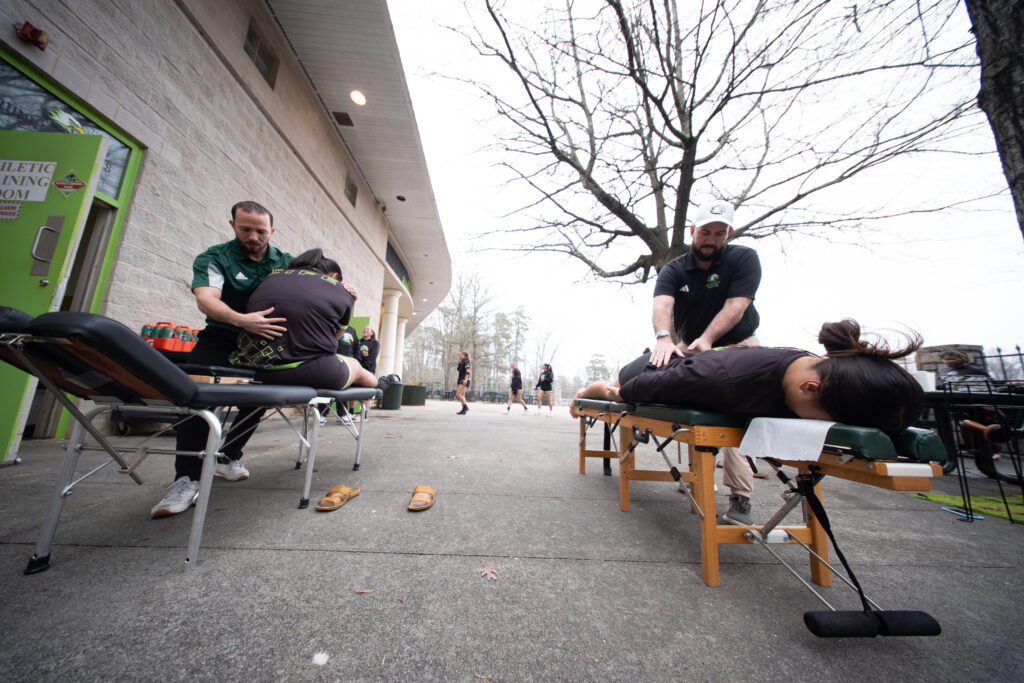
With more than 650 varsity student-athletes competing across 21 sports teams, Life U offers an environment that few institutions – chiropractic or otherwise – can replicate. For Sports Chiropractic students, these athletes are not theoretical case studies. They are active participants in the learning process.

Students gain hands-on experience with performance testing, movement analysis and on-venue observation, all while collaborating with athletic trainers, strength and conditioning coaches, and sports health professionals. Real data, real athletes and real performance settings transform the campus into a living lab for human performance.

How the Sports Chiropractic Track Works

The Sports Chiropractic track unfolds intentionally within the D.C. program:

  • Quarter 8 introduces students to sports chiropractic concepts and expectations, laying the groundwork for applied learning.
  • Quarters 9–12 deliver a four-course Sports Chiropractic sequence that includes performance testing labs, arthrokinematics and neurology, on-venue and sideline care, and a research-based sports practicum.
  • Quarters 13–14 place students in sports-focused PEAK and community-based internships, allowing them to apply their skills in professional, real-world environments.

Rather than waiting until after graduation to engage with sport, students progress through increasing levels of responsibility and exposure throughout their education.

Integrated Learning Across Disciplines

Sports Chiropractic rarely exists in isolation – and neither does Life University’s approach.

Students in the track learn to function as part of a broader performance team, interpreting athlete data, understanding injury risk profiles and contributing to clear, coach-ready and athlete-ready communication. This integrated model mirrors what graduates will experience in performance clinics, collegiate athletics and professional sport environments.

By learning how Chiropractic fits within a multidisciplinary performance strategy, students graduate prepared not only to deliver care but to collaborate effectively.

An Accelerated Academic Opportunity

For students interested in deepening their expertise, the track offers an additional advantage.

Those who complete the Sports Chiropractic coursework can apply those credits toward the Master of Science in Sport Health Science (Sports Chiropractic concentration). With the addition of two Professional Track courses, students can complete nearly half of the master’s degree while earning their Doctor of Chiropractic.

This accelerated pathway allows students to broaden their credentials without extending their overall time in school.

Preparing Graduates for Performance Environments

Graduates of the Sports Chiropractic track pursue diverse roles, including:

  • Team chiropractor
  • Integrated sports-rehab clinician
  • Performance clinic owner
  • Consultant for sport organizations
  • Researcher or educator in sports performance

No matter the setting, the throughline is the same: chiropractors prepared to think critically, act confidently and contribute meaningfully in performance-driven environments.

Efficiency. Performance. Purpose.

Michael Hartfield

As Olympian and Life University D.C. alumnus Michael Hartfield, D.C. (’26), puts it:

“Effort won’t ever beat efficiency – and Chiropractic gave me efficiency.”

That idea lies at the heart of Life University’s Sports Chiropractic track – an educational experience where performance meets principle – and where future chiropractors are prepared not only to support athletes, but also to help them perform at their highest, most optimal level.