arrow-down arrow-left arrow-nav arrow-right arrow-up close db-alumni db-current db-faculty db-fmaily db-future db-online download facebook gallery help linked-in maximize menu minimize pause play print search share twitter youtube zinfolio

How to Choose the Right College Major for a Career in Chiropractic

If you are drawn to health, movement, natural approaches to well-being and the opportunity to help people live fuller lives, chiropractic may already feel like more than a career path—it may feel like a calling. But before you enter a Doctor of Chiropractic program, one important question often comes first: What should you major in as an undergraduate student?

The good news is that there is no single “right” major for becoming a chiropractor. Instead, the best major is the one that helps you complete required prerequisite coursework, build confidence in the sciences and develop the communication, critical thinking and service mindset needed for professional chiropractic education.

Start With the End Goal: Doctor of Chiropractic Admission

Students planning for chiropractic school should begin by understanding the academic foundation required for admission. Life University’s (Life U) Doctor of Chiropractic program may be entered through different academic pathways, including a bachelor’s degree pathway or qualifying college coursework that meets required credit-hour, GPA and science-course expectations. Because requirements can vary based on a student’s prior coursework and admission track, prospective students should work closely with an admissions counselor early in the process.

In general, students should expect to complete coursework in life and natural sciences, biology, chemistry, English composition, mathematics, humanities and social sciences. That means your major matters less than your academic plan. A student in Exercise Science, Biology, Anatomy and Physiology, Nutrition, Psychology or another aligned field may be well positioned if the degree plan includes the courses needed for chiropractic admission.

Look for a Major That Builds a Strong Science Foundation

Chiropractic education is rooted in the study of the human body, nervous system, biomechanics, physiology and patient care. For that reason, many future chiropractors choose undergraduate majors that include courses such as biology, anatomy, physiology, chemistry, kinesiology, exercise science, biomechanics, nutrition or related health sciences.

A science-focused major can help students become familiar with the language and concepts they will encounter in a Doctor of Chiropractic program. It can also help them strengthen study habits, lab skills and problem-solving abilities before beginning professional-level coursework.

Consider How You Want to Serve Future Patients

Choosing a major is also about discovering how your interests connect with the people you hope to serve. A student interested in athletics and human performance may gravitate toward Exercise Science. A student fascinated by cells, systems and lab sciences may find Biology or Anatomy and Physiology especially meaningful. A student who wants to understand behavior, motivation and whole-person wellness may be drawn to Psychology, Biopsychology, Health Coaching or Nutrition.

At Life U, this connection between academic preparation and purpose reflects a broader educational philosophy. Students are encouraged to think not only about what they want to study, but also about how they want to use that knowledge to give, do, love and serve out of their abundance.

Explore Life U Majors That Support Chiropractic Preparation

Life U offers several undergraduate programs that can support students interested in chiropractic, including Biology, Exercise Science, Anatomy and Physiology, Biopsychology, Nutrition, Psychology, Health Coaching and Pre-Doctor of Chiropractic coursework options. Students who know they want to become chiropractors may also explore Life U’s Pre-D.C. pathway, which is designed to help students complete prerequisite coursework while preparing for the Doctor of Chiropractic program.

The key is alignment. The right pathway should help you meet admissions expectations, build academic readiness and stay connected to the kind of future practice or patient population that inspires you.

Questions to Ask Before Choosing Your Major

  • Will this major help me complete the science prerequisites needed for chiropractic admission?
  • Does the curriculum include courses in biology, chemistry, anatomy, physiology or human movement?
  • Will I have access to advising that understands chiropractic preparation?
  • Does this major match my interests enough to keep me motivated and academically engaged?
  • Can this pathway support other health, wellness or graduate-school goals if my plans evolve?
  • Are there opportunities for hands-on learning, labs, internships, research, athletics or community engagement?

Do Not Choose Alone—Get Advising Early

One of the most common mistakes future chiropractic students can make is waiting too long to confirm whether their coursework meets admission requirements. Even motivated students can lose time if they take courses that do not satisfy a prerequisite, miss a required lab or discover too late that they need additional science credits.

That is why early advising matters. An admissions counselor can help review transcripts, clarify requirements and explain available pathways. Academic advisors can also help students build a course plan that supports both undergraduate degree completion and future D.C. program readiness.

The Best Major Is the One That Moves You Toward Your Purpose

There is no single undergraduate major that guarantees success in chiropractic school, and there is no one-size-fits-all path to becoming a chiropractor. What matters most is choosing a major that helps you complete the right coursework, strengthens your understanding of the human body and keeps you connected to the reason you want to enter the profession.

For students who feel called to serve others through chiropractic, Life U offers an environment where academic preparation, hands-on learning and vitalistic purpose come together. Whether your starting point is Biology, Exercise Science, Anatomy and Physiology, Psychology, Nutrition or another pathway, your journey can begin with one thoughtful step: choosing a major that prepares you to become the kind of doctor—and the kind of person—you are called to be.

Ready to explore your path to chiropractic? Connect with Life U Admissions to review your academic options, learn more about the Pre-D.C. pathway and discover how Life U can help you prepare for a future in chiropractic care.
What You Can Achieve With a B.S. in Psychology from LIFE U!

With a Life U B.S. in Psychology, you can pursue careers that use an understanding of human behavior, motivation, communication and leadership across fields like business, health care industry, human services, government, education, sports and law-related settings. Life U’s program specifically emphasizes psychology as both a scientific discipline and a foundation for careers involving human behavior, organizational dynamics and leadership development. Life U describes career opportunities including sports psychology, probation/parole, human resources and psychology-related pathways.

Our psychology programs, both on campus and online, don’t simply equip students with the traditional knowledge and tools of the trade. Life U students also become passionate, curious, lifelong learners and innovators who never underestimate the power of the human mind, body and spirit to overcome, adapt and transform.

Common options include:

  • Human resources / talent development — recruiting, training, employee engagement, organizational culture.
  • Behavioral health or human services support roles — case management, community services, crisis support or intake coordination.
  • Sports and performance-related settings — especially relevant at Life U given its student-athlete population and vitalistic health-focused culture.
  • Probation, parole or corrections-adjacent support roles — applying behavioral insight in structured community or justice-related settings.
  • Research or program coordination — supporting studies, surveys, student success programs or community health initiatives.
  • Graduate school pathways — counseling, clinical psychology, school psychology, social work, occupational therapy, coaching, public health or Life U’s own M.S. in Positive Psychology, which focuses on flourishing, strengths-based research and coaching psychology. Life U offers that graduate program online with tracks in General Positive Psychology and Coaching Psychology.

One important note: if someone wants to become a licensed psychologist, counselor or therapist, a bachelor’s degree is usually the starting point, not the final credential. The U.S. Bureau of Labor Statistics notes that psychology degree holders work across many occupational groups, and several common psychology-related careers—such as counseling roles—often require additional graduate education or credentials. U.S. Bureau of Labor Statistics [bls.gov]

A psychology degree from Life U prepares students to understand people—how they think, grow, adapt, lead and heal. Graduates can apply that knowledge in workplaces, health care environments, human services, athletic settings and graduate study, using psychology as a foundation for helping individuals and communities thrive.

Life U’s educational and clinical philosophy is based on Vitalism—our recognition that the Universe itself is self-conscious, and as such, creates itself as a dynamic system wherein living organisms are self-developing, self-maintaining and self-healing. The concept of Vitalism is foundational to the entire concepts of health and wellness in humans. Our bodies work hard to express health, to maintain health and to recover from illnesses or other conditions that threaten our health.

Vitalism is the guiding philosophy at Life U and is prevalent throughout all our undergraduate, graduate and professional degree programs.

For more information on how to begin your Life U journey, click here.

What Can You Do With a Biology Degree?

A biology degree can open doors to chiropractic, research, environmental science, biotechnology, healthcare, education and beyond.

If you are curious about how living systems work—from cells and genes to ecosystems and human health—a biology degree can give you a strong foundation for a wide range of meaningful careers. For many students, biology is more than a major; it is a launchpad for discovery, service and purpose.

At Life University, Biology students study the science of life in a community grounded in vitalistic thinking, whole-person health and Lasting Purpose. That means students are not only learning scientific concepts; they are also developing the critical thinking, communication and problem-solving skills needed to use science in ways that can help people, communities and the world around them.

Biology Is One of the Most Versatile Science Degrees

One of the biggest strengths of a biology degree is flexibility. Because biology explores the systems and processes that sustain life, it connects naturally to many fields, including chiropractic, laboratory research, environmental science, public health, biotechnology, education and science communication.

According to the U.S. Bureau of Labor Statistics, biology graduates work across a broad range of occupational groups, and many biology-related fields require strong scientific literacy, laboratory experience and analytical thinking. For example, biological technicians typically need a bachelor’s degree in biology or a related field and support scientific work through laboratory setup, sample testing, data collection and observation.

Career Paths You Can Explore With a Biology Degree

A bachelor’s degree in Biology can prepare students for entry-level opportunities, graduate study or professional programs, depending on their goals. Some careers require additional certifications, licensure or advanced degrees, so students should use their undergraduate years to explore options, gain experience and plan their next steps carefully.

Pre-Professional Pathways

Biology is a common choice for students interested in wellness-centered care because it provides a strong foundation in anatomy, physiology, microbiology, genetics and other life sciences. Graduates may continue into professional programs such as chiropractic and other optimal healthcare functioning and well-being industries.

At Life U, Biology can be especially attractive for students who are considering the Doctor of Chiropractic pathway or other health-focused graduate options. This major helps students build the science background needed to understand the human body while also encouraging a broader view of health, human potential and service.

Laboratory, Research and Biotechnology Roles

Students who enjoy experiments, data and discovery may find opportunities in laboratories, research settings, biotechnology companies, quality control environments or university research programs. Common early-career roles may include biological technician, laboratory assistant, research assistant or quality assurance associate.

These roles often involve preparing samples, maintaining lab records, supporting experiments, using specialized equipment and following safety protocols. Students who want to pursue advanced research, science or academic careers often continue into master’s, doctoral or professional programs.

Environmental Science, Conservation and Sustainability

Biology also provides a pathway for students passionate about understanding, preserving and supporting the natural world. Graduates may pursue careers in environmental science, conservation, wildlife biology, ecology, sustainability and natural resource stewardship, contributing to efforts that protect ecosystems, promote environmental well-being and foster a thriving future for all living systems.

For students who care about the relationship between human health and environmental health, this pathway can be especially meaningful. Biology helps students understand how organisms interact with their environments and how science can inform responsible stewardship.

Public Health, Education and Science Communication

Not every biology graduate works in a lab or clinical setting. Some use their science background in public health, community education, nonprofit work, science writing, health communication, teaching or outreach. These paths can be a good fit for students who enjoy explaining complex ideas, supporting community well-being or helping others make informed decisions about health and science.

How Life University Helps Students Build a Strong Foundation

Life University’s Biology program is grounded in a philosophy that is deeply respectful of the innate intelligence of life – the ability of all organisms to be conscious, self-developing, self-maintaining and self-healing. You will graduate with a solid knowledge base in the foundations of biology and cultivate a sense of respect and responsibility for our human role in understanding and influencing both our own living bodies and our place in the world.

Life U’s learning environment also gives students opportunities to connect biology with broader conversations about health, wellness, chiropractic, nutrition, exercise science, psychology and sustainability. That interdisciplinary perspective can help students see how biological knowledge applies to real people, real communities and real challenges.

Questions to Ask as You Explore Biology Careers

  • Do I want to work directly with patients, support clinical teams or pursue a professional healthcare degree?
  • Am I energized by laboratory work, research questions and scientific discovery?
  • Do I care about environmental issues, conservation or sustainability?
  • Would I enjoy explaining science through teaching, writing, public health or community education?
  • Am I willing to pursue graduate school, professional school, certification or licensure if my chosen career requires it?

Your Biology Degree Can Become a Pathway to Purpose

A biology degree does not point to only one career. It gives students a foundation for many possibilities—and the opportunity to shape that foundation around their interests, strengths and long-term goals. Whether you are preparing for chiropractic school, considering research, thinking about environmental science or simply fascinated by the science of life, Biology at Life U can help you begin with purpose.

Ready to explore where a Biology degree can take you? Learn more about Life University’s Biology program, connect with Admissions or schedule a campus visit to discover how your curiosity about life can become a meaningful future.

CLICK HERE NOW TO BEGIN YOUR JOURNEY TODAY!

Exercise Science Vs. Biology: Which Major Is Right for You?

Choosing a college major is a big decision, especially if you’re passionate about health, science and helping others live better lives. If you’re considering a future in healthcare, wellness, research or human performance, two exciting options to explore are Exercise Science and Biology.

At Life University (Life U), both programs provide a strong scientific foundation rooted in a respect for the body’s natural abilities and the principles of whole-person health. While the majors share some common ground, each offers a unique path toward making a positive impact in the lives of others.

What Is Exercise Science?

Exercise Science focuses on understanding how the human body functions, adapts and performs through movement and physical activity. Students study anatomy, physiology, kinesiology, nutrition and human performance while learning how exercise can support health, wellness and optimal function.

At Life U, Exercise Science students learn to work with the body as an innately intelligent organism and explore ways to help individuals achieve optimum health and performance. The program combines rigorous scientific study with practical application, preparing students to work in a variety of health, fitness and sports performance settings. Students also have opportunities to gain hands-on experience working with athletes and community members while applying what they learn in real-world environments.

Exercise Science May Be Right for You If You:

  • Enjoy fitness, sports and human movement
  • Want to help people improve their health through exercise
  • Are interested in strength and conditioning, athletic performance or rehabilitation
  • Prefer hands-on learning experiences
  • Want a career focused on preventive health, wellness and optimum performance

Potential Career Paths:

  • Exercise Physiologist
  • Strength and Conditioning Specialist
  • Personal Trainer
  • Corporate Wellness Specialist
  • Health Coach
  • Sports Performance Specialist
  • Fitness Center Manager

Many Exercise Science graduates also continue their education in fields such as chiropractic, athletic training and other health professions.

What Is Biology?

Biology is the study of living organisms and the processes that sustain life. From genetics and microbiology to ecology and cellular biology, students explore the fascinating systems that make life possible.

At Life U, Biology students learn through a curriculum grounded in respect for the innate intelligence of living systems and the body’s remarkable capacity for organization, adaptation and self-maintenance. In addition to building a strong foundation in the biological sciences, students develop a deeper understanding of humanity’s relationship to the natural world and the responsibility that comes with advancing scientific knowledge.

Life U’s collaborative learning environment also encourages Biology students to connect with classmates and faculty across disciplines, including chiropractic, nutrition, exercise science and psychology, creating opportunities for interdisciplinary study and research.

Biology May Be Right for You If You:

  • Enjoy studying living systems and scientific discovery
  • Are fascinated by genetics, microbiology and cellular processes
  • Like laboratory work and research
  • Are considering a Doctor of Chiropractic degree or other graduate studies
  • Want a versatile degree that opens doors to a variety of science-based careers

Potential Career Paths:

  • Biological Research Technician
  • Laboratory Scientist
  • Environmental Scientist
  • Biotech Professional
  • Public Health Specialist
  • Forensic Science Professional
  • Graduate Researcher

Many Biology graduates continue to Doctor of Chiropractic programs, allied health professions, graduate research programs and other STEM career pathways.

Comparing Exercise Science and Biology

While both majors are rooted in science and share coursework in subjects such as anatomy and physiology, they differ in their focus and application.

Choose Exercise Science If:

You are excited by human performance, fitness and wellness. You want to work directly with people and apply science to help individuals improve their health, movement and quality of life.

Choose Biology If:

You are fascinated by living systems and scientific inquiry. You enjoy exploring how life functions at the cellular, molecular and organismal levels and want a broad foundation that can support a variety of scientific and healthcare careers.

Think of it this way:

Exercise Science asks: How can movement improve health and human performance?

Biology asks: How do living systems function, adapt and thrive?

Neither choice is better than the other. The right major is the one that aligns with your interests, strengths and long-term goals.

Why Study Either at Life U?

Life U offers a unique educational environment where rigorous science, vitalistic principles and whole-person health come together. Students learn in a supportive, collaborative community dedicated to helping people achieve their highest potential through education, leadership and service.

Small class sizes allow for meaningful interaction with faculty mentors, while hands-on learning opportunities help students apply classroom knowledge to real-world situations. Whether you choose Exercise Science or Biology, you’ll develop critical thinking, scientific reasoning and practical skills that can prepare you for graduate studies, professional programs and rewarding careers.

Most importantly, you’ll be part of a university community committed to empowering students to make a positive impact in the world through health, wellness and human flourishing.

Your Future Starts Here

If you’re passionate about health sciences but unsure which major fits your goals, take a closer look at what inspires you most.

Do you see yourself helping people optimize their performance and well-being through movement, exercise and wellness strategies? Exercise Science may be the perfect fit.

Are you drawn to scientific discovery, research and understanding the intricate systems that make life possible? Biology could be the pathway for you.

Whether you’re inspired by human performance, fascinated by living systems or preparing for a future in chiropractic or another health profession, Life U provides the knowledge, hands-on experiences and supportive community to help you turn your passion into purpose.

Ready to take the next step? Explore Life U’s Exercise Science and Biology programs and discover how Life U can help you create a future of health, leadership and impact.

Click Here for more information on Exercise Science or Biology.

Click Here to Apply or Visit today.

From Movement to Meaningful Impact: Your Opportunities With a LIFE University (LIFE U) Exercise Science Degree

If you are passionate about health, human performance and helping others reach their full potential, a Bachelor of Science in Exercise Science from Life University (Life U) can open the door to a wide range of professional and academic opportunities. Designed to blend scientific knowledge with hands-on learning, the program prepares students to make a difference in healthcare, fitness, sports performance and beyond.

Why Study Exercise Science at Life U?

At Life U, Exercise Science students build a strong foundation in anatomy, biology, biochemistry, physiology and kinesiology while learning how these disciplines work together to support human health and performance. The program emphasizes a vitalistic understanding of the body and provides opportunities to apply classroom knowledge through clinical experiences, internships and practicum settings.

Students gain valuable real-world experience through the university’s Center for Health and Optimum Performance (C-HOP), where they can work with athletes and community members, as well as through internship opportunities in cardiac rehabilitation, adult fitness programs, hospitals, corporations and community organizations.

This approach aligns with the broader mission of Life U to serve as a springboard for meaningful growth and purposeful careers in healthcare, athletics, education and community service.

Career Paths for Exercise Science Graduates

One of the greatest strengths of an Exercise Science degree is its versatility. Graduates can pursue careers in a variety of health, wellness and performance-oriented settings.

Strength and Conditioning Specialist

Exercise Science graduates are well-positioned to work with athletes at all levels, helping improve performance, prevent injuries and optimize training programs. The curriculum’s focus on movement science and human performance provides a strong foundation for strength and conditioning careers.

Fitness and Wellness Leadership

Graduates may pursue opportunities as fitness center managers, corporate fitness officers or wellness coordinators. These professionals design and oversee programs that help individuals and organizations improve health outcomes and enhance quality of life.

Sports Performance and Athlete Development

For students interested in athletics, career opportunities may include sports training, coaching support and performance development. The field continues to grow as organizations place greater emphasis on injury prevention, recovery and athletic excellence.

Cardiac and Pulmonary Rehabilitation

The program’s exposure to clinical and rehabilitation environments can help prepare graduates for work in cardiac rehabilitation and related healthcare settings, where exercise is used to support recovery and long-term wellness.

Health Promotion and Community Wellness

Exercise Science professionals are increasingly needed in community organizations and corporate wellness programs. Graduates can help individuals improve fitness, manage chronic conditions and adopt healthier lifestyles through evidence-based exercise programming.

Healthcare and Medical Industry Roles

The scientific foundation provided by the degree also supports careers in healthcare-related sales, wellness consulting and allied health environments where knowledge of human physiology and performance is highly valued.

A Powerful Launchpad for Graduate and Professional Education

For many students, an Exercise Science degree is only the beginning. The curriculum provides excellent preparation for advanced study in healthcare and human performance disciplines.

Doctor of Chiropractic (D.C.)

Because of Life U’s longstanding leadership in chiropractic education, Exercise Science students have a natural pathway toward the Doctor of Chiropractic program. In fact, the university’s Pre-Doctor of Chiropractic pathway specifically identifies the B.S. in Exercise Science as one of the bachelor’s degrees that can be paired with preparation for chiropractic education.

Students interested in a career that emphasizes natural health, movement and whole person care often find chiropractic to be a compelling next step.

Clinical Exercise Physiology

Students interested in working with clinical populations may pursue graduate study in exercise physiology or related health sciences. Advanced education can lead to specialized roles in cardiac rehabilitation, clinical testing and wellness intervention programs.

Sport Health Science

Life U also offers a Master of Science in Sport Health Science that explores human performance through advanced coursework, laboratories, practicums and internships. The program includes areas such as clinical exercise physiology, sport performance, nutrition and sport science and sports chiropractic and rehabilitation.

Preparing for a Future of Purpose

The healthcare, fitness and human performance industries continue to evolve, creating opportunities for professionals who understand how movement influences health and well-being. Through rigorous scientific training, experiential learning and a vitalistic approach to human performance, Life U’s Exercise Science program equips students with the knowledge and skills needed to succeed in a wide variety of careers and graduate programs.

Whether your goal is to become a strength and conditioning specialist, lead wellness initiatives, pursue chiropractic or advance into graduate study, a Life U Exercise Science degree can provide the foundation for a career dedicated to helping others move, perform and live at their best.

Take the Next Step Toward Your Future in Exercise Science

The best way to discover if Life U’s Exercise Science program is right for you is to experience it firsthand. Whether you’re interested in sports performance, healthcare, rehabilitation, wellness programming or continuing to graduate study, Life U offers several ways to explore your future before making a commitment.

Click here for more information or to sign up for a tour.

Freaky Fridays Events Encourage Cross-Disciplinary Collaboration

Freaky Fridays is a cross-disciplinary creative discussion and dialogue series, originally proposed by the Psychology Department with Life University’s (Life U) College of Graduate and Undergraduate Studies (CGUS). This is an innovative way to build community, learn from one another, and keep Friday fun and exciting for students and faculty. The topics and hosts vary, so stay tuned for more updates.

Freaky

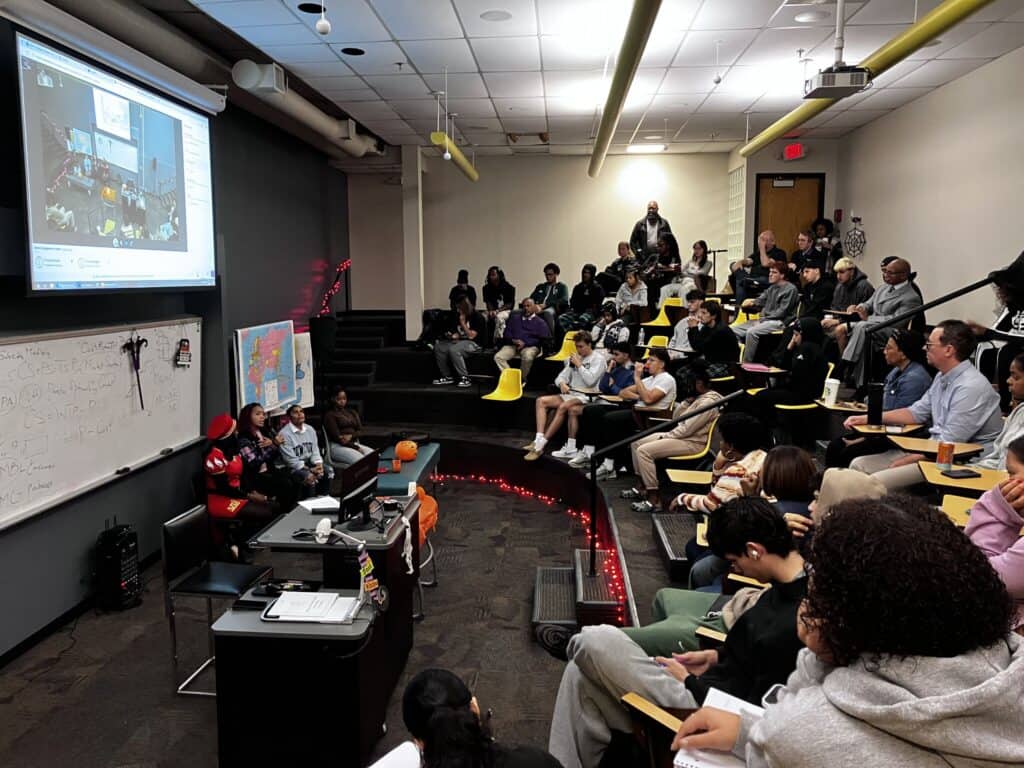
A recent Freaky Friday event held the morning of October 24, 2025, in CGUS 104 was well-received and attended. Titled “Transitioning from Student Athletics to Professional Success,” this special event was hosted by Dr. Marla Thompson on behalf of CGUS. She invited four gracious panelists to share their thoughts and field questions. These individuals were all Life U Women’s Rugby alumni. We extend a heartfelt thank you to Ravyn Santiago, N’keiah Butler, Gracie Martinez and Brittany Wilcox for their participation and candor.

Many dedicated faculty and staff attended and lent their support. Dr. Michael Smith, Dean of Students and representative of the Life After Life Career & Internship Program, emphasized the importance of alumni mentorship and professional development. Dr. Thomas Fabisiak expressed gratitude to the speakers for “lending their time and talent to inspire and inform the next generation of Life University professionals.”

A comment that resonated deeply throughout the room came from alumna Gracie Martinez.

 “I’d rather be the worst person on the best team than the best person on the worst team. The same discipline you use to perform in sports is the same discipline you should apply academically,” Martinez said.

Upcoming Freak Friday Event

Topic: “Health Equity and the Hidden Social Forces Behind Health and Wellness”

Date: November 7, 1:00 P.M. – 3 P.M.

Location: CGUS 104

Hosted by Dr. Christie Kwon, this event will bring together students from her “Introduction to Public Health” and students from Dr. Michael Amos’s class, “Industrial-Organizational Psychology.” Not only will it be a time for these two classes to connect, but it is also an opportunity for intellectual exploration for all attendees from the Life U community.

McAulay Minute- Life U’s MBA for Healthcare Professionals

Running a successful practice takes more than clinical excellence — it takes business savvy. That’s where Life University’s all-new Online MBA comes in. Launching October 2025, this fully online program is designed specifically for practitioners in Chiropractic and other health sciences fields. ✔ Real-world, healthcare-focused case studies ✔ Courses in AI marketing, tax strategy, team leadership & more ✔ Learn from expert Ph.D. faculty ✔ 100% online, self-paced format Whether you’re growing your first practice or expanding into multiple locations, Life U’s MBA equips you with the tools to scale, lead and thrive. Applications now open! Learn more at https://www.life.edu/academic-pages/master-of-business-administration/.

Tackling MBA Myths

Did you know that Life University (Life U) is currently accepting applications for its new online Master of Business Administration (MBA) program? Our MBA program offers more than just career preparation – it’s an investment in a well-rounded business education that empowers students to lead with purpose and positivity. Yet, there are some myths and misconceptions about the value of an MBA education that have proliferated the larger consciousness, so let’s take a beat to assuage some potential concerns that might come up before hitting that possibly intimidating “Apply” button.

Myth 1: Students need a business background and/or degree to qualify for an MBA.

A bachelor’s degree is a standard prerequisite for an MBA, but the degree type is less consequential in terms of consideration. Of course, an undergraduate degree in business will certainly serve as an excellent foundation to build upon, but it is by no means a requirement or a necessity related to an MBA. MBAs are often used as a springboard for individuals looking to jumpstart a second career or launch a new business, so it can even be an asset to study a particular field of interest and combine it with an MBA education. For example, a Life U student might achieve a B.S. in Exercise Science to become an athletic trainer before later pursuing our online MBA to gain the business insight necessary to create their own personal training gym. In essence, we welcome all types of dedicated prospective students into our MBA program and provide the business training needed to not only succeed but thrive.

Myth 2: MBAs aren’t affordable.

An MBA can be very financially reasonable depending on the program selected. Life U charges $345 per credit hour for our MBA, placing us at a lower total cost than many other universities. And for those who choose an accelerated course of study option in a one-year program, additional cost savings can be achieved. We also have an excellent Financial Aid office that can connect you with scholarships, loans and other resources to help fund your education.

Myth 3: MBAs are only for people who want high-level leadership roles.

Everyone, at every level of an organization, has the capacity to be a business leader. This does not necessarily have to mean becoming a high-powered CEO, but it can simply mean performing at your best at any stage. Our three concentrations offered are General, Accounting and Marketing, so an MBA can be helpful at all stages of a career or in a specialized manner if needed.

Myth 4: Online MBAs are not as well regarded by employers.

Generally, hiring managers do not inquire about the format of a degree listed on a résumé, and even if they did, online degrees are typically as respected as traditional degrees. It is true that when online education was in its early infancy, employers were skeptical about its validity, but over time, most have come to see the value that MBA-educated professionals bring, regardless of format. The main caveat to that is that the best success will be achieved when combined with diligent networking and relevant work experience. The Life U MBA program will give you access to industry leaders, executive mentors and exclusive career opportunities to expand your professional impact.

Myth 5: Online MBAs aren’t as rigorous as in-person.

Online programs offer more flexibility, but the rigor is the same or sometimes a step above an in-person equivalent. Typically, the pacing matters more than the physical location in this regard. The Life U MBA can be taken in an accelerated format for a year-long program or stretched out to allow for busier schedules and constraints. Online MBA students can sometimes miss some of the more natural networking that occurs in in-person learning, but that can be mitigated with a bit of creative leveraging of opportunities offered by the University.

Myth 6: MBAs are too male-dominated.

According to Business 360°, women’s full-time MBA enrollment was at 41% in 2022, and all indications point to that percentage increasing over time. Regarding Life U’s current overall student population, it was last reported at an even 50% between male and female students as of the 2024 Fall Quarter. Therefore, we expect our program to be a good mix of students in this measure because many strong women are now investing in a vibrant business education and career.

Myth 7: Only the highest-scoring students will qualify.

To evaluate the whole student, not simply a series of numbers, we are not currently requiring a GMAT score for our MBA program. Instead, we want to evaluate your leadership potential and your experiences. The main essential requirement is a bachelor’s degree with a minimum 3.0 G.P.A. For more information on Life U’s exciting new MBA program, please visit our MBA welcome page.

References

https://post.edu/blog/debunking-7-common-mba-misconceptions/

Launching Unexpected Research Interests in Biology with Megan Cronje- Podcast

Every little girl dreams about one day meticulously studying the pelvic girdles of rodents and how it affects growth, right? Eh, probably not. Yet Megan Cronje as a B.S in Biology student and RISE scholar has developed a taste for research and where it can take her in life. Learning how to probe obscure questions and present her ideas has helped her build confidence and see the possibilities.

Coding and Computer Programming: Exploring a New Career

The Internet is indeed king. So much of our day-to-day life is controlled and organized based on elusive 1s and 0s, hidden code, that we might as well be living in the Matrix. That being said, there is a wealth of career potential in developing coding and computer programming skills, becoming one of the brave builders of this constantly changing world. So how do you know if this line of work is for you? Here are some basics to consider.

What is Computer Programming?

In a nutshell, computer programming is creating a recipe to tell computers and software what you would like to “cook” and how. For those lucky enough to work in the field of computer programming, their days are spent building, updating, testing and fixing software programs using a variety of accepted coding languages. Consistent review of a system’s overall performance is needed, as well as tech support, program updates and identifying the need for fixes to properly support the backend data structure of a site, application or other software. A computer programmer may be called upon in their job to do many complex tasks, such as:

  • Translating the designs and plans of software engineers into functional code.
  • Creating computer instructions comprised of different coding languages to inform a system’s efficient operations.
  • Constant career development to keep up to date on new coding languages in order to improve computer language fluency.
  • Utilizing code libraries to quickly craft multiple lines of code at once.
  • Troubleshooting and testing all programs on a regular schedule after launch to ensure operational effectiveness.

Is this a good career path for me?

Coding may be a fulfilling career for you if you enjoy learning new languages, especially coding languages. An eager interest in emerging technologies would also make coding a viable choice. If you enjoy problem-solving and critical thinking to solve complex technical challenges, this can be a rewarding career path. It can also often provide a good salary and potentially allow for work flexibility depending on where you use your skills. You may find yourself in a 9-5 traditional office work environment, or these skills can be utilized in a hybrid or remote setting depending on employer requirements. According to Indeed, the average annual salary for a computer programmer in the U.S. is $53,626.

The demand outlook for the profession overall has decreased a bit in recent years, a 10% decrease reported from 2023-2033, according to the U.S. Bureau of Labor of Statistics. This is mostly attributed to technological changes and international competition in the industry. This shouldn’t necessarily be a deterrent, as there is still plenty of work available in this field, but it is a reminder that keeping up with new technology and coding language is a key to long-term success as a computer programmer.

Popular Coding Languages

Most employers search for a computer programmer with advanced knowledge of several different coding languages. A bachelor’s degree in the field is often required or at least recommended. Life University, for example, has a stellar B.S. in Computer Information Systems and Technology that will provide a solid basis in the most prominent programming languages. Some common computer languages that you may come across and learn include:

  • Python
  • C++
  • Java
  • JavaScript
  • Ruby
  • Swift
  • Kotlin

Programming certifications are another way to stand out in the industry and attain marketable skills. They may require a course and exam to achieve. Some common examples include:

  • Oracle Certified Associate: Java Programmer
  • Oracle Certified Professional: Java Programmer
  • Microsoft Certified Professional Developer
  • C++ Certified Associate Programmer
  • C++ Certified Professional Programmer
  • Oracle Certified Associate, Java SE 8 Programmer

We hope this serves as a good basis if coding is a desirable career path for you. Happy exploring!

References

https://www.coursera.org/articles/coding-jobs

https://www.indeed.com/career-advice/career-development/is-computer-programming-a-good-career