arrow-down arrow-left arrow-nav arrow-right arrow-up close db-alumni db-current db-faculty db-fmaily db-future db-online download facebook gallery help linked-in maximize menu minimize pause play print search share twitter youtube zinfolio

Eating the Right Carbs Can Lead to Healthy Aging

Let’s face it – most of us don’t like to think about aging. It can feel like an unwelcome chapter where mobility decreases, aches increase and our youthful glow fades. But what if we told you that eating the right kind of carbohydrates could help you age not just gracefully, but healthfully?

According to Eating Well, the key isn’t cutting carbs entirely; it’s upgrading them.

In a new study published in JAMA Network Open, it states, “women who consumed more high-quality carbohydrates and fiber in midlife were significantly more likely to reach older adulthood with good physical and cognitive function – and without major chronic illnesses.”

The study highlights that it’s not about how many carbs you eat, but the type of carbs that matter most.

“Whole plant foods like fruits, vegetables, legumes and whole grains were linked to a higher likelihood of healthy aging. Meanwhile, diets high in refined carbohydrates (e.g., cookies, white-flour pasta, etc.) had the opposite effect.”

In other words, swap the white bread and sugary snacks for whole grains and fiber-rich foods, and your future self may thank you.

This kind of nutritional strategy aligns with the values we promote here at Life University, particularly in connection with our emphasis on sustainable, holistic health. Nourishing your body with the right fuel now can have long-term benefits – not just for your body but for your brain.

Supporting this further, a women’s health study published in the Atlanta Journal-Constitution (AJC) on June 9, 2025, backs the long-term impact of quality carbs. The study, conducted by Tufts University and Harvard University from 1986 to 2016 and involving over 47,000 women, found that the type of carbs consumed influenced whether individuals experienced what they defined as “healthy aging.”

“The researchers defined healthy aging as older adults who avoided 11 major chronic diseases, including cancer, Type 2 diabetes and stroke; experienced no cognitive or physical impairments; and self-reported good mental health. Of the nearly 50,000 women observed, only 3,706 were considered to have experienced healthy aging. That’s around an 8% success rate.”

That statistic might sound daunting, but it also reinforces how critical our nutritional choices are today. Dr. Dominic Fetterly, Director of Life U’s NeuroLIFE Institute, offers this helpful metaphor:

“More complex carbs are going to give us better fuel, and that’s going to be more sustainable over time. It’s like adding a log to a fire instead of putting hay in a fire. Simple sugars are going to burn up really quickly, adding a log is going to add sustainable fuel for longer periods of time.”

Dr. Fetterly also encourages us to explore alternatives to simple sugars as part of our daily choices.

So, what does this mean for your plate? It means shifting from fast-burning, processed carbs to nutrient-dense, fiber-rich options. Think: sweet potatoes over fries, whole grain quinoa instead of white rice, and a fresh fruit bowl in place of that sugary dessert.

At Life U, we believe in a proactive approach to wellness, and that includes understanding how our diet today can impact our quality of life tomorrow. If we can help empower our students, faculty and community to live longer, healthier and more vibrant lives simply by upgrading what’s on our plate, that’s a legacy of health worth investing in.

Have a Heart! Heart Disease Prevention

The heart is a mysterious and confounding organ, much more complex and vital than the cartoony renderings at the end of Cupid’s arrows. Its proper functioning in the human body is critical to a healthy and happy life. This, of course, makes the prospect of heart disease all the more distressing. As recorded by the Center for Disease Control (CDC), heart disease is the leading cause of death in the U.S. for both genders and for most racial and ethnic groups. It is costly both in healthcare dollars and in lives lost, with over 700,000 lives claimed in 2022 alone. Though heart disease numbers and related conditions have improved drastically since the 1950s, there is still much work to be done to fully combat this mostly preventable disease.  Here are some guidelines to get on the right path, adapted from the Mayo Clinic’s article “Strategies to prevent heart disease.”

  • Avoid smoking, tobacco or vaping. All these activities and the products used for them put undo strain on the heart. For non-smokers, do your best to stay away from secondhand smoke as much as possible. The chemicals in tobacco can have damaging effects on the heart and blood vessels. Inhaling cigarette smoke lowers oxygen levels in the blood, leading to increased blood pressure and heightened heart rate because the heart must work harder to get enough oxygen flowing to the brain and body. The sooner a smoker quits, the better because heart disease risk begins to lower even one day after quitting. After a year, heart disease risk becomes roughly half that of smokers and will continue to improve.
  • Movement for at least 30-to-60 minutes per day is advised. Daily consistency is the key here to help reduce heart disease risk, control weight and lower the chances of getting other health conditions that can strain the heart. Conditions such as high blood pressure, type 2 diabetes and high cholesterol are common ailments that exercise can help alleviate or prevent. For those that are just starting or restarting an exercise routine, it may take a while to work up to the recommended full guidelines. Overall, the minimum guidelines for weekly exercise suggest 150 minutes of moderate aerobic exercise, 75 minutes of vigorous cardio and at least two strength training sessions. Do what you can and don’t give up. More obvious benefits will be noticed with boosted intensity, frequency and length of workouts, however.
  • Carrying extra weight, especially around the middle, can be dangerous and raise heart disease risk. Body Mass Index (BMI) uses height and weight to determine if a person is classified as overweight or obese. Use this BMI Calculator to see your base score, though a BMI is not to be used as a sole indicator of a weight issue. Basic BMI calculation doesn’t factor in muscle mass as opposed to excess fat, so other measurements and tests may be required to make a proper assessment. In general, a BMI of 25 or higher is considered overweight and is linked to multiple health risks. Waist circumference is also a factor. A waist of 40 inches for men and 35 inches for women is considered an indicator of higher risk for heart disease.
  • Prioritize good sleep. Those of us that don’t get enough sleep put themselves at a higher risk for obesity, high blood pressure, diabetes, depression and heart attack. Seven hours minimum at night is recommended for adults. Setting a sleep schedule, going to bed at the same time each night and rising at the same time each morning are good ways to support this. If you still feel tired even after having an adequate sleep schedule, it might make sense to ask your healthcare team about being evaluated for obstructive sleep apnea. This condition often comes with symptoms such as snoring, short periods of halted breathing and waking up feeling unable to breathe. Sleep apnea has several health risks, including increased heart disease risk. Proposed sleep apnea treatment may involve losing weight or using a continuous positive airway pressure (CPAP) machine to keep your airway open during sleep.
  • Stress management is an often-overlooked health factor, but it can raise blood pressure and heart disease risk. Avoid unhealthy stress coping mechanisms, such as excess comfort eating, drinking or smoking. Instead, do your best to be physically active and turn to stress-reducing activities like relaxation, mindfulness, meditation or yoga. If stress becomes unmanageable, it is important to seek treatment and/or therapy for longer-term conditions such as depression and anxiety.
  • Don’t forget to get regular checks of blood pressure and cholesterol. Type 2 diabetes screening is recommended beginning at age 45.
  • Keep up with self-care to prevent infections. Gum disease is a risk factor for heart disease, so remember to brush and floss daily, as well as attend regular dental checkups.

Heart Healthy Diet Ideas

(Adapted from Mayo Clinic’s Article, “Heart-healthy diet: 8 steps to prevent heart disease”)

The battle of preventing heart disease often begins at the end of your fork. Watching what you eat, combined with appropriate exercise, can go a long weight to ensuring a happy, healthy heart.

  • Remember to eat more fruits and vegetables with a limited amount of processing, added sugar or salt.
  • Choose whole grains whenever possible, at least half the grains consumed in your diet. Healthy options include whole grain farro, quinoa and barley.
  • Not all fats are created equal. Try to avoid trans fats as much as possible. Saturated fat should make up less than 6% of total daily calories, according to The American Heart Association. Examples of recommended healthy fats include olive oil, canola oil, vegetable oils, nut oils, avocados, nuts and seeds.
  • Seek low-fat protein sources, such as lean meat, fish and poultry. For vegetarians or those cutting down on meat, legumes such as beans, peas and lentils are also good low-fat sources of protein.
  • Reduce sodium as much as possible by opting for herbs, spices and other alternatives. If seeking canned foods, look for low-sodium versions. The same goes for condiments and sauces. Fresh, unprocessed foods will contain little to no sodium. This allows you to control how much sodium you might like to add, just for flavor.
  • Meal planning can be a life saver, making sure you don’t turn to a fast-food meal just because you don’t have a plan for dinner.
  • If you do occasionally have a treat or overindulge, give yourself some grace. The important thing is to maintain an overall healthy diet.

Portion: Keep things in proportion with proper portion sizes. Most people have no clue what a recommended serving size is for most of their favorite foods. Using a small plate or bowl can help improve portion control. Other tips include:

  • Make a point to eat low-calorie and nutrient-rich fruits and vegetables. It can also help to eat these before moving on to heavier foods on your plate.
  • Limit the amount of processed and high-calorie foods in your diet.
  • Be mindful of how many servings you are consuming. Serving sizes are intended as a specific amount, defined often in cups or ounces. Pasta is typically a ½-cup serving, or about the size of a fist. A meat serving is about 2 to 3 ounces, about a deck of cards.
  • How many servings is recommended per person daily can fluctuate. Overall, it is best to be mindful of what you consume, eat slowly and listen to your body so you don’t overeat.

Interested in an exciting career in Nutrition? Learn more about Life University’s B.S. in Nutrition program. 

Healthy Twists on Southern Cooking

Life University’s scenic 110-acre campus is situated in Marietta, Georgia, just around the corner from Atlanta. Needless to say, many of us grew up with southern comfort food as part of our culture and our plates. Fried chicken, mashed potatoes, green bean casseroles and so many more familiar dishes are a staple at community potlucks. Yet, it isn’t a secret that the southerner’s diet plan isn’t exactly the healthiest or most sustainable on a regular basis. How can we enjoy our time-honored favorites while also keeping nutrition and health in mind?

Lightly Southern

Piedmont Healthcare shares some tips from Nancy Waldeck, a chef for Cancer Wellness at Piedmont, in their article “How to make healthier Southern food”.

  • Select healthier fats. Remember to limit the amount of fat and salt in your dishes. You can do this through roasting, baking, sauteing or grilling instead of frying. Air frying has become a popular and healthier alternative to traditional frying, though it requires owning an air fryer that will cost about $100 dollars. Alternatively, use healthier oils like olive oil or avocado oil instead of butter for cooking and flavoring.
  • Herbs and spices add nutrition and plenty of flavor, so less salt is needed.
  • Roasting or grilling vegetables help improve the natural sweet taste rather than frying or adding lots of meat to the plate.
  • Fruity desserts are a southern staple, so whip up a fruity dessert and top with chopped nuts instead of a crust. Try to avoid adding extra sugar and cream as much as possible.

Lighter Southern Cooking Resources 

Interested in a career in Nutrition? Visit life.edu and learn more about Life University’s B.S in Nutrition program.

Preferred Cooking Methods for Stellar Nutrition

Ever hear the phrase “Food is medicine”? Though this common aphorism is a generalized blanket statement, it is true that a balanced diet can serve as a foundational basis to support the human body to function at its full potential. Yet, the exact mechanics of how to preserve peak nutritional value in our food can be confusing and daunting with the myriad never-ending to-dos on our mental lists taking up most of the space. Healthline lets this thought process cook in their article “How Cooking Affects the Nutrient Content of Foods,” examining popularized cooking methods for how much nutritional value remains in the finished product.

How food is prepared has a larger impact on the nutritional value passed on, and we aren’t just talking about when a chef decides to drown your dish in butter. Certain nutrients are often lost in varying degrees during cooking time, such as water-soluble vitamins, fat-soluble vitamins and minerals. A few key vitamin and mineral groups in these categories include vitamin C, B, A, D, E, K, as well as potassium, magnesium, sodium and calcium. Cooking does provide needed improvements in digestion and absorption of many nutrients, but being aware of what may be lost in the process is instructive.

Nutrient Retention Tips

Here are some helpful ways to get the most nutrition out of your food when cooking:

  1. When poaching or boiling, limit water use to what is necessary.
  2. If possible, remember to consume the liquid left in the pan after cooking vegetables. Perhaps it can be incorporated into a sauce.
  3. For flavor and added nutrition, reincorporate juices from meat that drip in the pan.
  4. It doesn’t appeal to peel your vegetables. Unpeeled veggies retain more fiber and nutrient density.
  5. Smaller amounts of water in cooking reduces loss of vitamins C and B.
  6. Plan to eat any cooked vegetables within a day or two, as their vitamin C content may continue to decline when the cooked food is exposed to air.
  7. If possible, cook food whole so that less of the item is exposed to heat and water. This will sometimes extend cooking times, however, so it may defeat the purpose if the food product is particularly large. Cut food as desired after cooking, if possible.
  8. When it makes sense to do so, cook vegetables for only a few minutes whenever possible.
  9. When safe do so, consider using shorter cooking times for meat, poultry and fish. Invest in a meat thermometer to make sure your food has reached safe temperatures.
  10. Some cooks add baking soda to vegetables to help maintain color, but it isn’t recommended because vitamin C will be lost to the alkaline environment created.

Overall, there isn’t a perfect universal cooking method that retains peak nutrients, but being thoughtful about your approach can make a big difference.

Cooking with Water

Water-based cooking is the cooking type with the most loss of water-soluble vitamins. Water-based cooking means that a food item is poached, simmered or boiled. Generally, the difference relates to the temperature used, less than 180°F to poach, 185-200°F to simmer and 212°F to boil.

Vegetables often serve as an excellent vitamin C source, but a significant portion of the nutrient is lost to cooking. When boiled, broccoli, spinach and lettuce can lose roughly half their vitamin C content, as the nutrient is water-soluble and heat sensitive, leaching out of veggies when immersed in hot water. Meat can also lose nutritional content when simmered, as B vitamins are sensitive. Up to 60% of thiamine, niacin and other B vitamins may cook out into the juices that run out of the meat. However, if the liquid of the meat is consumed, all of the minerals and 90% of B vitamins are still present. In regard to fish, boiling is encouraged compared to frying or microwaving, as it will better preserve vitally important omega-3 fatty acids.

To Grill or To Broil?

Grilling evokes memories of summer cookouts, campfires and sharp grill lines on a juicy steak or a scrumptious veggie kebab. Broiling is the lesser-known twin method, as grilling mostly means to cook on a grilled service from below while broiling uses a heat source above. Both have similar effects to food, with up to 40% of B vitamins and minerals potentially lost in nutrient-rich juice or droppings. If some of that content is collected, it may preserve some nutritional value.

However, if you are a certified grill master, remember to clean your grill often with safe cleaners. If lots of food and fat is left to char, it can create excess polycyclic aromatic hydrocarbons (PAH) that can become carcinogenic.

Surprising Facts About Your Microwave 

The humble microwave gets a bad rap, hogging counterspace and mostly being viewed as a quick way to warm up day-old pizza. Yet, its shortened cooking time and reduced heat exposure can have some benefits in nutrition preservation. More study is required to know the full potential impact of microwaving on nutritional values, but it is positive to see that microwaving green vegetables only loses about 20-30% of its max nutritional value, a significant improvement compared to other cooking methods.

Losing Value When Turning up the Heat 

As a general rule, the longer and the hotter you cook something, the more nutrition is lost. Let’s look at a few other popular cooking methods to see how they compare in this equation:

Roasting and Baking- This term refers to cooking with dry heat, often in an oven. They are somewhat interchangeable, but roasting usually refers to meat or vegetables, while baking refers to baked goods like bread, muffins or cakes. Loss of vitamins is minimal with this method, with the exception of B vitamins in roasted meat.

Sauté and Stir-Fry- These techniques require food to be cooked in a saucepan over medium heat in small amounts of oils or butter. Stir-frying is similar to sauté, but it requires higher temperature and shorter cooking time. Short cooking times with no water help prevent loss of B vitamins, and adding some fat can actually improve absorption of nutrients and antioxidants found in plants. Stir-frying can reduce vitamin C levels significantly in produce such as broccoli and red cabbage.

Frying- Traditional frying in oil is needless to say not the healthiest cooking method in general, but let’s see how it effects nutritional value for those that enjoy fried foods in moderation. Frying fish, especially fatty fish such as tuna, is not recommended due to significant loss of omega-3s. In this case, baking is a better bet.

However, frying can have some health benefits in certain situations, such as preservation of vitamin C and B vitamins, as well as increased fiber in potatoes. Care needs to be taken with frying because oil heated to a high temperature for long time periods can create toxic substances called aldehydes, which are linked to increased risk of developing cancer or other diseases. Oil type, temperature used and cooking time all play a role in how much aldehyde is produced. It can also be risky to reuse reheated oil, as it can lead to additional aldehyde forming. As a rule of thumb, try not to overcook your food if you decide to fry something and try to select a healthy cooking oil if possible, such as coconut oil or olive oil.

Steaming- Steamed vegetables retain their nutrients remarkably well, with minimal loss. Some people do find steamed vegetables bland, but seasoning, oil or butter can rectify that.

Interested in learning more about Nutrition as a career path? Visit Life University’s page for the B.S. in Nutrition program.

Dietary Detoxes or Cleanses: Healthy or Harmful?

Oh boy. Your friend has a giant mixer bottle of unidentifiable greenish liquid again, claiming they are on another vague cleanse. Are dietary detoxes or cleanses actually doing people any good, or are they yet another dangerous diet scam? Healthline weighs in for their article “Weight Loss Cleanses: Do They Work?

The theory behind a cleanse implies that there are impurities within our bodies that require cleansing. There isn’t a standard for what constitutes a legitimate weight loss cleanse, but in general, the idea is to remove something from a diet or lifestyle to encourage health or weight loss. Typically, cleanses are short and follow a set of instructions for dietary changes to facilitate specified goals. Usually, a cleanse or detox lasts between one-to-30 days.

One type might focus on reducing weight, while another claims to promote fat loss in target body areas. The methods are widely varied. Some suggest herbal supplements or dictate exercises, while others only home in on food types consumed. Cleanses and detoxes are similar diet plans with some overlap, especially as there isn’t a scientific standard to follow. The main difference can be found in the motivation behind the diet type.

Detox or detoxification diets rely on the premise that your body needs help to eliminate harmful substances or toxins from your system in order to achieve optimize health. The referenced toxins could be any dietary or environmental substance that might cause harm, such as pollutants, heavy metals, industrial chemicals, pesticides or allergens. A detox diet might ask you to fast; take herbal supplements or laxatives; eliminate many foods; or use a sauna. Some are said to be detoxing specific organs, like the liver, kidneys or colon. Weight loss is a common goal of detoxes, but they can often be said to address a wide range of physical ails, such as allergies, headaches, migraines, fatigue, digestive trouble, nausea, hormone imbalance, acne and skin rashes. Yet, as detoxes grow in popularity, there is no scientific evidence to back up the true effectiveness of these regimens.

Cleanse diets on the other hand emphasize healthy and nutrient-dense whole foods to replace unhealthy or allergenic goods in an effort to support health overall. Cleanse dieting is thought by some to promote weight loss and alleviate digestive issues or food cravings. Foods often eliminated in a cleanse diet are sugar, processed foods, dairy, soy, corn, wheat and gluten.

Popular Programs on the Market

 Another day, another new diet that pops up in a Google search. Here are a few you might have heard of or tried:

  • Juice Cleanses: This is usually three-to-seven day’s worth of only consuming juice and water. Often there is a specified order of fruits and vegetables to be consumed, in juice form.
  • 10-Day Green Smoothie Cleanse: Instead of meals, participants consume green smoothies made from various fruits and veggies. An unlimited amount of non-starchy vegetables is also allowed during this time.
  • BeachBody Ultimate Reset: A commercial 21-day diet that seeks to eliminate dairy, eggs, sugar and processed food while including nutritional supplements, probiotics and herbal laxatives.
  • Master Cleanse: Aka the Lemonade diet; this diet cleanse only allows a mixture of lemon juice, water, cayenne pepper and maple syrup for 10 days.

What Science Has to Say

When making major dietary decisions, ideally there should be some solid research basis behind making any sort of drastic changes in what is or is not consumed in a healthy diet. Unfortunately, there have not been any scientific studies published on any public weight loss cleanse or detox, so claims of health benefits do not yet have quantifiable evidence to back them up. The closest parallel that can be drawn in terms of a similar diet with researched benefits is a short-term, very-low-calorie diet (VLCD).

A VLCD is often used for obese people and several studies have shown significant weight loss, as well as other possible benefits like lowering cholesterol and blood pressure. A VLCD is a diet of 450-800 daily calories, but they are more strategic than weight loss cleanses in that they are closely monitored by healthcare professionals and take special care to preserve nutritional balance. Weight loss cleanses do not seem to be as concerned with maintaining vital nutrients, such as protein.

Most notably, these diets are short-term fixes that might help someone look and feel good in the very immediate short-term, but they offer no plan for long-term health or healthy eating habits.

 Possible Dietary Dangers

The U.S Department of Health and Human Services published an article titled “’Detoxes’ and ‘Cleanses’: What You Need To Know” that brings special attention to the misinformation and riskiness of this segment of the diet industry complex. There have been multiple incidences where the U.S. Food and Drug Administration (FDA) and the Federal Trade Commission (FTC) have had to step in and act against multiple companies found to be selling detox/cleansing products containing illegal or possibly dangerous ingredients, marketed with unsubstantiated claims that the products could treat serious diseases and other shocking violations.

Beware of what may be contained in prepackaged juice cleanses or detoxes. They may not be properly pasteurized or processed to kill harmful bacteria that can cause sickness, which puts the elderly and those with weakened immune systems at the most risk. Juices can sometimes be made from foods high in oxolate, such as spinach and beets. Large quantities of high-oxalate juice can increase risk for kidney complications. Not to mention, drinking lots of water, juice or herbal tea without any food for days on end can lead to dangerous electrolyte imbalances.

Final thoughts

The internet is truly the new wild west, and you just can’t believe everything you read, especially when it comes to what to put into your body. Whether or not a dietary plan is right for you needs to be discussed thoroughly with your primary health professionals, especially if it is a drastic change. Detoxes and cleanses appear to share a fair amount of concerning similarities to disordered eating, so a safer bet is to try a more gradual and balanced diet and exercise plan.

Interested in Nutrition as a career? Explore Life University’s B.S in Nutrition program at this link.

Fun Healthy Food Ideas for Fall Parties

If you live in the South, you know better than to show up at the potluck empty handed. But for the sake of avoiding belly bloat and not busting out of your sick Deadpool costume, you want to bring something healthier than the usual sugar bombs and greasy snack foods. No fear this year, as these eats are festive and nutritious.

Candy Corn Parfait

Candy corn is so cute, but the sugar content is crazy. To get the look without the guilt, take a mason jar and put pineapple on the bottom. Then, put an orange fruit or fruit mix of your choice in the middle (mandarins, peaches, mangos). Finally, add a dollop of whipped cream on the top. Fresh and fruity!

Snack O’ Lanterns

Take a navel orange (or other orange large enough) and cut off the top. Remove the fruit on the inside while leaving the shell of the orange. This is pretty similar to standard procedure for a regular jack-o-lantern, just in mini form. Cut funky, spooky faces into the shell as you would a standard jack-o-lantern. Then, fill the inside up with the chopped orange slices and any other small cut-up fruit that you prefer. It’s a clever individualized portioned treat. For a veggie alternative, you can do the same thing with bell peppers (preferably orange or yellow) filled with scrumptious veggies and served with side dips like hummus and light ranch.

Halloween Roasted Veggies

All your favorite roasted veggies can be turned festive with creative cutting, most easily achieved with meat shears. Take a potato, cut it in a dome shape and cut out some eyes. Boom – ghost! Carrot slices make great mini jack-o-lantern faces, and beets can easily be cut into a witchy hat shape. Don’t forget to add delicious herbs, garlic, rosemary, salt and pepper to taste. Roasting for 20 minutes in the oven at 400 degrees should work for most roast veggie tables.

Monster Wraps

Instead of the Monster Mash, let’s nosh on some yummy Monster Wraps. Spinach or red pepper wraps make a great base to turn a basic veggie wrap with a lean protein into a Frankenstein or a monster of your own design. Creative topping of the wrap surface will leave friends amused and hungry for more.

Find the recipe at Woman’s Day »

Batty Energy Bites

You need a burst of energy because someone started The Time Warp dance? No problem. These simple and adorable bites are rolled balls of oats, peanuts butter, dark chocolate and honey.

Find the recipe at Chelsea’s Messy Apron »

Festive Banana Ghost/Mummy Popsicles

Not every Halloween night is a chilly affair. If this year turns out to be a warm one, cool it down with cute ghost banana popsicles. Dip in a Greek yogurt mixture and pop them in the freezer until the coating sets. Then, drizzle on yummy toppings such as peanut butter or a light amount of chocolate or caramel. Chocolate chips or M&Ms make good eyes to complete the ghostly look.

Find the recipe at Well Plated »

Pumpkin Mummy Cookies

If you or a friend require a gluten-free diet, these almond flour-based cookies are to die for. It’s a soft, delectable cookie decorated with funky icing strips to create the mummified flair.

Find the recipe at the Eating Bird Food blog »

Homemade Warm Apple Cider

Need a little warm apple spice in your life? Whip out the crockpot and enjoy a delicious beverage with notes of apples, oranges and aromatic, soothing spices like nutmeg, cinnamon and clove.

 Find the recipe at Jessica in the Kitchen »

Adapted from Prevention’s “30 Healthy Halloween Treats, Snacks, and Recipe Ideas the Whole Family Will Love”

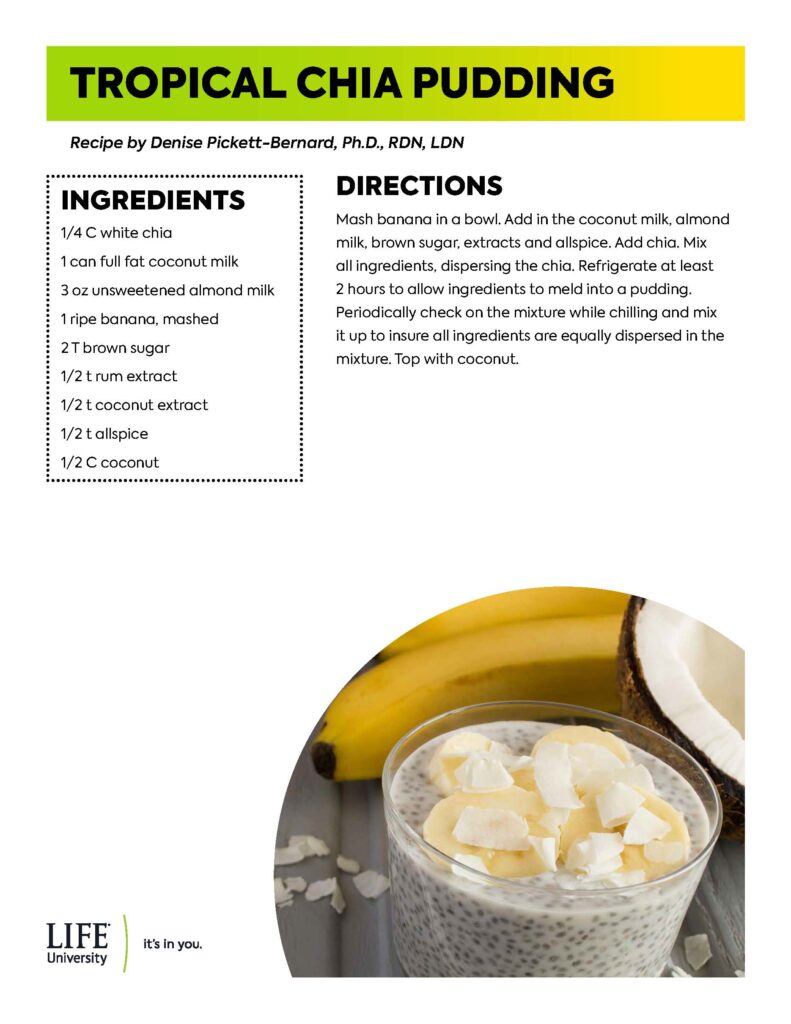
Recipes for LIFE: Tropical Chia Pudding

Lu Recipe Tropicalchiapudding

Tropical Chia Pudding

Recipe by Denise Pickett-Bernard, Ph.D., RDN, LDN

INGREDIENTS

1/4 C white chia

1 can full fat coconut milk

3 oz unsweetened almond milk

1 ripe banana, mashed

2 T brown sugar

1/2 t rum extract

1/2 t coconut extract

1/2 t allspice

1/2 C coconut

DIRECTIONS

Mash banana in a bowl. Add in the coconut milk, almond milk, brown sugar, extracts and allspice. Add chia. Mix all ingredients, dispersing the chia. Refrigerate at least 2 hours to allow ingredients to meld into a pudding.Periodically check on the mixture while chilling and mix it up to insure all ingredients are equally dispersed in the mixture. Top with coconut. 

Into the Pale of the Paleo Diet

Everyone wants to look and feel their best, but with the swirling contradictions and misinformation floating around the Information Superhighway, no one knows which way is up. What will work in the real world to promote health and weight loss that lasts? Going Paleo is one such buzzword dietary regimen that raises an eyebrow regarding its validity and safety, so let’s breakdown what it is to start with.

The Paleo Plan

(Adapted from the Mayo Clinic’s article, “Paleo diet: What is it and why is it so popular?”)

Paleo, short for Paleolithic, is designed to mimic the eating plan of early humans in the Paleolithic era, roughly 2,500 to 10,000 years ago. It might also be called the Stone Age Diet or Caveman diet. The idea is that overly processed foods are best avoided because the human body may not have learned to adapt to certain processed foods like grains and dairy.

If this evolutionary failure to adapt is to be believed, it has contributed to diseases such as obesity, heart disease and diabetes.

The modern paleo diet focuses on vegetables, fruits, lean meats, fish, eggs, seeds and nuts, things that could have been consumed in Paleolithic times. In more recent terms, it would be things that you could conceivably find on a farm without much or any additional processing. A person might turn to a paleo diet to lose weight or maintain a healthy weight. Reducing risk of heart disease or related risk factors is also a potential motivator.

Food that can be added to a Paleo plate include:

  • Fruits
  • Vegetables
  • Nuts and seeds
  • Eggs
  • Lean Meats, preferably grass-fed or wild game
  • Fish, with a preference for those with high omega-3s, such as salmon, mackerel and albacore tuna
  • Fruit and nut oils, like olive or walnut

Foods excluded from Paleo are:

  • Grains like wheat, oats and barley
  • Legumes, including beans, peanuts and lentils
  • Dairy products like milk and cheese
  • Added salt or sugar
  • Refined sugar
  • Starchy vegetables, like corn, peas and white potatoes
  • Highly processed food products, like chips or cookies

There appears to be some recommending effects from a paleo diet, at least in the short term. However, research on its effects in the long and short term are limited at best, and not much exists in comparative research to diets more inclusive to all food groups. Existing paleo diet studies have mostly followed small groups of people and only lasted from a few weeks to a few months. The definitions and dietary requirements also varied from study to study, so clinical consistency is not met in order to allow people to have a true idea of what to expect, especially in a longer time frame.

The small, short-term studies available point to positive trajectory in weight loss, blood pressure and cholesterol. A large self-reported study was conducted with young adults in Spain, showing paleo had a link to lower heart disease or cardiovascular risks. This lowered risk was most likely from avoidance of highly processed foods and instead opting for lots of fruits and vegetables. However, longer trials with larger groups of people on different diets are what is needed to get a full view of the ramifications of a paleo diet lifestyle.

Simplicity and cutting out excessively processed food are all well and good, but the full sweep nature of all that paleo seeks to cut out raises nutritional concerns and questions. Detractors of the movement are most concerned about the lack of whole grains, legumes and certain healthy dairy sources. These major sections of the food pyramid provide excellent proteins, fiber, vitamins and minerals. These foods are also often more affordable than the alternative sources suggested by Paleo

Paleo is prohibitively expensive for some. Wild game and grass-fed meat are not as readily available and come with a hefty increase in the grocery bill. A mediterranean diet is similar and does not have the possible risks of Paleo. In general, it is best to consult thoroughly with a dietitian and a primary care professional before making drastic dietary changes.

For more about Nutrition as a rewarding career path,  take a look at Life University’s B.S. in Nutrition degree program.

Should You Key Into the Keto Diet? A Nutritional Review

High-to-medium protein, low-carb diets ending in the letter “O” appear to be all the rage in current dieting culture. Everyone wants a safe, fast and effective way to lose weight and hopefully keep it off in the long term. The Ketogenic or Keto diet is one such popularized dieting plan that needs further scientific study and analysis to truly determine its efficacy and safety. The Harvard School of Public Health published its “Diet Review: Ketogenic Diet for Weight Loss” to examine what is currently known about the magical sounding Keto.

What’s Keto?

The keto diet is a low-carb, fat-rich eating plan with a history spanning centuries as a treatment booster for specific medical conditions, such as medication resistant pediatric epilepsy. It has also been utilized in closely monitored circumstances for polycystic ovary syndrome, cancer, diabetes and Alzheimer’s. Yet, the diet has gained attention as a possible weight loss tool due to the hyper fixation around low-carb diets spanned by the Atkins diet of the 1970s. Other low-carb diets are moderate in fat, but the ketogenic diet sets itself apart with its recommended 70-80% fat content.

The ketogenic diet is intended to deprive the body of glucose and encourage the body to use fat converted into ketones as its primary fuel source. The brain needs glucose most readily, at roughly 120 grams daily, as it can’t store it. When someone fasts or cuts out carbs, the body uses stored glucose from the liver and even temporarily breaks down muscle for its glucose needs. Over three-to-four days of continued carb reduction and depleted glucose, the hormone insulin decreases in the blood as the body uses fat to fuel itself. The ketone bodies are produced from the liver and fat, fueling the body instead of glucose.

This process of ketone bodies accumulating in the blood is called ketosis, which healthy individuals naturally experience in fasting periods like after sleep or after intense exercise. The primary immediate health concern with a ketogenic diet is if the diet will propel the body into ketoacidosis, which is when blood levels of ketones reach a harmful excessive level in the body and a person’s insulin production is not enough to combat it. Ketoacidosis is most common for type 1 diabetics due to their lack of insulin production and in rare cases, nondiabetics on prolonged extremely low-carb diets. The risks of ketoacidosis and the rate of ketosis varies by individual, fluctuating based on factors such as body mass index and resting metabolism.

The Keto Menu

Like most diets, it isn’t an exact science for the ratio of nutrients that a person should take in to maximize the desired effect. In general, the suggestion for keto diet is 70-80% fat from daily calories, then 10-20% protein and 5-10% carbs, less than a medium bagel. Protein is limited in this diet compared to other low-carb programs because it can prevent ketosis. A keto diet aims for enough protein to preserve lean body mass and muscle but still allows for ketosis.

There are several popular keto plans out there, so suggested foods may vary, but in general, keto diets permit:

  • Cocoa butter, lard, poultry fat, and most plant fats (olive, palm, coconut oil)
  • High-fat foods like avocado, coconut meat and certain nuts (macadamia, walnuts, almonds, pecans)
  • Seeds (sunflower, pumpkin, sesame, hemp, flax)
  • Some dairies, though it depends on the level of lactose. Butter and hard cheeses are sometimes allowed due to lower amounts of lactose.
  • Pork, bacon, wild caught fish, organ meats, eggs and tofu are on the list. Grass-fed beef and free-range poultry are recommended as they have slightly higher levels of omega-3 fats. In general, protein is moderate in this diet.
  • Non-starchy vegetables, such as leafy greens, cauliflower, broccoli, asparagus, Brussels sprouts, onions, mushrooms, summer squash, cucumber and celery.
  • Fruit is limited, mostly berries in small portions.

Foods not allowed on the keto diet include:

  • Any and all whole or refined grains, flour products
  • Added or natural sugars in food and drinks
  • Starchy vegetables like butternut squash, corn or potatoes
  • Most fruits and all fruit juices
  • Legumes, especially beans, lentils and peanuts
  • Most beers and wines (unless low-carb) or any beverages with added sweeteners.

The Research and Possible Benefits

 In the short-term, a ketogenic diet has been shown to promote beneficial metabolic changes. Weight loss has been seen to improve, as well as insulin resistance, high blood pressure and cholesterol or triglyceride levels. It is theorized that keto could be helpful for type 2 diabetes as well. Some keto supporters have noticed less food cravings and a decrease in appetite. There are theories that the increased ketones in the blood also help curb appetite, as well as more efficient calorie expenditure and promotion of fat loss instead of body mass. Though there have been many studies conducted on keto diets, they were all in the short term of roughly six months or less, so it’s unclear, at best, what a keto lifestyle over years might look like. Not to mention, over 50% keto attempters end up becoming frustrated by the strict dietary rules and cannot keep up the diet for a significant period, according to another Harvard Keto related article.

Possible Dangers of Keto

 A high-fat diet is most likely not for everyone, as it might prove difficult to maintain and produce unwanted symptoms. Not to mention, restricting carbs severely can increase hunger and fatigue, as well as lower mood and increase irritability, headaches and confusion.

Essentially, we don’t know what we don’t know in terms of keto side effects in the long-term, but there is some concern over possible increased risk for kidney stones, osteoporosis and higher uric acid levels that can result in gout. Nutrient deficiencies could also arise, such as lack of vitamin C due to fruit restriction. There are a lot of unanswered questions surrounding who this diet is safe for and in what periods of life.

Summary

Overall, the weight loss effects of a keto diet compared to conventional weight loss plans has not yet shown to be significantly different, so the benefit to most dieters does not seem to be present compared to the work involved. Like with any other major dietary plan, it is crucial to consult a dietitian and your primary care professional to ensure a safe and effective nutritional plan of action.

To learn more about Nutrition as a career, please visit Life University’s Bachelor of Science in Nutrition page.

References

  1. Paoli A, Rubini A, Volek JS, Grimaldi KA. Beyond weight loss: a review of the therapeutic uses of very-low-carbohydrate (ketogenic) diets. Eur J Clin Nutr. 2013 Aug;67(8):789.
  2. Paoli A. Ketogenic diet for obesity: friend or foe?. Int J Environ Res Public Health. 2014 Feb 19;11(2):2092-107.
  3. Gupta L, Khandelwal D, Kalra S, Gupta P, Dutta D, Aggarwal S. Ketogenic diet in endocrine disorders: Current perspectives. J Postgrad Med. 2017 Oct;63(4):242.
  4. von Geijer L, Ekelund M. Ketoacidosis associated with low-carbohydrate diet in a non-diabetic lactating woman: a case report. J Med Case Rep. 2015 Dec;9(1):224.
  5. Shah P, Isley WL. Correspondance: Ketoacidosis during a low-carbohydrate diet. N Engl J Med. 2006 Jan 5;354(1):97-8.
  6. Marcason W. Question of the month: What do “net carb”, “low carb”, and “impact carb” really mean on food labels?. J Am Diet Assoc. 2004 Jan 1;104(1):135.
  7. Schwingshackl L, Hoffmann G. Comparison of effects of long-term low-fat vs high-fat diets on blood lipid levels in overweight or obese patients: a systematic review and meta-analysis. J Acad Nutr Diet. 2013 Dec 1;113(12):1640-61.
  8. Abbasi J. Interest in the Ketogenic Diet Grows for Weight Loss and Type 2 Diabetes. JAMA. 2018 Jan 16;319(3):215-7.
  9. Gibson AA, Seimon RV, Lee CM, Ayre J, Franklin J, Markovic TP, Caterson ID, Sainsbury A. Do ketogenic diets really suppress appetite? A systematic review and meta‐analysis. Obes Rev. 2015 Jan 1;16(1):64-76.
  10. Bueno NB, de Melo IS, de Oliveira SL, da Rocha Ataide T. Very-low-carbohydrate ketogenic diet v. low-fat diet for long-term weight loss: a meta-analysis of randomised controlled trials. Br J Nutr. 2013 Oct;110(7):1178-87.
  11. Sumithran P, Prendergast LA, Delbridge E, Purcell K, Shulkes A, Kriketos A, Proietto J. Ketosis and appetite-mediating nutrients and hormones after weight loss. Eur J Clin Nutr. 2013 Jul;67(7):759.
  12. Paoli A, Bianco A, Grimaldi KA, Lodi A, Bosco G. Long term successful weight loss with a combination biphasic ketogenic mediterranean diet and mediterranean diet maintenance protocol. Nutrients. 2013 Dec 18;5(12):5205-17.
  13. Hu T, Mills KT, Yao L, Demanelis K, Eloustaz M, Yancy Jr WS, Kelly TN, He J, Bazzano LA. Effects of low-carbohydrate diets versus low-fat diets on metabolic risk factors: a meta-analysis of randomized controlled clinical trials. Am J Epidemiol. 2012 Oct 1;176(suppl_7):S44-54.

Chronic Condition Prevention and Spinal Pain Management

Let’s play a game of ‘Would You Rather?’ Would you rather try to live your life with a debilitating chronic pain condition or take steps to prevent it? That seems like a no-brainer, yet the traditional medical system does not seem to offer much in the ways of preventing chronic pain as the population ages, other than suggesting potentially addictive painkillers or drastic surgeries.

According to the National Center for Health Statistic’s November 2020 Data Brief, chronic pain is a growing concern plaguing the American population, with 20.4% of adults reporting chronic pain in 2019. Chronic pain and high-impact chronic pain, as in pain that frequently limits the ability to live and work in a desired manner, appear to increase with age and appear most prevalent among adults ages 65 and over. Additionally, adults living in more rural areas appear to be at a higher risk for chronic pain symptoms.

What can we do to decrease our likelihood of developing chronic pain? In The Foundation for Chiropractic Progress’ (F4CP) article, “How Holistic Spinal Pain Management Is An Important Ally To Chronic Condition Prevention And Control,” it outlines five essential focus areas to bolster spinal health, promote overall well-being and contribute to the prevention of chronic pain conditions.

Posture

Remember to sit up straight and stand up straight as much as possible, though not too rigidly. A balanced posture benefits the health of the spine, prevents neck and back pain, and allows for better breathing and circulation to protect against cardiovascular difficulties. The correct posture for an individual varies based on position as well (sitting, standing, sleeping). The Cleveland Clinic suggests some general posture rules that can prove helpful:

  • Your head should rest above your shoulders. Don’t pull your neck back or allow your head to hang heavily forward. Be careful where you position electronic devices, as leaning to look at a phone, laptop or other device can lead to ‘tech neck’ over time.
  • Shoulders should align above your hips. If sitting down, try to keep a 90-degree angle between your back and hips.
  • Keep your lower body stable. The best place for your legs and feet depends on if you’re sitting down or standing up. If sitting, feet should be flat on the floor in front of you with your knees bent at 90 degrees and your ankles separated. If your feet can’t reach the floor, a footrest is recommended. When standing, keep your feet hip-distance apart. Keep most of your weight centered on the balls of your feet.

Consistent Exercise

A body in motion tends to stay in motion and feel better doing it too. And this doesn’t mean everyone needs to work out like gym rats or Olympic sprinters either. It’s less about what exact physical activities you do and more about the consistency and frequency in which you do them. A moderately paced walk four times a week is ultimately better in the long term than a brisk run only once a week – and probably more manageable for the average person. A regular and frequent exercise routine helps to keep weight under control, as well as with heart health, metabolism and reducing stress.

It is easiest to stay consistent with exercise when you find ways to make it fun and social. Join a gym and actually use it on a regular basis, maybe even bringing a friend along. Sign up for a Zumba class, a pickleball tournament or even try a workout-based video game. Whatever it is, find something that you can commit to doing regularly that gets your heart rate up.

Nutrition  

A healthy plant-forward or plant-based diet can work wonders for your health and help prevent chronic diseases related to diet, such as obesity and joint pain issues from carrying extra weight. A diet that centers around whole grains, fruits, vegetables and legumes can ease the need for counting calories as well, as these foods tend to be less calorically dense than processed foods. For easing of depression symptoms, a balanced diet is found to be helpful also.

 Sleep Well

Night owls beware. Seven to eight hours a night for adults is not only recommended but crucial for overall well-being, brain health and preventing chronic pain conditions. Getting a good night’s sleep on a consistent basis restores the body and the mind, making it easier to complete daily physical activities when awake due to better energy and motivation levels.

Physical exertion and solid nutrition are key factors in sleep hygiene. Other ways to catch forty winks include shutting off screens at least an hour before bed, investing in a supportive mattress and making sure the room is cool, dark and quiet.

Chiropractic Care as Intervention  

Whether you are currently experiencing neuro-musculoskeletal pain or think you are at risk for developing symptoms, it’s wise to visit a doctor of chiropractic (DC) to receive a personalized, holistic healthcare plan that will address all the elements listed above and more. Experience drug-free, safe and evidence-based care that can effectively prevent and/or treat pain.