arrow-down arrow-left arrow-nav arrow-right arrow-up close db-alumni db-current db-faculty db-fmaily db-future db-online download facebook gallery help linked-in maximize menu minimize pause play print search share twitter youtube zinfolio

Disordered Eating: Warning Signs and Possible Solutions

Those of us born in the Instagram era have an especially acute and tangible source of toxic beauty culture constantly shouting from all angles, forever raising the stakes for what is a so-called acceptable way for someone to look, dress, exist. Naturally, obsessions over thinness and how to attain unattainable beauty standards can often lead into unhealthy and even deadly territory. From thigh gaps to mad dashes to get that #summerbody bikini ready, it’s no wonder that disordered eating and eating disorders seems to be a growing concern both nationally and internationally.

Harvard’s Strategic Training Initiative for the Prevention of Eating Disorders (STRIPED) released their 2020 Economic Costs of Eating Disorders Report, which included some alarming statistics. It reported that 9% of the U.S. population, or 28.8 million people, will have an eating disorder at some point in their life. Like all illnesses, it effects different populations in a variety of ways. People of color are half as likely to get a proper diagnosis or treatment, and women are twice as likely to develop an eating disorder.

Seemingly innocuous disordered eating habits often occur leading up to a recognizable eating disorder diagnosis, so knowing the signs and seeking help might help prevent further physical and mental damage.

Disordered Eating Versus Eating Disorders

There are many harmful myths and misconceptions about disordered eating and eating disorders that can prevent people from getting help. The Cleveland Clinic seeks to debunk this misinformation in their article “How to Recognize the Warning Signs of Disordered Eating (and What to Do).” Disordered eating encompasses the spectrum of eating disorders (anorexia, bulimia, binge eating disorder), but it is often used to classify a larger percentage of people that present with some symptoms of eating disorders but with less frequency or severity to signal a definitive problematic eating pattern. Having a less quantifiable disordered eating condition can add to the confusion of the problem and still contribute to a person’s distress and harm their overall health and life quality.

Picture in your mind what you think of when you think of a person who might have an issue with disordered eating or an eating disorder. If you pictured a thin, white woman, then you would not be alone in that assumption. However, this is an illness that crosses all barriers. Males account for an estimated third of the eating disorder community, according to the National Eating Disorders Collaboration. Overweight individuals can also present with disordered eating symptoms, but they are not often tested unless their weight drastically decreases.

There are a number of troubling behaviors that can be attributed to disordered eating, such as restricted eating, compulsive eating and eating irregularly or only under strict conditions. Dieting, fasting, food binges, meal skipping and intentional purging also fall under this purview. Medical misuse is also common, overusing laxatives, diuretics, enemas and steroids. Fad diet pills pose a major risk as well.

Here are a few physical signs to watch out for that could indicate disordered eating.

  • Yo-yo, up and down weight.
  • Stomach pains and complaints about gut issues.
  • Bowel habit changes
  • Menstrual period fluctuations, such as stopping or missing periods
  • Dizziness, weakness, fatigue
  • Fainting
  • Skin and hair changes (brittleness or dryness)
  • Dental issues related to acid, such as cavities and enamel erosion, can be caused by purging or bulimia.

Emotional signs can also point to disordered eating, such as

  • Preoccupation with weight, food consumed, diet, calories and carbs that supersedes all other concerns of daily life
  • Obsessing over physical appearance, the body’s size or shape, specific body parts and/or the blinking number on an unforgiving scale
  • Cutting out large categories of food and only including a small number of foods safe to eat
  • Developing highly specific food rituals
  • Avoiding eating socially or feeling uncomfortable eating in front of others

Swift intervention is key, as the longer these harmful habits are allowed to develop, the more entrenched and normalized they become. If you or a loved one are concerned about potential disordered eating, consult your primary healthcare professional to reach a clearer diagnosis and determine a care plan. Strong support systems can be a lifeline in the midst of inner turmoil.


Want to learn more about Nutrition as a career? Visit the Life University Bachelor of Science in Nutrition home page. 
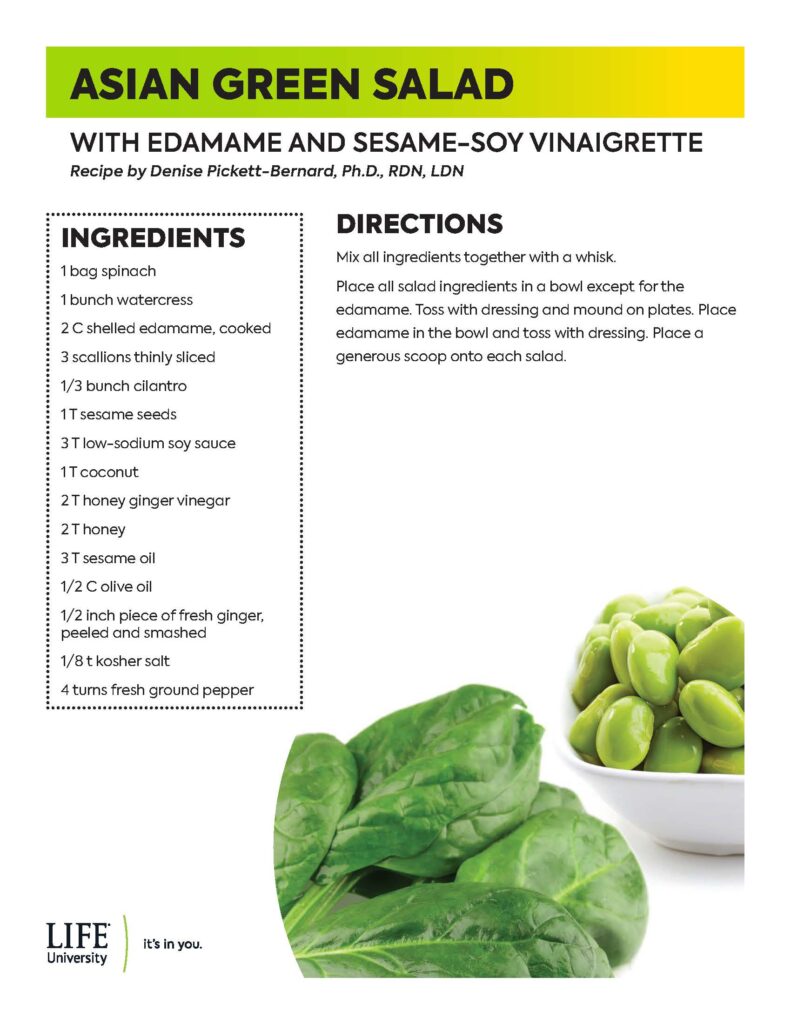
Recipes for LIFE: Asian Green Salad

Welcome to Life University’s Recipes for LIFE, where we bring you delicious glimpses into the culinary world! Today, we’re tantalizing your taste buds with a flavorful exploration of Asian cuisine. Picture this: healthy edamame with luscious fresh spinach and watercress with a heightened kick of cilantro and fresh ginger. Whisk in some sesame oil, honey for sweetness and add a few more delightful flavors, and your crunchy greens are transformed into a delectable meal. Whether you’re a seasoned chef or a kitchen novice, this dish is sure to impress with its simplicity and depth of flavor.

Lu Recipe Asiangreensalad[57]

Recipe: Asian Green Salad

With Edamame and Sesame-Soy Vinaigrette 

Recipe by Denise Pickett-Bernard, Ph.D., RDN, LDN


Ingredients

1 bag spinach

1 bunch watercress

2 C shelled edamame, cooked

3 scallions thinly sliced

1/3 bunch cilantro

1 T sesame seeds

3 T low-sodium soy sauce

1 T coconut

2 T honey ginger vinegar

2 T honey

3 T sesame oil

1/2 C olive oil

1/2 inch piece of fresh ginger, peeled and smashed

1/8 t kosher salt

4 turns fresh ground pepper


Directions

 Mix all ingredients together with a whisk. Place all salad ingredients in a bowl except for the edamame. Toss with dressing and mound on plates. Place edamame in the bowl and toss with dressing. Place a generous scoop onto each salad.

Appetite Loss and Nutrition Tips to Get You Through

Have you ever gone through a period in your life where food quite literally turns your stomach? Just the sight of a juicy hamburger or the smell of a sweet cake can send you running for the hills. An occasional loss of appetite is normal and should pass with time, though of course it could be an indicator of a health issue to address. Let’s pinpoint what a loss of appetite actually is and ways to alleviate it.

Cleveland Clinic’s article “Loss of Appetite” overviews the symptom as simply not feeling hungry or having the desire to eat food. You might have a full feeling, a disinterest or aversion to the taste or smell of food and avoid eating socially. If loss of appetite lasts more than a week, then it could be a red flag to look into. A loss of appetite might also have other uncomfortable symptoms alongside it, such as nausea, vomiting, fatigue, low energy, muscle weakness, diarrhea, constipation and even changes to skin, hair or nails.

The most common causes of appetite loss are physical body changes, emotional changes to mental health, an underlying health condition or a medication side effect. Physical causes could include pain, dehydration, dental issues, injury, surgery recovery or a loss/reduction of taste or smell. Emotional distress can play a big role in going off food as well, with causes such as anxiety, eating disorders, depression, stress or intense emotional reactions like grief, fear, sadness or shock. Pregnancy could also be possible for sexually active women. The lists of underlying conditions or medications that can contribute to loss of appetite are long, and it is best to consult with your primary healthcare professional if you suspect an unaddressed problem, rather than falling down the Dr. Google rabbit hole.

Home treatment for loss of appetite

  • Continue to eat regular meals. They can be smaller than normal, but try to eat small meals for breakfast, lunch and dinner even if you are not hungry. Your body needs fuel even if it doesn’t feel like it does. If it is easier, break it up into five or six smaller meals throughout the day.
  • Try liquid meals. A liquid meal might be easier to keep down. Choose liquid meals like soup broths, fruit juices and smoothies. Sports drinks with electrolytes can also be helpful as a supplement. Consult a dietitian or primary healthcare professional to see what is needed to get your daily calories.
  • Keep it bland. Bland foods are often soft and low in fiber. A common bland diet when sick is the BRAT diet (Bananas, Rice, Applesauce, Toast). Avoid spicy and fried foods. Unseasoned meat, vegetables, potatoes, breads and crackers should all be safe for you. Dairy products are also a bland choice, as long as you don’t have an intolerance.
  • Pick up the protein, minerals and vitamins in your food intake. If you are missing any nutrients, foods rich in protein, vitamins and minerals can help replace those in your body.
  • Try to eat with family and friends as much as you can. Your support system can help encourage you to get all the nutrients your body needs.

For more about Nutrition at Life University, take a look at our B.S. in Nutrition degree program to turn your curiosity into a rewarding career.


Slice of LIFE is an invitation to and extension of everything happening at Life University. Whether you are a current student, a potential freshman or a proud alum, Slice of LIFE can help keep you connected to your academic community. Know of a compelling Life U story to be shared, such as a riveting project, innovative group or something similar? Let us know by emailing Marketing@life.edu.

Connecting Stress Recovery with Chiropractic Care

Stress is an incredible physiological response to stimuli that can cause major changes to our health. Physical pain and emotional pain are inextricably linked. The Foundation for Chiropractic Progress (F4CP) lays this out in their article “6 Tips to Target Stress Recovery”.

It’s not uncommon for chronic pain sufferers to also have underlying issues related to hormonal stress that manifest into symptoms, such as low energy or depressed moods. Mental stress can also affect a person’s ability to cope with physical pain. Over 16 million Americans report persistent and chronic back pain limiting their ability to perform work and life activities. Individuals with chronic back pain also notice meaningful levels of psychological stress related to hopelessness, anger, depression and more.

Recent studies continue to support the idea that lower back pain and depression often are symbiotic and not necessarily isolated health conditions. Haywire hormones deregulated by physical or mental stress can create interferences for a number of bodily functions, such as immunity, inflammatory responses, protection of cells, rebuilding of tissues, blood sugar stability, nerve conduction, central nervous system operation and the blood-brain-barrier. Besides the pain and healing implications, hormone imbalances can disrupt mood, sleep and libido, as well as cause irritability, aggression and energy dips.

Hormonal dysregulation can surprisingly affect the way that medications like antidepressants, pain meds and neuropathic agents work in the body. Unfortunately, underlying hormone imbalance can prevent prescription drugs from reaching the desired therapeutic response. Therefore, finding natural, drug-free solutions to break the cycle of stress, pain and mood swings is essential.

Intentional Stress Management Tools

When talking about how to regulate stress and avoid cycles of pain and stress, the goal is to properly manage the hypothalamic-pituitary-adrenal-thyroid-gonadal (HPATG) system known as the body’s main stress control center. Doctors of Chiropractic (DCs) understand the complex role that stress plays, how it effects the body, and the need to reduce mental and physical stressors fatiguing the HPATG Axis. Removing stressors when possible and giving support for the axis to heal is crucial. But how do we address stress?

  1. Acknowledge Your Emotions

Ask yourself honestly how you are feeling and from where those feelings may stem. Support groups, therapy or other professional assistance can help you pinpoint your emotional state and better articulate personal mood changes or pain. Mindfulness meditation, quiet reflection, prayer and other reflective self-care activities can also be beneficial. Don’t be afraid to say ‘no’ to optional stressful activities that don’t bring you joy. Instead, seek activities that foster peace and renewed energy within you.

  1. Be Proactive in Pain Management

Regularly being adjusted or evaluated by a chiropractor can help immensely in maximizing joint function and keeping pain levels low. Your chiropractor can monitor your problem areas over time, adjust as needed, offer tailored strengthening regimens and work with you on improved stability and natural pain relief.

  1. Be Aware of Toxins

Garbage in, garbage out. Simply put, if you put unhealthy food, drinks and chemicals into your body, you will likely experience adverse effects over time. Ideally, you should try to reduce the amount of toxins you consume or allow yourself exposure to. Stimulants like coffee, caffeine and soda put strain on the adrenal glands. Alcohol is a depressant and best limited, as it taxes the organs as the body processes it. Sugar, white flour, fried or processed foods with chemicals, and artificial sweeteners are best avoided or limited. Don’t forget to examine personal products like shampoos and lotion, opting for natural products to decrease the toxic load on the body, letting the body focus energy toward rebalancing itself.

  1. Nutrition is Your Friend

Eat food for nourishment, not for emotional reasons. Shop the perimeter of the grocery store, where you will find more whole food choices as opposed to processed foods. Strike a balance of lean proteins and fresh healthy produce. Remember to drink plenty of water, and for a boost of vitamin C and flavor, you can add citrus.

  1. Work on Getting Enough Sleep

Make sure you give your body enough time to rest, as it is a time to rejuvenate and recover. Prolonged period of mental or physical stress will naturally tire you out. Sleep needs to be a healing priority.

Drug-free pain management is possible and at your fingertips. Connect with a Life University educated chiropractor and start step one to a healthier and happier you!

References (from original F4CP article)

1   https://hpi.georgetown.edu/backpain/

2   https://pubmed.ncbi.nlm.nih.gov/36901226/

3   https://www.ncbi.nlm.nih.gov/pmc/articles/PMC4107914/

4   https://www.f4cp.org/wp-content/uploads/2023/08/F4CP-Harris-Poll-2023_report-FINAL.docx.pdf

*Membership required to view this link.

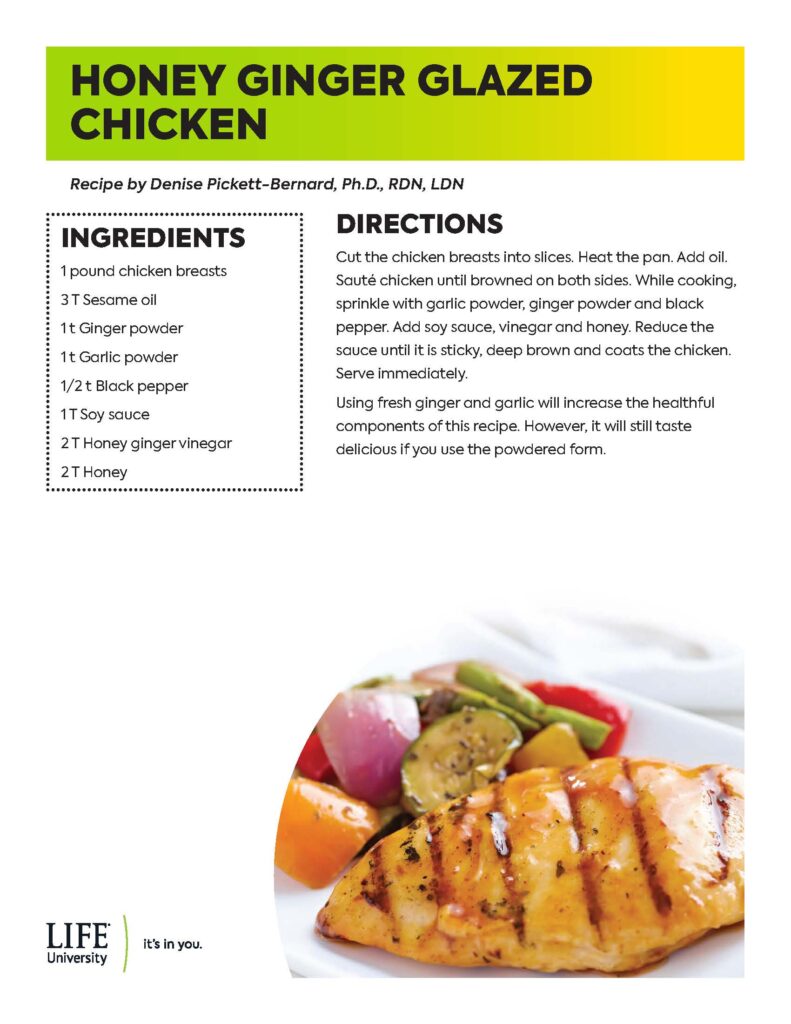
Recipes for LIFE: Honey Ginger Glazed Chicken

Today we are focusing on a healthy chicken protein dish. This recipe can be made indoors on the stove or outdoors on the grill while enjoying the beautiful springtime. It’s the perfect, easy midweek dinner option. Pair it with a Belgian Endive Salad for a complete meal.

Lu Recipe Honeygingerchicken


Recipe: HONEY GINGER GLAZED CHICKEN

Recipe by Denise Pickett-Bernard PhD, RDN, LDN

INGREDIENTS 

1 pound chicken breasts

3 T Sesame oil

1 t Ginger powder

1 t Garlic powder

1/2 t Black pepper

1 T Soy sauce

2 T Honey ginger vinegar

2 T Honey


DIRECTIONS

Cut the chicken breasts into slices. Heat the pan. Add oil. Sauté chicken until browned on

both sides. While cooking, sprinkle with garlic powder, ginger powder and black pepper. Add

soy sauce, vinegar and honey. Reduce the sauce until it is sticky, deep brown and coats the

chicken. Serve immediately.


Using fresh ginger and garlic will increase the healthful components of this recipe. However, it

will still taste delicious if you use the powdered form.


Recipes for LIFE series: Quinoa, Pistachio and Dried Fruit Salad

Enjoy a great wintertime salad to tickle your tastebuds.  Mixing some garlic with honey ginger vinegar and pistachios, along with currents and dried apricots gives one a filling and delicious lunch or a great start to your dinner.


Recipe: Quinoa, Pistachio and Dried Fruit Salad

Provided by Denise Pickett-Bernard PhD, RDN, LDN


Ingredients

For the dressing:

1/4 C extra virgin olive oil

2 T Eureka lemon olive oil

2 cloves of garlic, minced

2 T lemon juice

1/4 C honey ginger vinegar

1-2 t honey

2 t cumin

For the salad:

1 C cooked quinoa

1/4 C dried apricots, chopped

1/4 C pistachios

1/4 C currants or golden raisins

1/4 C green onion, chopped

salt & pepper


Directions

Whisk the dressing together. Toss it with the cooked quinoa, pistachios, currants,

and dried apricots. Top the salad with chopped green onion.

Recipes for LIFE series: Strawberry- Ricotta Bruschetta

Looking for a sensational appetizer to share with friends and family this weekend?  Look no further than this decadent Strawberry-Ricotta Bruschetta. This recipe combines the sweet taste of fresh strawberries with the indulgent texture of ricotta cheese. Add on some pomegranate seeds and the savory taste of the balsamic reduction, and you have a healthy and tasty appetizer, and everyone will be demanding this recipe!


Recipe: STRAWBERRY-RICOTTA BRUSCHETTA

 WITH HOMEMADE BALSAMIC REDUCTION

Recipe by Denise Pickett-Bernard PhD, RDN, LDN


INGREDIENTS

For the balsamic reduction:

1 Cup balsamic vinegar

2 Tablespoons brown sugar

1 Tablespoon lemon juice, freshly squeezed

For the bruschetta:

1 large French baguette, sliced into 1-inch thick slices

1 1/2 Cups whole milk ricotta cheese, preferably homemade

2 Cups arugula or water cress, washed and spin-dried

3 pints fresh strawberries, hulled and sliced into small cubes


DIRECTIONS

Place balsamic vinegar, sugar and lemon juice in a saucepan. Heat on medium heat. Let it simmer until it is reduced by half, 10-15 minutes. Transfer it to a bowl (or a glass jar) and let it cool on the kitchen counter.

Meanwhile, arrange baguette slices on a baking sheet and broil them until golden brown, 1-2 minutes on each side. Alternatively, you can toast them in a toaster or grill them on a grill.

Spread each slice with a generous layer of ricotta cheese. Top them off with arugula, strawberries and pomegranate seeds (if using). Drizzle each slice with balsamic reduction and sprinkle with Maldon salt. Serve immediately.

Recipes for LIFE Series: Golden Beet Salad

Hey there, we’re diving into a refreshing and lively salad today, soaking in all those spring vibes. It’s not just a salad—it’s a showstopper perfect for sharing with your favorite people or treating yourself to a bit of soul-soothing, indulgent self-care.

Click here for more information regarding Life U’s Culinary Nutritional Program, Nutrition Program and Dietetics Program.


Recipe: Golden Beet Salad

with Avocado and Feta

Recipe by Denise Pickett-Bernard PhD, RDN, LDN


INGREDIENTS

3 medium golden beets,
trimmed 1 tsp. grated lemon rind
1½ Tbsp. fresh lemon juice
¼ tsp. black pepper
⅛ tsp. kosher salt
1 large shallot, thinly sliced
2 Tbsp. extra virgin olive oil
4 C arugula
1 ripe peeled avocado, sliced
1 ounce reduced-fat feta
cheese, crumbled (about ¼ cup)


DIRECTIONS

Wrap beets individually in microwave-safe parchment
paper. Microwave at HIGH seven minutes or until tender,
turning once after three minutes. When cool enough to
handle, peel and slice into 1/2-inch-thick wedges

Combine rind, juice, black pepper, salt and shallot in a
small bowl, stirring with a whisk. Let stand 10 minutes.
Gradually add oil, stirring constantly with a whisk. Place
arugula in a large bowl. Add two tablespoons juice mixture
to arugula; toss to coat. Add beets to remaining juice
mixture; toss to coat. Place arugula mixture on a platter;
top with beet mixture, avocado, and feta.

Recipes for LIFE series: Turkey Meatballs Teriyaki

Let’s continue celebrate 2024 with a delicious and healthy recipe.  These versatile turkey meatballs teriyaki make a great appetizer or add Asian mixed vegetables for quick midweek meal.

For more information regarding Life University’s Culinary Nutrition Program, please go to: life.edu/academic-pages/bachelor-of-science-in-culinary-nutrition/.


TURKEY MEATBALLS TERIYAKI

 Recipe by Denise Pickett-Bernard, PhD, RDN, LDN

 INGREDIENTS

2 pounds ground turkey breast

1/4 C pine nuts, lightly ground

1/4 C sesame seeds, lightly ground

1/2 C almond meal

2 eggs

2 T fresh ginger, grated (divided)

1 bunch scallions, chopped (green part only)

1 T + 1/4 C Kikkoman soy sauce

1 T sesame oil

3 T brown sugar

1/2 C fresh pineapple

1 C bell pepper, diced (red, yellow or orange)


DIRECTIONS

Line baking pan with parchment paper. Preheat oven to 375. Place turkey, ground pine nuts, ground sesame seed, almond meal, eggs, half of the ginger and 1 T of the soy sauce into a bowl. Mixing gently, distribute all of the ingredients throughout the meat resulting in a cohesive texture. Using a small ice cream scoop, form into 1 oz. balls, place on the baking sheet and bake for about 20 minutes. 

Make sauce while the meatballs are cooking. Heat a sauté pan. Add the sesame oil. Sauté the ginger, scallions and red bell pepper in the oil. Add the remaining soy sauce and brown sugar. Add the pineapple. When the meatballs are done, add to the sauce, stirring them to coat.


Slice of LIFE is an invitation to and extension of everything happening at Life University. Whether you are a current student, a potential freshman or a proud alum, Slice of LIFE can help keep you connected to your academic community. Know of a compelling Life U story to be shared, such as a riveting project, innovative group or something similar? Let us know by emailing Marketing@life.edu.

Recipes for LIFE- Spicy Red Pepper Hummus

During this holiday season filled with parties and plenty of food, why not try a healthy and delicious recipe for your next occasion? This hummus recipe is not only tasty but versatile and can be served with anything from crispy bread bites, pita bread, vegetables or gluten-free crackers. Celebrate in style today!

Hummus Recipe[70][94][27]

Spicy Red Pepper Hummus

Served With Crunchy Crudite

Recipe by Denise Pickett-Bernard PhD, RDN, LDN


Ingredients

16 ounces chickpeas (1 can drained and rinsed)

6 ounces roasted red bell peppers

l jalapeno, seeded, diced

l T chopped garlic

3 T chopped cilantro leaves

l t paprika

3 T chopped onion

l t freshly cracked black pepper

l T ground chipotle pepper

1/4 C extra-virgin olive oil

Raw vegetables for dipping


Directions

Mix all ingredients, except olive oil and vegetables, in food processor until pureed. Then, slowly add in olive oil. This can be served immediately or stored in an airtight container in the refrigerator for a few days. Serve with fresh vegetables for dipping.


Slice of LIFE is an invitation to and extension of everything happening at Life University. Whether you are a current student, a potential freshman or a proud alum, Slice of LIFE can help keep you connected to your academic community. Know of a compelling Life U story to be shared, such as a riveting project, innovative group or something similar? Let us know by emailing Marketing@life.edu.