
arrow-down arrow-left arrow-nav arrow-right arrow-up close db-alumni db-current db-faculty db-fmaily db-future db-online download facebook gallery help linked-in maximize menu minimize pause play print search share twitter youtube zinfolio

Where Performance Meets Principle: Inside Life University’s New Sports Chiropractic Track

At the intersection of high-level athletic performance and principled chiropractic care, a new educational pathway is taking shape at Life University (Life U).

Life University’s flagship Doctor of Chiropractic (D.C.) program will introduce a dedicated Sports Chiropractic track beginning Fall Quarter 2026 – an intentionally designed, performance-first experience built to prepare future chiropractors for the realities of modern sport. This new track is not an add-on or a specialization tacked on at the end of the program. Instead, it is fully integrated into the D.C. curriculum, blending classroom learning, clinical application, sport science, and real-world athlete exposure.

For students passionate about performance, movement and whole-person care, the Sports Chiropractic track represents something different – and something needed.

More Than Rehab: A Performance-First Philosophy

In many settings, sports-related care remains reactive, focusing primarily on injury management and rehabilitation. Life U’s Sports Chiropractic track was built with a different mindset.

Here, chiropractic care is approached through the lens of performance optimization. Students learn to evaluate how the nervous system, joint mechanics and movement patterns influence efficiency, adaptability and readiness – long before injury occurs. This neurology-driven, global mechanical assessment philosophy aligns naturally with sport, where milliseconds, positioning and coordination can make the difference between winning and falling behind.

The result is an educational experience rooted in chiropractic principles while fully attuned to the demands of athletics.

A Campus That Functions as a Living Lab
20260228 Life SB12717

Life U’s campus ecosystem is a defining feature of the track.

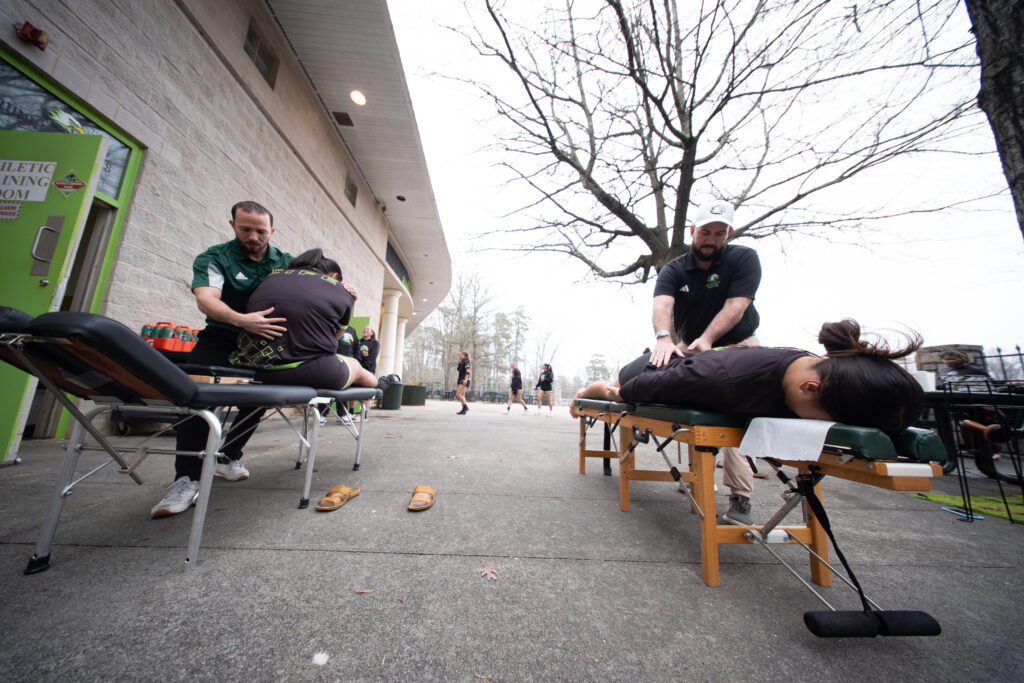
With more than 650 varsity student-athletes competing across 21 sports teams, Life U offers an environment that few institutions – chiropractic or otherwise – can replicate. For Sports Chiropractic students, these athletes are not theoretical case studies. They are active participants in the learning process.

Students gain hands-on experience with performance testing, movement analysis and on-venue observation, all while collaborating with athletic trainers, strength and conditioning coaches, and sports health professionals. Real data, real athletes and real performance settings transform the campus into a living lab for human performance.

How the Sports Chiropractic Track Works

The Sports Chiropractic track unfolds intentionally within the D.C. program:

  • Quarter 8 introduces students to sports chiropractic concepts and expectations, laying the groundwork for applied learning.
  • Quarters 9–12 deliver a four-course Sports Chiropractic sequence that includes performance testing labs, arthrokinematics and neurology, on-venue and sideline care, and a research-based sports practicum.
  • Quarters 13–14 place students in sports-focused PEAK and community-based internships, allowing them to apply their skills in professional, real-world environments.

Rather than waiting until after graduation to engage with sport, students progress through increasing levels of responsibility and exposure throughout their education.

Integrated Learning Across Disciplines

Sports Chiropractic rarely exists in isolation – and neither does Life University’s approach.

Students in the track learn to function as part of a broader performance team, interpreting athlete data, understanding injury risk profiles and contributing to clear, coach-ready and athlete-ready communication. This integrated model mirrors what graduates will experience in performance clinics, collegiate athletics and professional sport environments.

By learning how Chiropractic fits within a multidisciplinary performance strategy, students graduate prepared not only to deliver care but to collaborate effectively.

An Accelerated Academic Opportunity

For students interested in deepening their expertise, the track offers an additional advantage.

Those who complete the Sports Chiropractic coursework can apply those credits toward the Master of Science in Sport Health Science (Sports Chiropractic concentration). With the addition of two Professional Track courses, students can complete nearly half of the master’s degree while earning their Doctor of Chiropractic.

This accelerated pathway allows students to broaden their credentials without extending their overall time in school.

Preparing Graduates for Performance Environments

Graduates of the Sports Chiropractic track pursue diverse roles, including:

  • Team chiropractor
  • Integrated sports-rehab clinician
  • Performance clinic owner
  • Consultant for sport organizations
  • Researcher or educator in sports performance

No matter the setting, the throughline is the same: chiropractors prepared to think critically, act confidently and contribute meaningfully in performance-driven environments.

Efficiency. Performance. Purpose.

Michael Hartfield

As Olympian and Life University D.C. alumnus Michael Hartfield, D.C. (’26), puts it:

“Effort won’t ever beat efficiency – and Chiropractic gave me efficiency.”

That idea lies at the heart of Life University’s Sports Chiropractic track – an educational experience where performance meets principle – and where future chiropractors are prepared not only to support athletes, but also to help them perform at their highest, most optimal level.

Life University Women’s Rugby Claims 2026 CRAA Division I National Championship with Dominant Win Over BYU

Screenshot 2026 04 13 at 4.34.33 PM


Screenshot 2026 04 13 at 4.38.47 PM

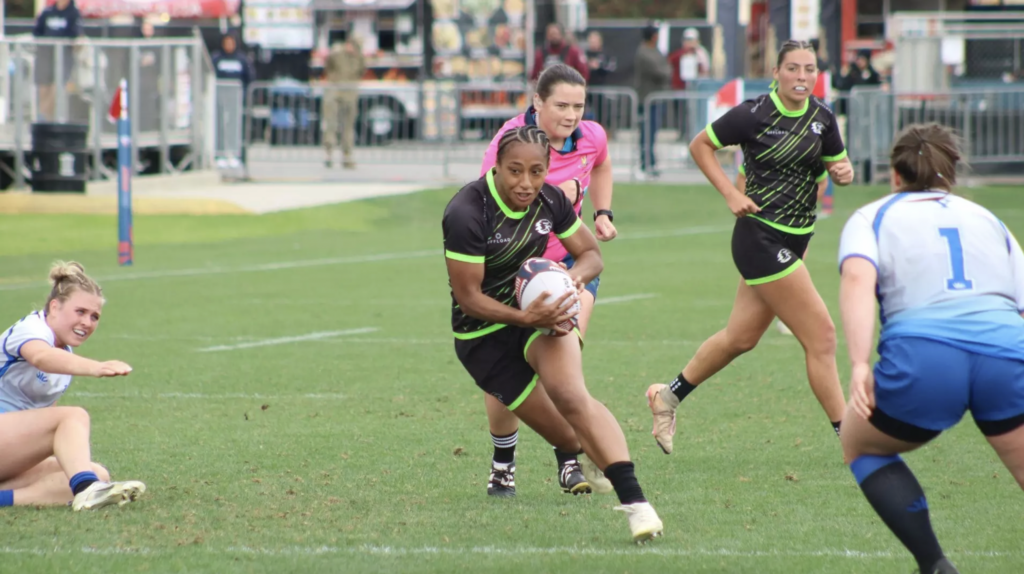
Sacramento, California — April 13, 2026 — Life University’s (Life U) Women’s Rugby team claimed the CRAA Division I XVs National Championship on April 11, defeating BYU 40–14 at Heart Health Park.

The championship match, which opened a Pacific Four Series doubleheader, was called at halftime due to severe weather and a subsequent lightning delay, with officials ending the contest for safety and scheduling reasons.

Life U dominated the first half, building a commanding lead through pace, physicality and efficient finishing. Azhinaye Barner scored twice for the Running Eagles, opening the scoring in the 12th minute and adding a second after a 60‑meter break. Danie Taulua, Angelina Mason, Christina Opeti and Hattie Greenwood also crossed the try line.

Mason was nearly perfect from the tee, converting 5 of 6 kicks. Life U led 40–14 at the break.

Despite the shortened contest, Life U’s first‑half performance left little doubt.

“It wasn’t the full 80 minutes we prepared for,” said Director of Rugby Ryszard Chadwick. “Building a 40–14 lead against a tough rival like BYU showed our attacking dominance. The team worked incredibly hard all season, and this championship belongs to them.”

Life U supporters remained on site following the decision to conclude the match, celebrating as the Running Eagles secured the 2026 national title.

Final score: Life University 40, BYU 14.

The Running Eagles finished the campaign with a spotless 18-0 record in XVs competition this season, with dominating victories over both powerhouse college competition (e.g. Penn State, Stanford and BYU) and USA Rugby Women’s Division 1 (WD1) Club competition (e.g. Houston sHARCs, Philadelphia Rugby Football Club, etc.).

About Life University Athletics

Life University Athletics is home to nationally respected programs that emphasize excellence in competition, academics and leadership. Through a mission‑driven approach, Life University develops student‑athletes committed to lead with purpose on and off the field.

About Life University

Founded in 1974, Life University is a health sciences institution most known for its flagship Doctor of Chiropractic Program within its College of Chiropractic. Undergraduates can pursue more than a dozen undergraduate degrees and three graduate degrees within the College of Graduate and Undergraduate Studies. Some degree programs are offered to distance learners through the College of Online Education.

Life University strives to empower our students to succeed both professionally and personally. At Life U, we innovate our approach to higher education while also remaining true to our philosophical commitment to produce informed leaders who exemplify humanistic values in their professions. To achieve this goal, Life U recognizes and demonstrates its dedication through three official Life University Values: Lasting Purpose, Vitalism and Integrity.

Life U’s 110-acre campus in Marietta, Georgia, just northwest of Atlanta, is home to more than 2,400 undergraduate, graduate and professional students who come from all 50 United States and more than 60 countries.

Life University is regionally accredited by the Southern Association of Colleges and Schools Commission on Colleges (SACSCOC) to award baccalaureate, master’s and Doctor of Chiropractic degrees, and also has programmatic accreditation through the Council on Chiropractic Education (CCE) and the Accreditation Council for Education in Nutrition and Dietetics (ACEND). The mission of Life University is to empower students with the education, skills and values necessary for career success and life fulfillment, based on a vitalistic philosophy.

Discovering New Paths After Competition- The Student-Athlete to Chiropractor Pipeline

There is one major looming reality that all athletes must face sooner or later. Eventually, a time will come when the body is unable to face the rigors of competitive play, whether that comes about from injury or the natural aging process. Regardless, it is wise to plan for life after the game. Unsurprisingly, many current or former student-athletes seek out careers that are connected to athletic performance in some way.

Here at Life University (Life U), we offer many degree programs that support future athletically-focused careers, such as our B.S. in Exercise Science and our M.S. in Sport Health Science. Yet, one career focus area has emerged as particularly suited to many current and former student-athletes: Chiropractic.

Today, we are going to revisit some Life U student and alumni stories that illustrate this worthwhile path that athletically-inclined individuals have taken for an exciting, meaningful career in Chiropractic.

Dr. Marc Ellis

Dr. Marc Ellis is the founder of Georgia Chiropractic Neurology Center located in Marietta, Georgia. His ongoing work in the field of chiropractic neurology, coupled with years of experience in neuromuscular therapy and martial arts, enables him to address complex conditions with a multi-faceted approach. Caring for the underlying connective tissue has yielded dramatic results in chronic cases.

Before attending chiropractic school at Life U, Dr. Ellis became a certified neuromuscular therapist. He obtained a master’s degree in clinical neuroscience from Parker University in 2020 and has spent countless hours studying human biomechanics, nutrition, homeopathy, functional medicine and kinesiology. His passion since chiropractic school has been functional neurology, in which he has completed thousands of hours of postdoctoral studies and graduated as the Valedictorian of the Clinical Neuroscience program from Carrick Institute in 2004.

His most recent public claim to fame has been his work with top-tier athletes, particularly Sem Verbeek, winner of the 2025 Wimbledon Mixed Doubles Championship with Katerina Siniakova. Ellis’ team has worked with Verbeek for years to harness the power of Chiropractic Neurology to improve his game as well as his health.

Sem wimbledon
Sem Verbeek and his tennis partner celebrating their Wimbledon win.

For example, they use special glasses to track his eye movements on the court and then find areas of less-than-ideal focus to recorrect, resulting in stronger hits. Verbeek has been so joyful and in awe of his progress that he made a point to have the Georgia Chiropractic Neurology Center logo on his shirt in the Wimbledon Finals. That shirt will be displayed in the Wimbledon Hall of Fame as well. It is truly exciting and powerful to see Chiropractic showcased in this way!

Dr. Josh Glass

Dr. Josh Glass is a 2001 alumnus of Life University’s College of Chiropractic. He is the owner of Georgia Sports Chiropractic, as well as the Team Chiropractor for the University of Georgia and Georgia Institute of Technology’s Track & Field teams and Emory University Athletics. He also previously served as the Team Chiropractor of the Atlanta Hawks (NBA). Check out his podcast episode on Living Life at Life U as Dr. Glass speaks on his gravitation toward working with athletes and sports teams.

He notes that he considers all people who want to move as athletes. Listen in on this insightful conversation to learn more about the amazing work that Dr. Glass has done and continues doing to improve the expression within every individual he cares for.

Esa Tsoi

Esa Tsoi is a chiropractic student at Life U who has made the recent switch from student-athlete to chiropractic student, as well as serving as an assistant coach for Life U Men’s Volleyball. Tsoi had been an active volleyball player for over 15 years, so she was excited to play at the collegiate level during her undergraduate studies while keeping the dream alive to one day continue to medical school (or so she thought). Yet, as the old saying goes, the only constant in life is change. Sadly, a career-ending injury occurred that required Tsoi to figure out the next steps in her journey if she wanted to stay connected to her sport. She eventually made the switch to coaching, first as an assistant coach for Campbellsville University Men’s Volleyball.

As fate would have it, Campbellsville University and Life U are athletic rivals in several sports, including volleyball. In something of a university meet-cute, Tsoi played an away volleyball game against Life U and quickly became charmed by her scenic, compelling surroundings. She keenly remembers asking a teammate about the prominent sculpture that serves as a key campus landmark, the detailed bronze hands that she later learned were modeled after Life U founder Dr. Sid Williams performing a toggle adjustment. That is when Tsoi learned about Life U’s rich chiropractic history, unearthing a latent curiosity in chiropractic care and holistic healing from career talks she had participated in back in high school.

To learn more about the possibility of Chiropractic as a career, Tsoi inquired with a local chiropractor in Campbellsville and became a chiropractic assistant there, completing internship hours as part of her degree program.

“I was just learning how a chiropractor runs his office. I learned a lot about Chiropractic, what they do […] and also, I always knew that I wanted to help in health – to help athletes in their sense of improving performance and preserving their health,” Tsoi said.

It became clear after a few months of seeing “all the fun stuff” and vital work that the chiropractor was doing that Chiropractic was the right path for her. As a Life U graduate, the chiropractor encouraged her to check out Life U, and it wasn’t too long after her undergraduate program finished that she moved to Marietta to enroll in Life U’s D.C. program. She has enjoyed being able to continue in her athletics passion as an assistant coach for Life U Men’s Volleyball, as well as having a front row seat to see how chiropractic care can give that edge to sports performance.

“[Life U] has [developed] a different way to coach, to teach, to help this group of young people grow. That was a really interesting thing for me to see, and also what’s special here is the athletes here get adjusted, so I can see like ‘OK, athlete not getting adjusted and athlete getting adjusted – like there’s actually some difference in there.’ I think it’s really interesting to see how their body adapts,” Tsoi said.

For Esa Tsoi’s full Faces of Life U story, check out her Faces of Life U profile.

Dr. Brad Walker

Life U D.C. alumnus Dr. Brad Walker has the honorable distinction of competing as a two-time Olympian and World Champion in Men’s Pole Vault. He has represented Team USA 12 times on the world stage and coached USA medalists at the last two Olympic Games. He and his wife Sage Walker own and operate their own chiropractic office in Kennesaw, Georgia, called Walker Wellness.

“Competing at the highest level and biggest stages in the sport and traveling all over the world – getting my passport stamped almost everywhere I could have wanted to go – was an amazing part of track and field. And the opposite side of it – the hard work, determination and willpower to succeed – are the lessons that sports at the highest level teach you,” said Dr. Walker.

Life U is no stranger to welcoming Olympians on campus, with past student-athletes who have previously competed in the games or student-athletes who have gone on to compete post-graduation. Retired from professional competition, Walker has reinvented himself as a coach mentoring the next generation of elite pole vaulters, and his vision of fully realized coaching involves a background in chiropractic education to help his athletes unlock their ultimate potential. Walker coaches a team of Olympic-hopeful and Olympic-champion pole vaulters. Some of the athletes he has worked with include Katie Nageotte, 2020 Gold Medalist in Women’s Pole Vault, and Sandi Morris, 2016 Silver Medalist in Women’s Pole Vault.

“It’s a very different set of emotional feelings being an athlete versus being a coach. […] I don’t get super nervous because I know it is the athlete’s responsibility to go and get the job done,” said Dr. Walker.

Dr. Walker consistently utilized chiropractic care throughout his athletic career to perform at peak condition and stay healthy, so it makes sense to him to work as a Life U-trained chiropractor and incorporate those skills on the sidelines as needed, along with his coaching.

For Dr. Walker’s full Faces of Life U story from his time at Life University, visit his Faces of Life U profile.

Maintaining Chiropractic Health for Student Athletes with Dr. Robert Dubuque- Podcast

It’s always a treat for our host Dr. Veronica Garcia- Chapparo to get to have an in-depth chat with a former D.C. classmate and now Life U colleague. Dr. Robert Dubuque is Life U’s Director of Chiropractic Sports Performance and a Faculty Clinician. Caring for the chiropractic needs of our student-athletes at home and on the road is a daunting prospect to say the least. Dr. Dubuque discusses how he manages the many curveballs thrown his way.[vc_video link=”https://www.youtube.com/watch?v=kLZsydvcAkc”]

Preparing Students for What’s Next with More Than an Athlete Program

Identity. It’s a strong and often terrifying word if you don’t feel you can define what your own identity is. This very human desire to have a clearly defined identity and roadmap often culminates in student-athletes that see themselves through the rose-colored lenses of their sport. “I’m a basketball player.” “I’m a wrestler.” Well, that’s great, but even for the slight percentage of lucky people that go pro in their chosen sport, that last day to play will come soon enough. It’s best if student-athletes begin to plan for what happens after sports while in school.

Alaina Smith-Walker, Assistant Athletic Director of Internal Operations, and the Life University (Life U) Athletic Department launched the More Than an Athlete (MTAA) program in 2020 to jumpstart student-athletes’ mindsets on goals for the future beyond their athletic performance.

“We noticed so often with student-athletes across the board that you spend your whole childhood, your whole developmental years getting better at your sport and getting good enough to be in a position to play in college,” Smith-Walker said.

Smith-Walker continues by emphasizing that this way of life is so ingrained in so many of their student-athletes, to do nothing but go to school and play their sport. And of course, that dedication is admirable and should be applauded, yet it can cause major problems later on. Graduation rolls around, and then many of these students seem to finally look up and say, “I don’t know what to do next.”

“They realize they hadn’t even thought about what their options were because people seem not to see past what is right in front of them. So, that is when we realized that that is something that as an institution that cares about the whole student athlete, is something that we should be providing.

The program began as a periodic speaker series, but after reviewing helpful feedback from coaches and players, it pivoted to more of an awareness program that keeps student-athletes informed about resources and opportunities already available to them through the University. This involves working closely with friendly campus partners such as Career Services and Campus Activities Board (CAB) to collaborate, build connections and stay relevant to the needs of Life U’s student-athletes. MTAA focuses on three essential pillars: mental and physical wellness, academics and engagement.

Some of the practical pieces that students have access to through this program include:

  • Health & Wellness
    • Physical – Sports Chiropractic/non-sport activity
    • Mental  – Counseling and counseling workshops
    • Nutritional – Fuel station (with educational resources)/team talks/sports medicine/body composition
  • Student Engagement
    • Academic support opportunities
    • Campus events
    • Community events and service
    • Professional development

“Our vision as a department is to be a leading institution in meaningful student-athlete experience, and that is really what More Than an Athlete means to provide,” Smith-Walker said.

Career development and self-exploration have become key needs that students expressed wanting help with, so MTAA molded itself more to facilitating access and awareness around what the University already has to provide in these areas and others. The main MTAA resource available currently is a weekly infographic distributed through student-athletes’ emails and the official Life University Athletics Instagram account, which details different events and programs related to the three pillars of MTAA that students can utilize.

In the future, Smith-Walker hopes to see MTAA grow by making more outside and external connections from the University with which to connect students to give them more exposure to the expansive world outside the Barclay Circle bubble. Some of that has happened organically, but the hope is that local businesses and organizations can find even more ways to invest in student-athletes down the road.

Slice of LIFE is an invitation to and extension of everything happening at Life University. Whether you are a current student, a potential freshman or a proud alum, Slice of LIFE can help keep you connected to your academic community. Know of a compelling Life U story to be shared, such as a riveting project, innovative group or something similar? Let us know by emailing Marketing@life.edu.

Chiropractic Care Propelling Sports Performance

Competitive sports and chiropractic care go hand in hand. In fact, here at Life University (Life U), we commonly encounter students who originally developed an interest in chiropractic as a profession due to care received as high school or collegiate student-athletes. So it’s an interesting concept to consider that consistent chiropractic care might not only offer healing and recovery benefits, but also could contribute to improved sports performance. The Foundation for Chiropractic Progress (F4CP) explores this idea in their article “Maximize Your Sports Performance.”

Potential in Athlete’s Improved Balance, Stability and Flexibility

Next time you attend a professional sporting event such as a baseball or football game, check the sidelines or the dugouts. Chances are that a licensed DC is present as a crucial member of the sports performance staff. In fact, chiropractors are employed by 90% of pro sports teams, including MLB and all teams in the NFL and NHL. Fun fact: Dr. Hamid Sadri, Official Team Chiropractor for the Atlanta Braves, is a proud Life U alumnus. How cool is that!

DCs in the sports chiropractic realm are commonly thought to treat and help athletes recover from injuries. Yet DCs can go beyond recovery goals, working with athletes to focus on injury prevention and hopefully staying off the injured or no-play lists. Adjusting the joints for optimized function and providing strategies to aid balance, stability and flexibility, DCs can potentially provide a competitive edge as they strive to improve performance as a whole, as well as athletic stamina and resilience.

And of course, even athletes at lower or more casual levels can benefit from chiropractic care, receiving individualized treatment that focuses on the health of the whole athlete, as well as injury prevention and better performance.

Sports Chiropractic at Life U

Here at Life U, we are educating the next generation of Sports Chiropractors and even have a Sports Chiropractic Club on campus. Paul Boss, President of the Sports Chiropractic Club, describes the club as a “treatment paradigm” founded and based around three key pillars: mobility, stability and motor control.

“Once you gain mobility and you are able to move the joint, then it has to be able to become more stable to prevent injuries. And once you can control that movement, mobility and stability, then you are able to get motor control,” explained Boss.

Boss also noted how club members learn to evaluate a patient’s health based on varying levels of focus. First, there is the global focus, which looks at the overall health, functioning and nervous system aspects of a patient. Then, it is time to take a regional focus – to look at a specific extremity or specific area of interest. And finally, there is the local focus, attending to a particular joint.

“At the core of it all, how does a chiropractic adjustment affect or improve athletic performance? And not just in athletes, but in everybody else because we like to use those principles and that treatment paradigm […] to treat athletes on a spectrum. We look at athletes as people that had reached their optimum performance and almost as a roadmap that everyone can follow along their own way,” said Boss.

An Extra Boost

So how can chiropractic care potentially give athletes a competitive boost? By honing in on three key components: balance, stability and flexibility.

Balance: With proper balance, an athlete maintains agility and maneuvers their body with greater speed, strength and accuracy. Conversely, imbalance often leads to inhibited performance or contributes to possible injury. DCs can adjust muscular imbalances between flexor and extensor muscle groups, as well as provide athletes with exercises to gain and maintain stability between these groups. Additionally, DCs can work with athletes to improve proprioceptive skills, which allow the body to inherently sense surrounding movement, action and location.

Stability: Stability in the body allows the body to return to equilibrium after being displaced or disrupted from or during movement. Stability directly related to an athlete’s resilience creates a strong and solid foundation to be grounded or defend against opponents. Good balance and stability go hand-in-hand, which is why both are often addressed at the same time in training programs. Chiropractic care can help stabilize skeletal subluxations through chiropractic spinal adjustments that will restore proper alignment. Also, they can address uneven shoulders or hips that will affect both stability and balance.

Flexibility: Ideally, a flexible athlete can utilize an optimum range of motion (ROM). Optimized range of motion is needed to increase speed, strength and overall performance. In track athletes, for example, increased flexibility in hip and leg muscles can result in a longer stride or better leg positioning for a hurdle. Flexibility plays a role in injury prevention also, as tissue rigidity requires a specific ROM that more easily leads to sprain/strain injuries.

Tips and Good Practice for Enhancing Performance

DCs can provide many different services to help athletes optimize how they perform on the field, as well as improve and protect their overall health, even reducing the chance of injury.

DCs not only offer sideline care for sports teams, but they also often offer personalized care for individuals, such as:

  • Periodic checkups to monitor and optimize joint function, performing specific chiropractic adjustments to prevent athletes from training or competing with limited mobility or putting strain on joints lacking full mobility.
  • A good mix of exercises, stretches and routines to support the needed tenants of balance, stability and flexibility so that athletes can play at their best with enhanced speed, accuracy and strength.
  • Nutritional and dietary guidance to make sure that athletes take in the necessary calories, water and nutrients in order to build or maintain muscle during training and competition.
  • General health and wellness lifestyle support with recommendations for proper sleep, stress management and other factors affecting physical and mental health.

In some ways, a chiropractor can be especially helpful for the occasional athlete, often referred to as a weekend warrior. Weekend warriors commonly combat symptoms related to sprain or strain injuries in muscles or ligaments, tendonitis, lower back and/or shoulder pain.

Occasional athletes should keep in mind these guidelines to help to avoid injury:

  • Build activity slowly. It’s not healthy or sustainable to take someone who has not been particularly active in a sport and then expect them to perform at a competition level. For example, if you haven’t ran for months and then suddenly decide to run a 5k or an even longer race, chances are you are in for some discomfort.

Ideally, maintain a basic level of fitness and activities related to a given athletic activity you enjoy. Gradually increase your activity, mileage or other exercise by about 10% per week before entering into a competition or competitive sport.

  • Warm-ups are essential. Gentle stretching to engage the muscles and aerobic activity to raise your heart rate play a key part in conditioning. They prepare your body for the game or match to come.
  • Don’t forget to stretch after a game, match or intense exercise. Research shows that stretching following activity can reduce soreness and promote recovery. Soft tissue work can also help, such as using foam rollers.
  • Don’t push through pain during competition, as this is a recipe that often leads to injury.
  • Be knowledgeable on the safe techniques required for your sport.
  • Check your sports equipment to see if it is safe to use.

Whether you are a Life U Running Eagle student-athlete or play sports casually or recreationally, stay safe out there and have a good game!


References (Foundation for Chiropractic Progress’ original article citations)

  1. https://www.doc-sports.org/
  2. https://www.muhealth.org/conditionstreatments/pediatrics/adolescentmedicine/benefits-of-sports
  3. Balance Performance as Observed by Center-of-Pressure Parameter
    Characteristics in Male Soccer Athletes and Non-Athletes Lara A. Thompson,1,*Mehdi Badache,2 Steven Cale,2 Lonika Behera,2 and Nian Zhang3 Sports (Basel). 2017 Dec; 5(4): 86. Published online 2017 Nov 8. doi: 10.3390/sports5040086 https://www.ncbi.nlm.nih.gov/pmc/articles/PMC5969037/
  4. Collegiate baseball players with more optimal functional movement patterns demonstrate better athletic performance in speed and agility Yu-Pin Liang 1 , Yi-Liang Kuo 1 , Hsiang-Chin Hsu 2 , Yen-Ysung Hsia 3 ,Ya-Wen Hsu 3 , Yi-Ju Tsai 1 J SportsSci. 2019 Mar;37(5):544-552. doi:10.1080/02640414.2018.1514711. Epub 2018 Sep. https://pubmed.ncbi.nlm.nih.gov/30188249/
  5. Stretching and injury prevention: an obscure relationship Erik Witvrouw 1 ,Nele Mahieu, Lieven Danneels, Peter McNair PMID: 15233597 DOI: 10.2165/00007256-200434070-00003 https://pubmed.ncbi.nlm.nih. gov/15233597

Slice of LIFE is an invitation to and extension of everything happening at Life U. Whether you are a current student, a potential freshman or a proud alumni, Slice of LIFE can help keep you connected to your academic community. Know of a compelling Life U story to be shared, such as a riveting project, innovative group or something similar? Let us know by emailing Marketing@life.edu.

For more about Life U’s Doctor of Chiropractic program, visit life.edu/academic-pages/chiropractic-program/doctor-of-chiropractic/

Chiropractic Care in Professional Sports

As the MLB season comes to a close, Georgia has come together around the Braves’ historic run. Even as baseball ballparks are going dark for the winter, the Atlanta Hawks are just getting warmed up for another NBA season (and hopefully building to an even more successful run than last year). It’s years like the Hawk’s season last year that will make sports fans want to know everything and anything that could be changed to gain an advantage: plans like changing the coaching staff or signing new stars are the first lines of thought that start to jump to mind, but intense fans will also want to know about the conditioning, training, nutrition and healthcare being offered to the players they cheer on. What kinds of science-fiction body-building or conditioning is really out there and available to highest paid athletes on earth? Do they actually eat food like the rest of us, or do they eat little nutrition tablets and drink Gatorade all day?

Part of the reason that professional athletes are role models is because they are, one way or another, paragons of health and fitness. Even if you don’t really care which team puts the ball through the net more, there is something compelling about seeing just what the human body is capable of if we cross athletes with the greatest potential, the most effective training and top-tier nutrition and health care. I would venture to guess that very few Americans regularly attend swimming competitions or ever even see them outside of the Olympics, but Michael Phelps is still a household name across our nation because he came along and smashed so many of the standard expectations of what a human body is capable of when you put it into an Olympic pool. It should come as no surprise then, if we consider the healthcare routines that many athletes work with, that chiropractic health care is a common resource that competitors across all sports turn to either for dealing with a specific injury or just maintaining their body at its peak levels for as long as possible. Phelps himself has commented on how important chiropractic care and maintenance has been for him over his career. The results of competitors like him have delighted audiences for generations, and there is nothing quite as exciting for a long-time sports fan to see an old record smashed.

Speaking of stars, even the most casual of NBA fans will be familiar with Michael Jordan. You don’t win the NBA Championship six times and the League MVP five times without taking plenty of bruises and the need to adapt your game. Jordan’s impressive performance stats are made all the more convincing by the longevity of his career; even if people might freely admit that Jordan was born with more natural talent for the game of basketball than (well nearly) anyone else, it stands to reason that his methods for maintaining that longevity are something that perhaps we can emulate. Jordan is on record as saying “I didn’t know how much I could improve until I started seeing a chiropractor. Since I’ve been in Chiropractic, I’ve improved by leaps and bounds, both mentally and physically.” Testimony like this has actually led to large changes in health care across the NBA, and it is now extremely common practice for teams to have chiropractic healthcare professionals on staff and available for their players. Players such as Derrick Rose, Gerald Wilkins and legend John Stockton have all spoken out about how they view Chiropractic as a key component both in maintaining apex levels of fitness as well as handling the pressure and toll that performance puts on your body.

Everyone studying Chiropractic goes around with the dream and motivation of helping the people around them, but let’s be honest, it would be pretty fun if that person you got to help just happened to be Trae Young or another NBA star. That’s the realistic life of chiropractors skillful and lucky enough to possibly work one-on-one with these athletes, and while these positions are still relatively few, they are true possibilities in life. And come on, it would be pretty fun to see the Braves in the World Series and know you had played a part not just in cheering them along, but also in maintaining their wellness throughout the season. Well, if you are a Life University student, then you actually are off to a great start considering that since 2016, the Atlanta Braves have relied on team chiropractor Dr. Hamid Sadri‒a proud Life U alumnus! Go Braves, go Hawks and go Running Eagles!


Slice of LIFE is an invitation to and extension of everything happening at Life University. Whether you are a current student, a potential freshman or a proud alum, Slice of LIFE can help keep you connected to your academic community. Know of a compelling Life U story to be shared, such as a riveting project, innovative group or something similar? Let us know by emailing Marketing@life.edu.