arrow-down arrow-left arrow-nav arrow-right arrow-up close db-alumni db-current db-faculty db-fmaily db-future db-online download facebook gallery help linked-in maximize menu minimize pause play print search share twitter youtube zinfolio

How to Pay for Graduate School: Investing in Your Future at Life University (Life U)

Pursuing a graduate degree is an exciting step toward advancing your career, expanding your knowledge and making a greater impact in your chosen field. But for many prospective students, one question often stands in the way:

“How am I going to pay for graduate school?”

The good news is that graduate school may be more affordable than you think. At Life U, a variety of financial aid resources are available to help students make their educational goals attainable. In fact, most Life University students use some form of financial aid to help fund their education

If you’re considering a graduate program at Life U, understanding your funding options can help you move forward with confidence.

Start with the FAFSA

One of the most important steps in the financial aid process is completing the Free Application for Federal Student Aid (FAFSA). The FAFSA helps determine your eligibility for federal financial aid programs and is often the gateway to accessing loans and other funding opportunities

Even if you’re unsure whether you will qualify for aid, submitting the FAFSA is an essential first step. Many students are surprised to learn they may be eligible for assistance that can significantly reduce out-of-pocket costs.

Explore Financial Aid Opportunities

Life U offers several types of financial aid that may help graduate students manage the cost of their education. Depending on eligibility and enrollment status, students may be able to access:

  • Federal student loans
  • Scholarships
  • External scholarship opportunities
  • Other financing resources available through the University and outside organizations

Because every student’s situation is unique, financial aid packages can vary based on the degree program and the number of credit hours taken each quarter.

Don’t Overlook Scholarships

Scholarships aren’t just for undergraduate students.

There are a variety of graduate scholarship opportunities for eligible students across graduate programs. Scholarship awards can help reduce educational expenses and, unlike loans, generally do not need to be repaid.

Applying for scholarships can take a little extra effort, but the potential savings can make a significant difference over the course of your degree program.

Think Beyond Tuition

When creating your graduate school budget, it’s important to consider more than tuition alone. Educational expenses may also include books, fees, housing, transportation and everyday living costs.

Life U’s Financial Aid Office provides cost-of-attendance information to help students understand the full financial picture and plan accordingly.

Creating a realistic financial plan before classes begin can reduce stress and help you focus on your academic and professional goals.

A Graduate Degree Is an Investment in Your Future

Whether you’re pursuing a master’s degree in areas such as Health & Wellness Coaching, Positive Psychology, Business Administration or Sport Health Science, or preparing for another advanced educational pathway, graduate education can open doors to new opportunities, leadership roles and specialized career options.

Many students find that the long-term value of advanced education far outweighs the initial investment. Graduate study can enhance your expertise, expand your professional network and position you for meaningful work that aligns with your passion and purpose.

You’re Not Alone in the Process

One of the advantages of choosing Life U is the personalized support available throughout the financial aid journey. The University’s Financial Aid team works with students to help them understand their options and navigate the application process.

From your first FAFSA submission to exploring scholarships and understanding educational costs, resources are available to help you make informed decisions about financing your degree.

Your Future Is Worth the Investment

Financing graduate school can feel overwhelming at first, but it doesn’t have to stop you from pursuing your goals. By exploring financial aid opportunities, applying for scholarships and developing a thoughtful financial plan, you can take meaningful steps toward earning an advanced degree.

At Life U, graduate education is about more than preparing for a career. It’s about developing the knowledge, leadership and purpose needed to create a positive impact in the lives of others.

Ready to take the next step? Explore Life U’s graduate programs and financial aid resources to learn how you can invest in your future and start building the life and career you envision at www.life.edu today!

What You Can Achieve With a B.S. in Psychology from LIFE U!

With a Life U B.S. in Psychology, you can pursue careers that use an understanding of human behavior, motivation, communication and leadership across fields like business, health care industry, human services, government, education, sports and law-related settings. Life U’s program specifically emphasizes psychology as both a scientific discipline and a foundation for careers involving human behavior, organizational dynamics and leadership development. Life U describes career opportunities including sports psychology, probation/parole, human resources and psychology-related pathways.

Our psychology programs, both on campus and online, don’t simply equip students with the traditional knowledge and tools of the trade. Life U students also become passionate, curious, lifelong learners and innovators who never underestimate the power of the human mind, body and spirit to overcome, adapt and transform.

Common options include:

  • Human resources / talent development — recruiting, training, employee engagement, organizational culture.
  • Behavioral health or human services support roles — case management, community services, crisis support or intake coordination.
  • Sports and performance-related settings — especially relevant at Life U given its student-athlete population and vitalistic health-focused culture.
  • Probation, parole or corrections-adjacent support roles — applying behavioral insight in structured community or justice-related settings.
  • Research or program coordination — supporting studies, surveys, student success programs or community health initiatives.
  • Graduate school pathways — counseling, clinical psychology, school psychology, social work, occupational therapy, coaching, public health or Life U’s own M.S. in Positive Psychology, which focuses on flourishing, strengths-based research and coaching psychology. Life U offers that graduate program online with tracks in General Positive Psychology and Coaching Psychology.

One important note: if someone wants to become a licensed psychologist, counselor or therapist, a bachelor’s degree is usually the starting point, not the final credential. The U.S. Bureau of Labor Statistics notes that psychology degree holders work across many occupational groups, and several common psychology-related careers—such as counseling roles—often require additional graduate education or credentials. U.S. Bureau of Labor Statistics [bls.gov]

A psychology degree from Life U prepares students to understand people—how they think, grow, adapt, lead and heal. Graduates can apply that knowledge in workplaces, health care environments, human services, athletic settings and graduate study, using psychology as a foundation for helping individuals and communities thrive.

Life U’s educational and clinical philosophy is based on Vitalism—our recognition that the Universe itself is self-conscious, and as such, creates itself as a dynamic system wherein living organisms are self-developing, self-maintaining and self-healing. The concept of Vitalism is foundational to the entire concepts of health and wellness in humans. Our bodies work hard to express health, to maintain health and to recover from illnesses or other conditions that threaten our health.

Vitalism is the guiding philosophy at Life U and is prevalent throughout all our undergraduate, graduate and professional degree programs.

For more information on how to begin your Life U journey, click here.

Exploring the Benefits of Online Education and Remote Learning with Life U’s College of Online Education

Online education had already been a growing focus and priority in modern universities like Life University (Life U) prior to the COVID-19 pandemic, but the sudden lockdown brought the need for robust online education into focus. Life U’s College of Online Education (COE) has grown leaps and bounds to accommodate the increasing demand for quality distance learning and will continue to do so.

But first, let’s examine some of the distinct advantages that this kind of educational style presents.

Advantages of Online Education

(Adapted from Open Education Database article, “7 Advantages to Taking Online Classes”)

  1. Flexibility- Many of our Life U students lead hectic lives filled with children, work and other responsibilities that don’t just go away when they decide to pursue higher education. Online education allows for many ways to make education fit into your life, instead of the other way around. Some classes, or portions of them, can be offered asynchronously (not in real-time) so that students have some control of when and where they want to learn.
  2. Affordability- Life University already has fair tuition rates, and all the other costs associated with an in-person education are typically lessened or eliminated in an online education setting. For example, online learners don’t have to contend with on-campus housing costs or meal plans. And of course, they save time and money by eliminating their commute. Online students can often also save money on textbooks, especially when digital versions are available. And if online students are enrolled at least part-time, they are eligible for federal financial aid in the form of grants and loans.
  3. Personalized work environment- Life U is wherever you have a secure Wi-Fi connection. Work from home or in your most beloved coffee shop, the library or even the beach! Additionally, Life U’s borders are expanded exponentially as online education does not have to be limited to a particular state or country. Just like on campus, we have online students from all over the world adding diversity and vibrancy to our student body.
  4. Improvement of Technical Skills- Many careers now require technical know-how in this digital age. Online courses utilize learning management systems, such as Life U’s Blackboard, to deliver course content, allowing students to submit work and connect with their professors and fellow students. Students gain experience in navigating new software, performing online research and communicating professionally online in discussion boards and teleconferencing. Being comfortable with working remotely is an asset now that remote work is becoming so prevalent.


The College of Online Education at Life U

Life U is currently in the process of adding several more exciting undergraduate and graduate level online degrees programs, so stay tuned. Dr. Jo Lobertini, Associate Dean of COE, had much to say about online education at Life U.

“What sets online learning at Life U apart from the rest? Superior student support and course design. Online students receive superior support from institutional staff and faculty. Tutoring is available from within the online classroom, and there is a dedicated online advising liaison who works to make sure online advising needs are met. Faculty have years of experience teaching online and take part in COE-specific training when they are hired.

Two of the COE’s online programs, the B.S. in Biology and the M.S. in Positive Psychology, have won national awards for their program design and delivery. All COE courses are carefully designed and developed by a team made up of a subject matter expert (faculty member), an instructional designer and a media producer working under academic leadership oversight. In this process, the faculty contributes subject matter, and the instructional designer supplies course development guidance based on the Quality Matters (QM) higher education standards for quality in online course design. These standards have been examined for consistency with the conclusions of the educational research literature on factors that improve student learning and retention rates, as well as activities that increase learning and engagement,” said Dr. Lobertini.

Online Degree Programs offered at Life U

M.S. in Positive Psychology (MSPP)- Two Tracks 

Life U offers the MSPP with two tracks: General Positive Psychology and Coaching Psychology. The MSPP is a fully accredited, one-of-a-kind online degree program. In fact, it is one of only a handful of such highly sought-after programs in the world. The MSPP at Life University investigates strengths-based research that enable individuals and communities to thrive.

B.S. in Biology

Life U’s Bachelor of Science in Biology curriculum is grounded in a philosophy that is deeply respectful of the innate intelligence of life – the ability of all organisms to be conscious, self-developing, self-maintaining and self-healing. Life U works closely with biology students to help them pursue their interests in advanced educational endeavors or STEM career pathways.

B.S. in Interdisciplinary Studies 

Life U’s Bachelor of Science in Interdisciplinary Studies provides a breadth of knowledge that is particularly advantageous in an increasingly complex and rapidly changing world, where today’s skills are quickly outdated by tomorrow’s new technologies. This degree equips students with the communication expertise, critical thinking abilities and a worldview that translate into transferable skills valued by all employers. 

B.S. in Psychology 

Life U’s Bachelor of Science in Psychology majors are taught to emphasize the inborn human capacities for love, courage, forgiveness, wisdom and interpersonal connection. Along with scientific study, these principles are woven throughout all coursework and culminate in real-life applications through either an internship or a senior thesis experience.

A.S. in Health and Wellness

Life University’s Health and Wellness Associate degree program is designed for individuals who wish to take part in America’s cultural change toward sustainable health choices, fitness and wellness-centered lifestyles. Upon completion of this health science degree’s requirements, graduates will be prepared to seek employment with recreational and health club facilities; community or corporate wellness programs; or pursue independent contracting. Alternatively, they may choose to purse further higher education study.

Pre-Doctor of Chiropractic

This is a pathway designed to prepare students to go on to a Doctor of Chiropractic (D.C) program. There are three paths in which students can choose to complete this degree. In the popular Path 1, students can earn their bachelor’s degree and work on their D.C program concurrently. In the Path 1 program, students have six potential majors to choose from, two of which are offered online (B.S in Biology and B.S in Psychology).

For more information about the Pre Doctor of Chiropractic, please visit the link above.


Slice of LIFE is an invitation to and extension of everything happening at LIFE University. Whether you are a current student, a potential freshmen, or a proud alum, Slice of Life can help keep you connected to your academic community. Know of a compelling Life U story to be shared, such as a riveting project, innovative group, or something similar? Let us know by emailing Marketing@life.edu.

Possible Career Paths for Health and Wellness Degrees at Life U

Career exploration is an important part of personal and professional growth. For students who are enrolled in health and wellness-related majors here at Life University (Life U), here is a helpful starter guide to get you thinking about possible career paths.

For more assistance with career exploration, please contact Life U Career Services.


A.S in Health and Wellness

Life U’s Health and Wellness Associate degree program is designed for individuals to take part in America’s cultural change toward sustainable health choices, fitness and wellness-centered lifestyles. Upon completion, graduates will be prepared to seek employment with recreational and health club facilities, community or corporate wellness programs, or pursue independent contracting. Alternatively, graduates may choose to continue their education through various professional certifications and advanced degree programs. 


Health Education Specialist- As illuminated by Publichealth.org, a career in health education can be a rewarding and vital professional avenue for those interested in health and wellness related work.

Typically, health educators focus on helping various people groups, from family units to large urban communities, by developing educational campaigns and programs to promote healthy habits and environments. Their duties are more research-oriented and administrative. This might suit someone who prefers working behind the scenes because, unlike other community health positions, educators don’t usually work face-to-face on individual cases.

Instead, health educators analyze key demographic data and work to create or improve health programs. This role is ideal for people with an eye on the big picture, applying problem-solving abilities across broad populations and divergent needs. Depending on an individual’s preferred balance of advising and teaching, educators can choose from a number of specialized roles in this field.

National Average Salary: $64,930

Current Practitioners: 55,830

(Data from the U.S Bureau of Labor Statistics, May 2021)


Corporate Health and Wellness Coordinator- it’s not easy to make sure that a large company keeps its workforces happy and healthy while on the job. That is where a corporate health and wellness coordinator comes in, as outlined by careermath.com.

Employed by a company, city or community, a health and wellness coordinator promotes employee or community health with strategic programming and activities geared toward health education.

Health program design and implementation is the name of the game, finding ways to educate your audience in fun and engaging ways. This path is ideal for someone who loves to be social and who understands how to get the word out about events and campaigns.

Estimated Average Salary (not including bonuses or other additional compensation):  $44,378

(Data from Glassdoor.com, December 2021)


Community Health Worker- As a frontline public health worker, community health workers have a close understanding and relationship with the communities they serve. As described by by Explorehealthcareers.org, This is not just a job, but a passion as community health workers typically work with underprivileged marginalized communities that present additional challenges such as limited resources, lack of access to quality health care, lacking in means to pay for health care, language barriers, or cultural beliefs, values and behaviors different from those of the Western healthcare system.

In these communities, community health workers work to shape systems to become more culturally appropriate and relevant to the people the systems serve. The community health worker serves as a bridge between the community and health care, government and social service systems.

National Average Salary- $47,780

Current Practitioners: 61,010

(Data from the U.S Bureau of Labor Statistics, May 2021)


B.S in Health Coaching

As outlined at life.edu, health coaches use an interactive consultation model with the coach and patient working together to help patients achieve desired health goals. A Life University health coach works closely with patients to gain a deeper understanding of their conditions and master the skills needed to persist and succeed with a prescribed healthcare regimen.

Health coaches help people interact most effectively with a multi-disciplinary team of clinical specialists, identify providers with appropriate expertise, communicate with clinicians and advocate on the patient’s behalf.


Health Coach- See above degree description for information on health coaching as a career.

National Average Salary (for All Health Education Specialist Types): $64,930

Current Practitioners (as of 2020, for All Health Education Specialists): 55,830

(Data from the U.S Bureau of Labor Statistics, May 2021)


Fitness Trainer or Instructor- Fitness trainers and instructors lead, instruct and motivate individuals or groups in exercise activities, including cardio workouts, strength training and stretching. They work with people of all ages and skill levels. 

Fitness trainers work with individual clients or choreograph their own group classes. They may do a variety of tasks in addition to fitness duties, such as managing the front desk, signing up new members, giving tours of the facility or supervising weight-training and cardiovascular equipment areas. Fitness trainers also may promote their facilities and instruction through social media and other marketing tools.

National Median Salary: $40,700

Number of Practitioners (as of 2020): 309,800

(Information and data from the U.S Bureau of Labor Statistics, May 2021)


Corporate Health and Wellness Coordinator- It’s not easy to make sure that a large company keeps its workforce happy and healthy while on the job. That is where a corporate health and wellness coordinator comes in, as outlined by Careermath.com. 

Employed by a company, city or community, a health and wellness coordinator promotes employee or community health with strategic programming and activities geared toward health education.

Health program design and implementation is the name of the game, finding ways to educate your audience in fun and engaging ways. This path is ideal for someone who loves to be social and who understands how to get the word out about events and campaigns.

Estimated Average Salary (not including bonuses or other additional compensation):  $44,378

(Data from Glassdoor.com, December 2021)


Mental Health Technician or Aide- Mental health technicians and aides care for people who have mental illness and developmental disabilities. Technicians typically provide therapeutic care and monitor their patients’ conditions. Aides help patients in their daily activities and ensure a safe and clean environment.

Mental health technicians and aides often work with patients who are severely developmentally disabled and need intensive care. Others work with patients undergoing rehabilitation for drug and alcohol addiction. The work varies with the types of patients being treated.

Mental health technicians and aides work as part of a medical team under the direction of physicians and with other team members, which may include psychiatrists, psychologists, psychiatric nurses, social workers, counselors and therapists.

National Median Salary: $36,230

Number of Practitioners (as of 2020): 145,600

(Information and data from the U.S Bureau of Labor Statistics, May 2021)


M.S in Positive Psychology (MSPP)

Life U offers the MSPP with two tracks: General Positive Psychology and Coaching Psychology. The MSPP is a fully accredited, one-of-a-kind online degree program. In fact, it is one of only a handful of such highly sought-after programs in the entire world. The MSPP at Life U investigates strengths-based research that enables individuals and communities to thrive. It is focused on the study of flourishing and positive human functioning, in particular key areas such as meaning in life and cultivating what is best within themselves like gratitude, compassion and forgiveness.


Life Coach or Executive Coach- The International Coaching Federation (ICF) defines coaching as partnering with clients in a thought-provoking and creative process that inspires them to maximize their personal and professional potential. The process of coaching often unlocks previously untapped sources of imagination, productivity and leadership.

National Median Salary (for All Career Advisors/Counselors): $60,510

Number of Practitioners (for All Career Advisors/Counselors, as of 2020): 322,000

(Data from the U.S Bureau of Labor Statistics, May 2021)


School/Career Counselor or Advisor- School counselors help students develop their academics, social skills and plans for after graduation. Career counselors and advisors help students and other clients develop skills, explore an occupation or choose an educational program that will lead to a career.

National Median Salary: $60,510

Number of Practitioners, as of 2020): 322,000

(Information and data from the U.S Bureau of Labor Statistics, May 2021)


Social Worker- Social workers help individuals, groups and families prevent and cope with problems in their everyday lives. Clinical social workers diagnose and treat mental, behavioral and emotional problems. Social workers help with a wide range of situations, such as adopting a child, being diagnosed with a terminal illness or preventing and treating substance abuse.

Some social workers get involved at a broad level to help community organizations and policymakers develop or improve social programs, services and conditions. This is sometimes referred to as macro social work. Advocacy is an important aspect of social work as well. Social workers advocate or raise awareness with and on behalf of their clients and constituents. Additionally, they may advocate for the social work occupation on local, state and national levels.

National Median Salary: $50,390

Number of Practitioners (as of 2020): 715,600

(Information and data from the U.S Bureau of Labor Statistics, May 2021)


Slice of LIFE is an invitation to and extension of everything happening at Life University. Whether you are a current student, a potential freshman or a proud alum, Slice of LIFE can help keep you connected to your academic community. Know of a compelling Life U story to be shared, such as a riveting project, innovative group or something similar? Let us know by emailing Marketing@life.edu.


Awakening with Life U- Equipping Incarcerated students with higher education materials to allow for leadership growth and positive change

steven clark awakening[26]

Life University (Life U) has an admirable commitment to promoting the well-being and empowerment of incarcerated people because of an institutional ideal that all people deserve access to educational resources that enable them to thrive personally while building the world they wish to see. 

At Life U, we recognize that universities have a special vocation to share resources with people who are impacted by prejudiced systems, including people affected by mass incarceration and systemic exclusion from access to education.

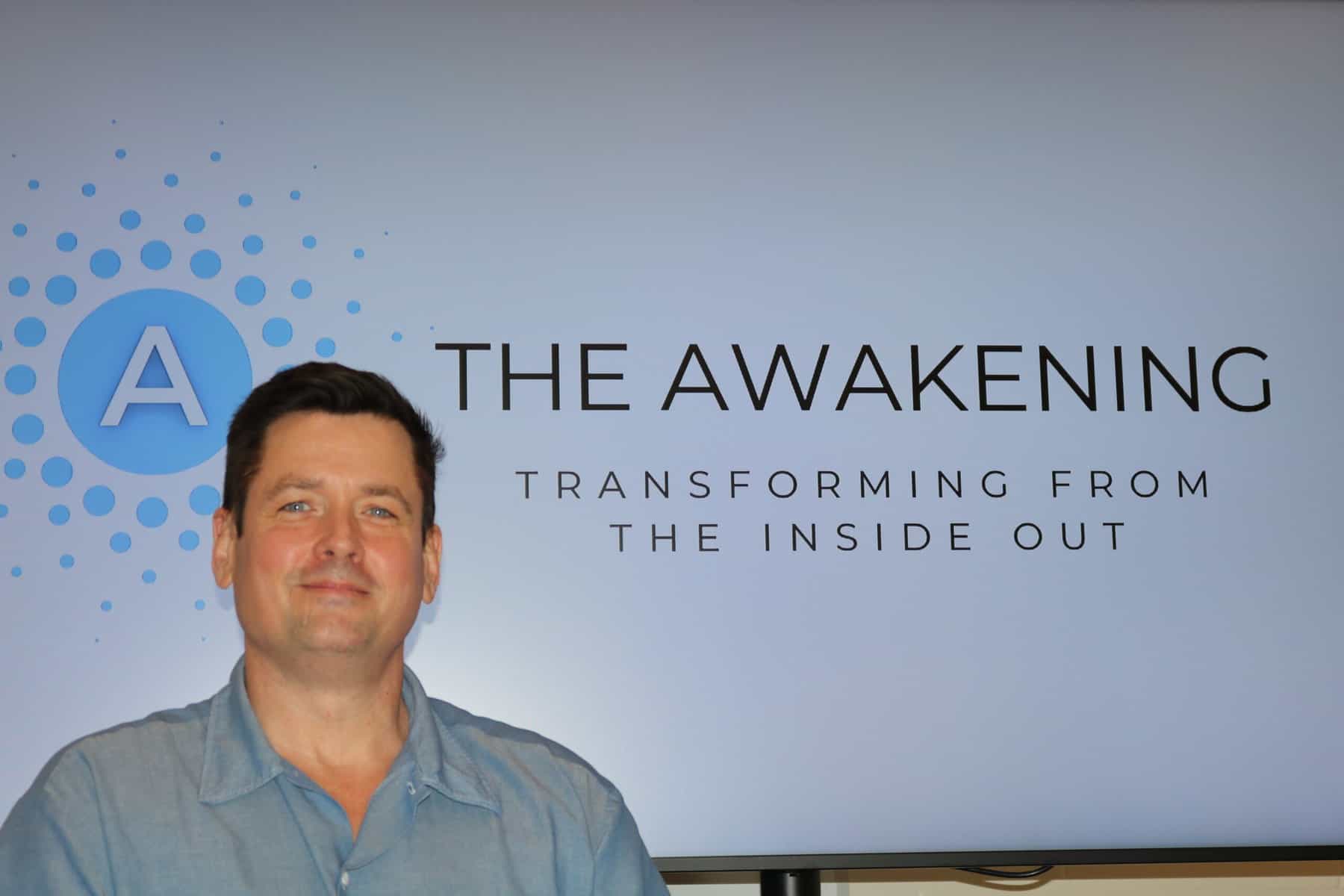
To that end, it is very exciting to see the progress made by Steven Clark, an incarcerated individual currently pursuing an M.S in Positive Psychology with Life U.

“As an incarcerated citizen, Steven is constantly faced with many challenges, especially during the COVID pandemic. However, Steven has proven to be resilient in the face of adversity and truly exudes and applies the principles of positive psychology,” said Dr. Richard Shook, Assistant Professor of Psychology. “He works hard to transform theoretical concepts from mindfulness and compassion into a living and breathing program that helps incarcerated citizens experience more equanimity and meaning in their lives.”

As part of his master’s program, Clark has created a positive psychology and coaching program at Maine State Prison. The program, titled “The Awakening: Transforming from the Inside Out,” is based partly on Life U’s Awakening Mentorship and Coaching program with guidance from the Life U Psychology Department.

“We have utilized kind of the teacher archetype, where we let individuals within the prison contribute to what the program is and the development of the program itself,” said Clark.

Currently, there are nine individuals involved in the program and 16 potential modules in progress intended to be utilized for the curriculum. Modeling some operations from the International Coaching Federation’s ethics and guidelines framework, the program has been in place since June 2021 and works with participants to create and tweak robust modules for future use.

On April 22, 2022, Clark hosted both an on-site and Zoom-based capstone presentation of the project entitled “The Awakening Program: An Inmate Collaboration to Transform Self, Community, and the System of Mass Incarceration.” The in-depth scholarly presentation, open to leaders and professors, detailed the goals and intentions of The Awakening Program. Resources and slides presented can be accessed through the Glen Community Exchange.

In his presentation, Clark highlights how incarceration ideally should focus on rehabilitation, not necessarily punishment. The Awakening also explores how every person is in some sort of bondage, whether it is a physical place or an affected mental state. But by having self-awareness of one’s traumas and pain, a person can start to develop strategies to deal with stress in healthy ways and in turn serve as a light for others.

There are a few shining examples of how The Awakening program has been put into practice. A meditation group now meets regularly, led by an incarcerated resident equipped with materials that might not have previously been easily accessible. A consciousness study group examining Bruce Lipton’s ‘The Biology of Belief” is in effect as well, in addition to numerous opportunities for peer mentorship in a life coaching format.

Though not the main goal of the program, part of the hope for programs such as these revolves around relief related to high recidivism rates. Ideally, when given a chance to better themselves, more incarcerated people can rise to the challenges that will face them after they get out. Then they can help not only themselves to become positive forces for change in the world, but also encourage others to choose brighter paths.

“We have a 60 to 80 percent recidivism rate within the system of mass incarceration. If any one of our highways had a 60 to 80 percent fatality rate, don’t you think they would shut that highway down to look at what was going on and maybe make some changes?” asked Clark. “The thesis of this thing is [positive practices such as] yoga, meditation and prayer allow change to happen from within, and then we affect the environment that we are in. If within the system of mass incarceration, we can help incarcerated residents become change agents themselves, that change is going to spread out.”

Similar to the goals of the Chillon Project, an initiative of Life U’s Center for Compassion, Integrity and Secular Ethics (CCISE) that allows women in Arrendale State Prison to pursue higher education through Life U, Clark’s program enables incarcerated people to reflect on past and present experiences in order to improve on the future.

“What we have been doing for a long time in the system of mass incarceration is broken, so we need a change. We need to start spreading love, kindness and compassion to those in the system,” said Clark.

Clark has expressed gratitude for all he has learned and will continue to learn through his M.S in Positive Psychology degree, in that it has “broadened his consciousness to a place where he understands healing modalities and how they need to be implemented in all marginalized populations.”

In addition, his studies have grown his skills and aptitude to deal with many unexpected challenges, a needed asset in his current space. The Awakening program and Clark’s master’s degree should serve as a viable springboard for the work he will be required to complete as part of his Ph.D. program with the California Institute of Human Sciences.

Going forward, Clark wishes to explore how positive consciousness plays a role in marginalized populations and what strategies can be implemented to improve consciousness in these populations.


Slice of LIFE is an invitation to and extension of everything happening at LIFE University. Whether you are a current student, a potential freshmen, or a proud alum, Slice of Life can help keep you connected to your academic community. Know of a compelling Life U story to be shared, such as a riveting project, innovative group, or something similar? Let us know by emailing Marketing@life.edu.

Coaching Psychology: What is it and why is it important?

Coaching Psychology: What is it and why is it important?

Life University (Life U) offers a Master of Science (M.S.) degree program in Positive Psychology with two tracks: General Positive Psychology and Coaching Psychology. This online degree program is fully accredited and one-of-a-kind. In fact, it is one of only a handful of such highly sought-after programs in the entire world. The M.S. in Positive Psychology at Life University investigates strengths-based research that enables individuals and communities to thrive. It is focused on the study of flourishing and positive human functioning, in particular key areas such as meaning in life and cultivating what is best within themselves.

In particular, the Coaching Psychology track has gained a fair amount of traction and interest in recent years. Coaching in this context refers to training in executive and life coaching through a positive psychology lens and a focus on mindfulness. Prior to the introduction of the M.S in Positive Psychology at Life U in 2014, there was a bachelor ‘s program available. But instructors noted interest in Positive Psychology and the coaching track proved greater with students further in their careers or often looking for a career change. Thus, the program was converted to a graduate degree.

“With the commitment and ongoing support of this admirable team of instructors at Life University, my eyes were opened to the world of positive psychology coaching, and I have confidently launched the personal development business of my dreams. I am quite proud, honored and grateful to say that I earned my graduate degree from this fine institution and will continue to live in abundance with Lasting Purpose,” said Jonathan Powell in a student testimonial. Powell is a M.S in Positive Psychology- Coaching Track alumnus and CEO of Monumental Paths, working as a Positive Psychology Coach and Educator.

In the creation of the curriculum and teaching methods for this cutting-edge field of study at Life U, a fair amount of thought went into implementing best practices at that time for teaching coaching psychology, backed up by research largely provided by Anthony Grant, Professor of Coaching Psychology at the University of Sydney.

“One of the key components we were looking at was theoretical basis, evidence-based psychology versus just a model. [We didn’t want to just say] ‘Here’s a model; go use it for your coaching.’ We wanted our students to truly understand learning theory—psychological theory—so it makes them more agile and more confident practitioners of coaching and positive psychology in general,” said Assistant Professor of M.S. Positive and Coaching Psychology Dr. Mickey Parsons.

In a recent class lecture, Dr. Parsons presented helpful background information that illuminates the growth potential of this burgeoning field.

“In 1995, Thomas Leonard started the International Coach Federation (ICF) as a nonprofit organization for the coaching community, and today, there are more than 50,000 members of ICF across 140 countries certified coaches,” noted Dr. Parsons in his recent lecture. “The profession of coaching continues to grow, and with that growth, new distinctions continue to surface. The term evidence-based coaching was introduced in 2003 to demonstrate how professional coaching is anchored in empirical and theoretical knowledge (such as positive psychology, cognitive behavioral theory and the like) versus what others may describe as loosely constructed trends in pop psychology.”

“At Life U, we take a positive psychology approach to coaching,” explained Dr. Parsons. “In fact, coaching psychology is a subset of the positive psychology umbrella, providing a theoretical framework and science for coaching practice. This theoretical cornerstone combined with the ICF core coaching competencies equips our students with knowledge and skills to be agile, evidence-based coaches capable of helping clients manage change, grow and thrive. Positive Psychology, in short, is the scientific study of what makes life most worth living. By cultivating positive emotion, experiences, meaning and relationships in our lives, we naturally enhance our wellbeing and that of our clients, client companies and beyond.”

At the completion of an M.S in Positive Psychology- Coaching Track, a student will be prepared to sit for either an Associate Certified Coaching Certification or a Professional Certified Coaching Certification through ICF, based on student goals as well as accumulated training and coaching hours.

“Through the years, coaching has become much more popular and now recognized by a lot of major institutions. But most institutions when they reach out to coaches, they do want them to be certified by ICF,” said Dr. Richard Shook, Assistant Professor of Psychology at Life U.

By their second quarter, students in this program are encouraged to begin building a clientele of sorts and practice peer coaching with one another to build upon skills and techniques. Professors connected to this program also offer mentorship and supervision as appropriate and encourage students to utilize external resources as much as possible.

It’s a profession in constant flux, so students are lucky to have professors with practical, current knowledge of the industry, as many of the professors of the program also have successful practices outside of Life U. Dr. Parsons, for example, is the Founder of The Workplace Coach, an executive coaching company that has been in business for more than 23 years and that “provides strategy, structure and solutions that equip leaders and their organizations for innovative results.”

“I think that the practitioner model gives students great insights into what’s going on inside the profession,” said Dr. Parsons. “We are not just talking theory; we are talking first-hand experience. We discuss how to do contracting, what are issues that come up with clients and with corporate clients. What are the ethics of day-to-day coaching practice?”

It’s exciting to see Life U students eagerly enter this emergent field and create success for themselves and their clients. For more information on the M.S in Positive Psychology- Coaching track, please visit life.edu/academic-pages/college-of-graduate-and-undergraduate-studies/positive-psychology-ms/.


Slice of LIFE is an invitation to and extension of everything happening at Life U. Whether you are a current student, a potential freshman or a proud alumni, Slice of LIFE can help keep you connected to your academic community. Know of a compelling Life U story to be shared, such as a riveting project, innovative group or something similar? Let us know by emailing Marketing@life.edu.

#TBT – Life U on Atlanta & Company: Psychology (2016)

[vc_video link=”https://youtu.be/WlsJOBmbyBI”]Michael Karlin, Ph.D., Assistant Professor of Psychology and Associate Director of the Center for Compassion, Integrity and Secular Ethics at Life University, spoke with Christine Pullara about Life U’s innovative psychology degrees and initiatives. They discuss undergraduate and graduate degree options in Psychology, Business and Positive Psychology.

They also discuss Life University’s collaboration with Etsy.org, as well as The Chillon Project, Life University’s degree-granting program in Georgia’s prison system.

Learn more about Life University’s degrees and programs at: LIFE.edu/Academics.

Learn more about Life University’s Center for Compassion, Integrity and Secular Ethics (CCISE), including The Chillon Project and its collaboration with Etsy.org at: Compassion.LIFE.edu.

Interested in listening to the CCISE’s free Compassion Integrity Training podcasts? Visit: Compassion.LIFE.edu/CIT.