arrow-down arrow-left arrow-nav arrow-right arrow-up close db-alumni db-current db-faculty db-fmaily db-future db-online download facebook gallery help linked-in maximize menu minimize pause play print search share twitter youtube zinfolio

Tackling MBA Myths

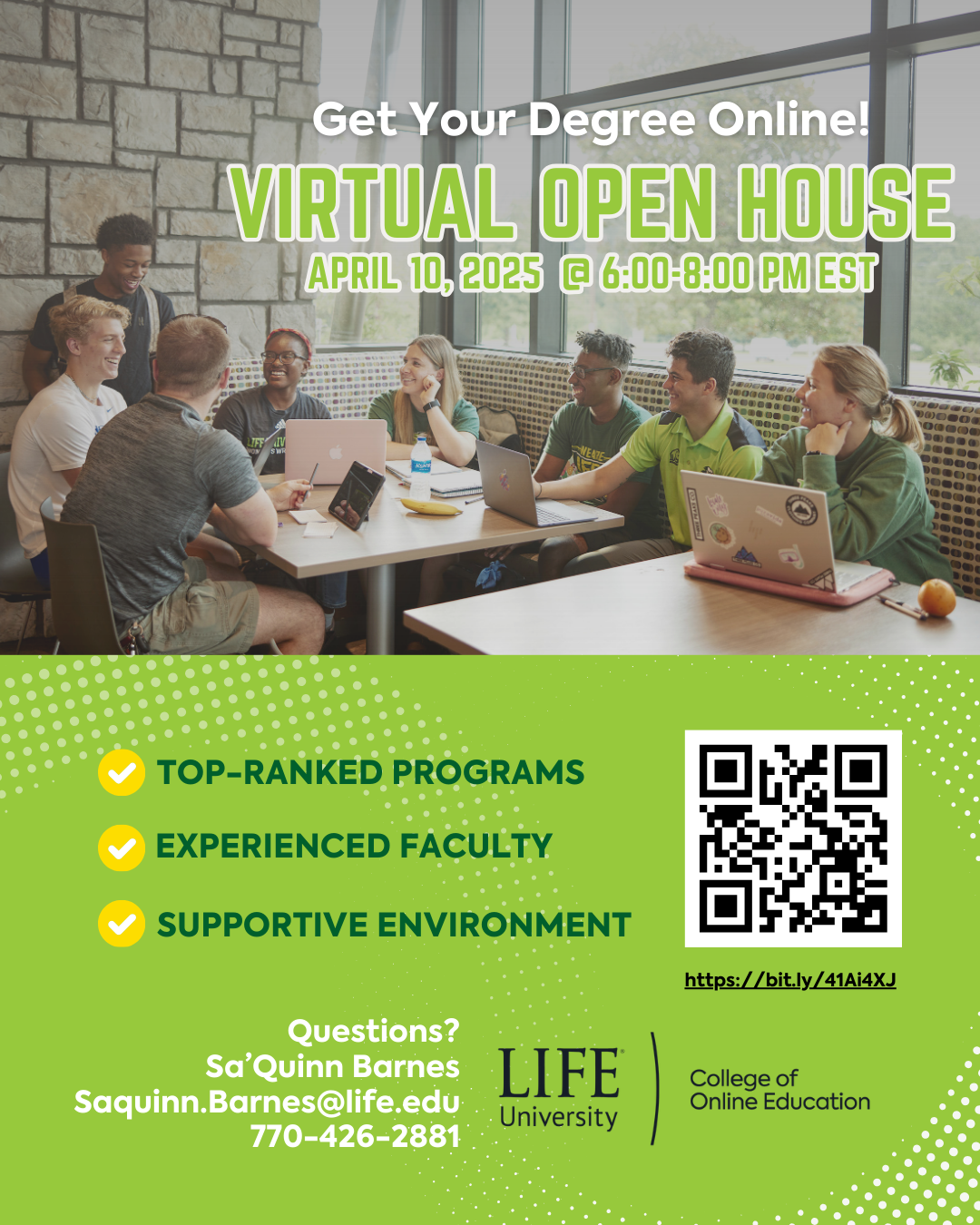
Did you know that Life University (Life U) is currently accepting applications for its new online Master of Business Administration (MBA) program? Our MBA program offers more than just career preparation – it’s an investment in a well-rounded business education that empowers students to lead with purpose and positivity. Yet, there are some myths and misconceptions about the value of an MBA education that have proliferated the larger consciousness, so let’s take a beat to assuage some potential concerns that might come up before hitting that possibly intimidating “Apply” button.

Myth 1: Students need a business background and/or degree to qualify for an MBA.

A bachelor’s degree is a standard prerequisite for an MBA, but the degree type is less consequential in terms of consideration. Of course, an undergraduate degree in business will certainly serve as an excellent foundation to build upon, but it is by no means a requirement or a necessity related to an MBA. MBAs are often used as a springboard for individuals looking to jumpstart a second career or launch a new business, so it can even be an asset to study a particular field of interest and combine it with an MBA education. For example, a Life U student might achieve a B.S. in Exercise Science to become an athletic trainer before later pursuing our online MBA to gain the business insight necessary to create their own personal training gym. In essence, we welcome all types of dedicated prospective students into our MBA program and provide the business training needed to not only succeed but thrive.

Myth 2: MBAs aren’t affordable.

An MBA can be very financially reasonable depending on the program selected. Life U charges $345 per credit hour for our MBA, placing us at a lower total cost than many other universities. And for those who choose an accelerated course of study option in a one-year program, additional cost savings can be achieved. We also have an excellent Financial Aid office that can connect you with scholarships, loans and other resources to help fund your education.

Myth 3: MBAs are only for people who want high-level leadership roles.

Everyone, at every level of an organization, has the capacity to be a business leader. This does not necessarily have to mean becoming a high-powered CEO, but it can simply mean performing at your best at any stage. Our three concentrations offered are General, Accounting and Marketing, so an MBA can be helpful at all stages of a career or in a specialized manner if needed.

Myth 4: Online MBAs are not as well regarded by employers.

Generally, hiring managers do not inquire about the format of a degree listed on a résumé, and even if they did, online degrees are typically as respected as traditional degrees. It is true that when online education was in its early infancy, employers were skeptical about its validity, but over time, most have come to see the value that MBA-educated professionals bring, regardless of format. The main caveat to that is that the best success will be achieved when combined with diligent networking and relevant work experience. The Life U MBA program will give you access to industry leaders, executive mentors and exclusive career opportunities to expand your professional impact.

Myth 5: Online MBAs aren’t as rigorous as in-person.

Online programs offer more flexibility, but the rigor is the same or sometimes a step above an in-person equivalent. Typically, the pacing matters more than the physical location in this regard. The Life U MBA can be taken in an accelerated format for a year-long program or stretched out to allow for busier schedules and constraints. Online MBA students can sometimes miss some of the more natural networking that occurs in in-person learning, but that can be mitigated with a bit of creative leveraging of opportunities offered by the University.

Myth 6: MBAs are too male-dominated.

According to Business 360°, women’s full-time MBA enrollment was at 41% in 2022, and all indications point to that percentage increasing over time. Regarding Life U’s current overall student population, it was last reported at an even 50% between male and female students as of the 2024 Fall Quarter. Therefore, we expect our program to be a good mix of students in this measure because many strong women are now investing in a vibrant business education and career.

Myth 7: Only the highest-scoring students will qualify.

To evaluate the whole student, not simply a series of numbers, we are not currently requiring a GMAT score for our MBA program. Instead, we want to evaluate your leadership potential and your experiences. The main essential requirement is a bachelor’s degree with a minimum 3.0 G.P.A. For more information on Life U’s exciting new MBA program, please visit our MBA welcome page.

References

https://post.edu/blog/debunking-7-common-mba-misconceptions/
Reconfiguring the collegiate landscape, looking at how to better welcome ‘non-traditional’ students

One delightful aspect of the Life University (Life U) student body makeup is the fact that we support students from all different walks of life. For example, as recorded in the Fall 2022 Annual University Fact Book, 67 percent of Life U students are pursuing a Chiropractic or Graduate level degree. With such a large portion of the Life U campus past the undergraduate stage of their education, it’s necessary that the University take stock and figure out how best to serve a growing ‘non-traditional’ student population.


What are ‘non-traditional’ students?

The National Center for Education Statistics has debated what constitutes a traditional versus non-traditional student, as the norms for when, where and how students choose to continue their education has been much in flux in recent years. However, age plays a big part in this puzzle, as the older the student is, the more likely they are juggling other major responsibilities, such as work, children and mortgages. Here at Life U, the Fall 2022 Fact Book listed 41 percent of undergraduate students as over age 22. So, we understand there are many competing demands for your time and energy, and we want to make your educational experience as successful as possible.


Flexibility for your life at Life U

Make your education work for you by selecting a learning style that works for your life. Life U has been working tirelessly to give students more options to meet their class requirements. In the 2021 Fall Quarter, LIFE Flex was unveiled. It is an innovative approach to course delivery that provides students with flexibility and multiple learning opportunities.

Students had the ability for the first time to choose to engage with classes in three different learning styles: face-to-face experience on-campus; synchronously (real-time) online; or in some cases, in a self-guided, asynchronous (not real-time) option for portions of courses. Online offerings are accessed via Blackboard, Life U’s learning management system. Effective for the 2021 Fall Quarter, all Life University lecture classes utilized the LIFE Flex format. For a fuller picture of LIFE Flex, please read our full article on the topic titled “What’s Your Life (U) Style? – LIFE Flex Overview.”


Online degree programs offered at Life U for added convenience

Life U is currently in the process of adding several more exciting undergraduate and graduate-level online degree programs, so stay tuned. Dr. Jo Lobertini, Associate Dean of COE, had much to say about online education at Life U.

“What sets online learning at Life U apart from the rest? Superior student support and course design. Online students receive superior support from institutional staff and faculty. Tutoring is available from within the online classroom, and there is a dedicated online advising liaison who works to make sure online advising needs are met. Faculty have years of experience teaching online and take part in COE-specific training when they are hired.

Two of the COE’s online programs, the B.S. in Biology and the M.S. in Positive Psychology, have won national awards for their program design and delivery. All COE courses are carefully designed and developed by a team made up of a subject matter expert (faculty member), an instructional designer and a media producer working under academic leadership oversight. In this process, the faculty contributes subject matter, and the instructional designer supplies course development guidance based on the Quality Matters (QM) higher education standards for quality in online course design. These standards have been examined for consistency with the conclusions of the educational research literature on factors that improve student learning and retention rates, as well as activities that increase learning and engagement,” said Dr. Lobertini.

M.S. in Positive Psychology (MSPP)- Two Tracks 

Life U offers the MSPP with two tracks: General Positive Psychology and Coaching Psychology. The MSPP is a fully accredited, one-of-a-kind online degree program. In fact, it is one of only a handful of such highly sought-after programs in the world. The MSPP at Life U investigates strengths-based research that enable individuals and communities to thrive.

B.S. in Biology

Life U’s Bachelor of Science in Biology curriculum is grounded in a philosophy that is deeply respectful of the innate intelligence of life – the ability of all organisms to be conscious, self-developing, self-maintaining and self-healing. Life U works closely with biology students to help them pursue their interests in advanced educational endeavors or STEM career pathways.

B.S. in Interdisciplinary Studies 

Life U’s Bachelor of Science in Interdisciplinary Studies provides a breadth of knowledge that is particularly advantageous in an increasingly complex and rapidly changing world, where today’s skills are quickly outdated by tomorrow’s new technologies. This degree equips students with the communication expertise, critical thinking abilities and a worldview that translate into transferable skills valued by all employers. 

B.S. in Psychology 

Life U’s Bachelor of Science in Psychology majors are taught to emphasize the inborn human capacities for love, courage, forgiveness, wisdom and interpersonal connection. Along with scientific study, these principles are woven throughout all coursework and culminate in real-life applications through either an internship or a senior thesis experience.

A.S. in Health and Wellness

Life University’s Health and Wellness associate degree program is designed for individuals who wish to take part in America’s cultural change toward sustainable health choices, fitness and wellness-centered lifestyles. Upon completion of this health science degree’s requirements, graduates will be prepared to seek employment with recreational and health club facilities; community or corporate wellness programs; or pursue independent contracting. Alternatively, they may choose to pursue further higher education study.

Learning to navigate the complexities of the human body while exploring how the body works and affects our physiology are just a couple of the fascinating areas that will be covered when students study for a Bachelor of Science in Anatomy and Physiology at Life University.
Explore the complex interdependencies between mind and body and using your knowledge to improve individual and group function. The interdisciplinary coursework will explore and challenge our collective knowledge of fundamental biopsychological concepts regarding bases of behavior, emotion and cognition and their relationship to health.
Blending good corporate citizenship with ethical business practice is the challenge facing businesses today. Corporate social responsibility and social entrepreneurship are not treated as just the latest buzzwords, but these business concepts provide a foundation for students to harness their power to manage successful economic, social and environmental relationships. A BBA student will practice and engage with various viewpoints of stakeholders to better understand how these relationships are likely to have a powerful impact on an organization’s long-term success and sustainability.
Students who pursue a degree in Computer Information Systems and Technology will learn the skills needed to make a positive impact on society and businesses utilizing information systems management.

Pre-Doctor of Chiropractic Pathway

This is a pathway designed to prepare students to go on to a Doctor of Chiropractic (D.C) program. There are three paths in which students can choose to complete this pathway. In the popular Path 1, students can earn their bachelor’s degree and work on their D.C program concurrently. In the Path 1 program, students have six potential majors to choose from, two of which are offered online (B.S. in Biology and B.S. in Psychology).


Slice of LIFE is an invitation to and extension of everything happening at Life University. Whether you are a current student, a potential freshman or a proud alum, Slice of LIFE can help keep you connected to your academic community. Know of a compelling Life U story to be shared, such as a riveting project, innovative group or something similar? Let us know by emailing Marketing@life.edu.

A Discussion with Bill Watson, Life University’s Director of the Center for Excellence in Teaching and Learning (CETL)

A Discussion with Bill Watson, Life University’s Director of the Center for Excellence in Teaching and Learning (CETL)

Training and Supporting Life University’s (Life U) Faculty & Staff

Bill Watson is the Director of the Center for Excellence in Teaching and Learning (CETL) at Life University (Life U) for the past six years. You will hear that this area of learning and education is actually pronounced see-till, not kettle.

Watson is originally from Florida but lived for seventeen years in Texas before coming to work at Life U. As the CETL Director, Watson is “responsible for overseeing the implementation and management of all our various initiatives and programs”. The main goal of CETL is to be the learning bridge and support to faculty so that they can be successful in teaching our students.  CETL is the epicenter of university resources for learning and education to all faculty and is the main resource center providing many educational tools. If the CETL staff receive a request and do not have the answer directly, they will research and locate the proper resources a faculty member will need.

CETL supports Life U faculty through a variety of ways including offering training courses online, in-person and answering specific questions from a faculty member. These resources through CETL are “the primary resource for faculty development on campus”, said Watson. He and the center’s staff work with faculty on a daily basis to facilitate workshops for the faculty and ensures that faculty have the resources, skills and training they need. Through the Faculty Staff Development Program (FSDP) CETL also supports the staff in training and Watson as the Chair of the FSDP Committee helps the committee to select the programs and courses offered at each FSDP. CETL services and resources are also available to staff who may be interested in developing skills that will prepare them for adjunct teaching positions.

A major resource within CETL is the MAGNA Digital Library. The license for this software was purchased two years ago to add as another way to support faculty. The MAGNA Digital Library offers hundreds of on-demand professional development seminars and one of the newest additions to be offered soon through CETL are the MAGNA seminars on teaching faculty how to teach online.  This is especially important as the Life U College of Online Education (COE) steadily grows and as the College of Chiropractic transitions some of their courses online.

“This new program will allow faculty to develop skills for teaching online,” said Watson.

He would like Life U faculty to know that this will be available to them soon. In his Director of CETL position, Watson has a major goal.

“It always needs to be about the student. If we always try to weigh our decisions on what’s best for the student, I think things will work out in the end”, said Watson.


Slice of LIFE is an invitation to and extension of everything happening at LIFE University. Whether you are a current student, a potential freshmen, or a proud alum, Slice of Life can help keep you connected to your academic community. Know of a compelling Life U story to be shared, such as a riveting project, innovative group, or something similar? Let us know by emailing Marketing@life.edu.

For more information about CETL, visit life.edu/academic-pages/cetl/

Dr. Richard Belcastro, Dean, College of Online Education (COE) at Life University

Dr. Richard Belcastro, Dean, College of Online Education (COE) at Life University

Dr. Richard Belcastro has been the Dean of the College of Online Education (COE) at Life University (Life U) for a little more than five years. He was drawn to Life U because of the opportunity to begin building an online school from the ground up. Dr. Belcastro has a Bachelor’s Degree in Education with a specialization in Special Education, a Master’s Degree in Education Administration and a Doctorate Degree in Special Education with a minor in Education Administration, all from West Virginia University.

“When I saw the position at Life U, it gave me the opportunity to start from scratch and build something that, in my opinion, would be special,” said Dr. Belcastro. “Judging from my experience in my previous position, I knew how to be effective and increase student success, and I wanted to bring that to a whole new group of students. Life U presented a unique opportunity. The College of Online [Education] wasn’t even here when I came on. It was just online programs. I wanted to be able to start from that, build that foundation and begin building on it at a new institution that hadn’t experienced it before, which was Life U.”

The College of Online Education was created at Life U in order to be competitive and offer similar programs to other higher education institutions. An online education at Life U is different from other institutions because the classes are not held in real-time, meaning students can take courses at their own convenience, which helps with scheduling conflicts.

There are project and course deadlines set that must be met, but a student does not need to sign on at a specific time. Instead, the student is allowed to weave courses into their schedule on their own time, giving them asynchronous studies that make life more flexible. Main campus students are also able to take online classes, and they do, often from the comfort of their home, dorm, the Library or even a nearby café. Students can also live in another state and still receive an education and a Life U diploma, saving travel and moving expenses.

According to Dr. Belcastro, there are several reasons why Life U’s COE is different from other universities. To begin with, he pointed out that our full-time online faculty are not only experts in their field, but also very knowledgeable in online education. Dr. Belcastro noted that the faculty are very accommodating and work hard to ensure that students are successful. Faculty have a high “touch rate,” reaching out to all of their students in the first week of classes.

“Our faculty go the extra mile to make sure students feel comfortable with not only the material that is in the class, but also with the online format,” said Dr. Belcastro.

Another major difference is that Vitalism is integrated throughout the online curriculum, and starting 2022 Fall Quarter, there will be a new course devoted specifically to Physiology and Vitalism.

Dr. Belcastro is proud of the online course design. Life U does not purchase prepacked courses; instead, all of the courses are designed by people who work for the University. This ensures both academic integrity and comprehensive flow for each course. The University is also hiring a media producer to help create a more engaging experience for students tailored to their specific curriculum. The COE is continually looking toward these and other enhancements in order to meet the main goal of preparing students for their next steps, whether that means entering the job market, furthering their career or continuing on to the next level of their education.

The College of Online Education’s B.S. in Biology was ranked among the “15 Best Biology Online” in 2021 by the Bachelor’s Degree Center, and “Life U’s Online Master’s in Psychology Program has been ranked No. 3 for Best Online Master’s in Psychology Programs and was awarded the title of “Best for International Students” according to Intelligent.com.

“Life U’s online education is committed to you as a student being successful. I can’t emphasize that enough,” remarked Dr. Belcastro on what he would say specifically to prospective students who may be considering an online education at Life U. “We are deeply committed to students’ success. A student’s educational journey here at Life U is one that they do not embark on alone; it is one that is a partnership with us. We are there every step of the way providing support. It’s one thing to have a fantastic curriculum, instructors, courses and programs, which we do, but it’s another thing to recognize, even with all of that, students still need help sometimes, and we are here for them to help them accomplish that. If the student is not successful, we’re not successful. If you are a student considering Life U online, I am going to tell you that we are going to do everything possible within the relm of academic integrity and rigor to ensure that you are successful.”


Slice of LIFE is an invitation to and extension of everything happening at Life U. Whether you are a current student, a potential freshman or a proud alumni, Slice of LIFE can help keep you connected to your academic community. Know of a compelling Life U story to be shared, such as a riveting project, innovative group or something similar? Let us know by emailing Marketing@life.edu.

Dr. Geo Laws to Strengthen LIFE’s College of Online Education

As she approaches her two-year anniversary at Life University, College of Online Education (COE) Coordinator, Dr. Georgianna (Geo) Laws spent some time to reflect on her growth and role at Life University.

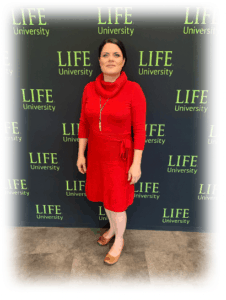
In her spare time, Georgianna paints and runs road races. This March she ran the Atlanta 2020 marathon in six hours and 10 minutes. Whenever she runs road races, she runs into Life University colleagues, which speaks to our institution’s commitment to wellness as a way for us to serve out of a sense of abundance. Geo is also most grateful to our C-HOP for the chiropractic services it provides to keep her and everyone at LIFE functioning optimally. She swears by chiropractic care after her stage III cancer was healed some 10 years ago through a combination of lifestyle changes and Chiropractic.

After earning a master’s degree in adult education and distance learning, Georgianna earned a doctorate in higher-education leadership and conducted a national research study titled Powerful or Powerless? Chief Online Education Officers’ Legitimate Power over Online Program Quality of U.S. Higher-Education Institution. Georgianna chose to work at Life University for the strong alignment she felt with Vitalism and with serving Lasting Purpose; she also chose LIFE for how it is changing the world through compassion. Finally, the strongest reason for choosing to serve LIFE was the appeal of the opportunity to work under the leadership of Dr. Richard Belcastro, the Dean of the College of Online Education, a position which literally mirrors her doctoral research with chief online education officers. Dr. Laws is one of only three groups of researchers in the U.S. to work with this population and the only one in the nation doing research with the legitimate power that higher education COEOs have over quality in online program administration.

A little more than a year after her employment, Drs. Belcastro and Laws, with the support of senior leadership at LIFE, were able to form the College of Online Education, which they continue to strengthen and to grow. By now the college added two professionals who took over parts of former responsibilities Geo held, namely Ms. Sabrina Armster, the College’s Instructional Specialist, and Dr. Rochelle Rothman, the College’s Instructional Designer. Georgianna recruited, trained and continues to mentor these two professionals, who currently operate and develop as a virtual team under Dr. Belcastro’s positive and steadfast leadership.

Dr. Laws frequently speaks at national and international conferences on the topics of quality in designing and delivering online education; quality in the administration of online programs; and cybersecurity implications for online education. Most recently, she has been speaking about the Chief Online Education Officers (COEO) role in the United States and the key strategic position this professional holds in the administration of quality online programs, particularly during the pandemic. In her next presentation, at the Online Learning Consortium (OLC) Accelerate 2020 conference, Dr. Laws will address how higher-education presidents and provosts in the U.S. can support their COEO in these uncertain COVID0-19 times.

Dr. Laws also had the privilege to be invited to review leadership-track proposals at the 2020 OLC Accelerate conference as well as at the Unites States Distance Learning Association 2020 national conference. In recognition of her passion for and efforts in online higher education, the President of the Unites States Distance Learning Association (USDLA) appointed Dr. Laws as a member of the USDLA Board of Directors. In this role, Georgianna serves as co-chair of the USDLA awards committee and works closely with the marketing/communications committee. Other committees she serves are advisory, credentialing, events/conferences, governance, membership, nominating, professional development and state chapters.

Dr. Laws helped co-organize and co-moderate the 2020 USDLA conference and spearheaded the production of the inaugural USDLA Soundbites podcast through which, among other guests, she interviewed the CEO and Executive Director of the Association, Dr. Reggie Smith III as well as Dr. Gerry Henley, Executive Director at MERLOT and SkillsCommons and Emeritus Professor of psychology, who was just inducted in the USDLA Hall of Fame. She also spoke at this 2020 virtual conference on the topic of recruiting and retaining top talent in online higher education organizations, a presentation she gave in collaboration with a third-party company founder and with Dr. Kathleen Williams, Director of Learning Resources at Life University. This is one of several presentations Dr. Laws undertook with other professionals at LIFE, as she believes in the value of serving, sharing and collaborating.

As her career in online leadership continues to soar, Dr. Laws’ profile was featured in Inkandescent Women magazine, next to the profiles of hundreds of women providing leadership in dozens of professional areas in the US. For the second year in a row, Geo was presented with the Life University Research and Scholarly Activity award for her work with chief online education officers. She was also recognized as an emerging leader in online learning through the Dr. Bruce N. Chaloux Scholarship for Early Career Excellence, awarded by the Online Learning Consortium to support the professional growth and preparation of the “next cadre” of leaders.

Dr. Laws is representing LIFE at the 2020 Institute for Emerging Leadership in Online Learning (IELOL), where she currently leads a team of four higher-education leaders. In her simulated role of chief online education officer, she partners with the VP of Administration, Budget, and Finance; the VP of Graduate Admissions and Enrollment; as well as the Provost to research and implement an online project management (OPM) marketing solution that they are to pitch to the president of a prominent university. Throughout the rest of her IELOL tenure, Dr. Laws is working on an initiative of strategic importance to the Life University College of Online Education, focused on building online culture.

“At most conferences, you have one or two ‘aha moments’. With IELOL, I’ve had multiple ‘aha moments’ in every single session,” Laws said. “We’re taking every possible sliver of leadership in online learning, and we delve deeply in it. We are led by IELOL faculty and mentors who are online thought leaders and looked upon as utmost experts in their particular areas of expertise. It’s just been a phenomenal journey!” Among the issues discussed in IELOL sessions are organizational branding; mission, policy and financial concerns; culture building around equity and inclusion; authentic faculty involvement and engagement; quality in online initiatives; continuity planning; data-informed decision making; communication; and much, much more.

As part of an initial IELOL assignment, Dr. Laws spoke with LIFE Vice President of Academic Affairs Dr. Tim Gross about the University’s College of Online Education, “celebrating where we’ve been, how far along we’ve come and where we’re going” and aiming to identify an opportunity Dr. Laws can research and implement at our institution. “It’s such an honor to be able to serve Life University at IELOL,” Georgianna said. “I’m learning so much, and I am constantly turning around and implementing what I am learning, helping strengthen our team in support of our faculty and students.”

“In light of the pandemic, Online has certainly come to the forefront, not only for our institution, but also on a global level,” Dr. Laws said. “What is important about Online is that it allows students access to quality education at times they cannot physically come to campus.” Dr. Laws pointed out that the mission of the College of Online Education is “to provide a high-quality global online educational experience, based on a vitalistic philosophy, that maximizes each student’s innate potential to pursue their goals and assume roles in leadership and the workplace through the application of integrity and principles of Lasting Purpose.”

“Online is a partner to our main campus colleges,” Dr. Laws said. “We’re here to provide Life University students an alternative pathway to earning credits or perhaps an entire degree, and we are very excited to serve our institution’s mission and to be the premier vitalistic organization in the world.”

To learn more about Life University’s College of Online Education, visit LIFE.edu/Online.

College of Online Education: Vitalism, Online and Accessible

Typically, when someone hears Life University, the first thing that comes to mind is the world-class chiropractic education coupled with the emphasis on a vitalistic philosophy. And that would be correct. But LIFE is much more. In 1996, the University initiated the offering of undergraduate programs, providing a quality education in areas not previously offered.

In the Fall of 2019, Life University also launched a College of Online Education. Although the University previously offered online courses, the new College demonstrated a commitment to providing those resources necessary for our students to be successful across multiple programs. In addition to offering five fully online academic programs, with more planned to start in the near future, the institution can now extend our outreach to students who are not limited to geographical location. LIFE’s vitalistic philosophy can now be shared with students who reside across the United States and the world. By using a combination of campus-based faculty and faculty specifically trained in the online modality, we can make an impact by providing the same curriculum to students worldwide. Linked with a commitment to utilizing the latest technologies, student success is the ultimate goal.

The College of Online Education provides several benefits. First, and foremost, we can introduce Vitalism to those students who cannot travel to Marietta to enroll in our campus courses. These students can still obtain a quality undergraduate or graduate degree where our philosophy is integrated into the curriculum. Next, a student can enroll, and complete, all Pre-D.C. courses online. This allows them to accumulate less debt, only having to come to campus to fulfill the Chiropractic degree requirements. But, having online programs also provides advantages to our on-ground students as well. A campus-based student can now take more courses without regard to potential scheduling conflicts, meaning they can theoretically graduate sooner while accumulating less student debt.

The College of Online Education will continue to assess current trends and employers’ needs when considering new courses and programs that enable our students to access quality and meaningful careers in the marketplace. Our goal will be to continue to produce graduates who have the ability to be problem solvers in their chosen area of expertise. Through our online academic programs, we have greatly increased the number of potential Life University graduates now capable of having a more broad and positive impact on the world.